
PC FURNITURE AND KITCHEN CABINETS DESIGN IDEAS PRICE PER SQ FT AND BENEFITS
November 20, 2026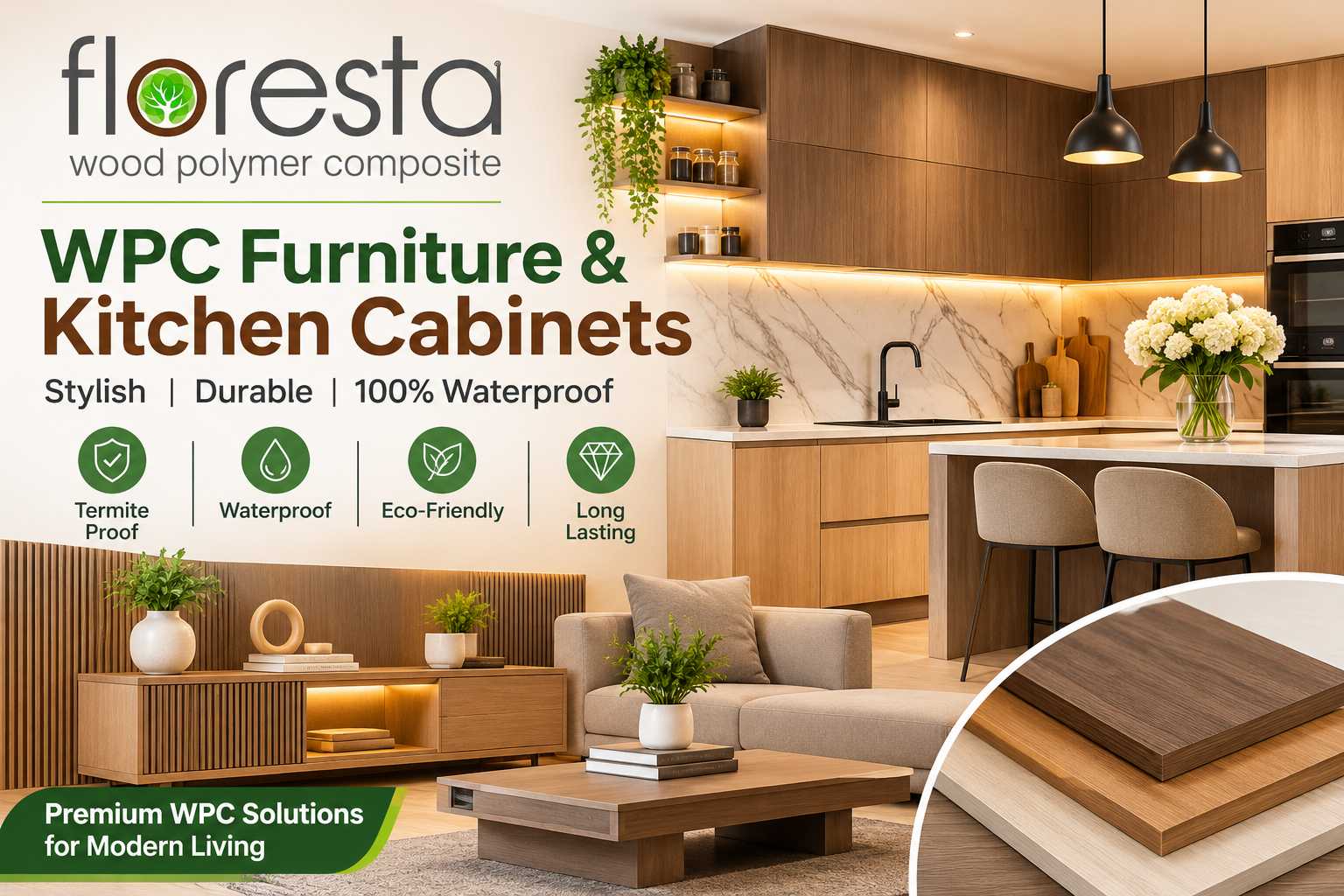
PC FURNITURE AND KITCHEN CABINETS DESIGN IDEAS PRICE PER SQ FT AND BENEFITS
You open the cabinet under the kitchen sink and find the base panel swollen, the laminate peeling, and a musty smell inside. A few months later, thin mud lines appear on the back of the bedroom wardrobe. Termites. In many Indian homes, this is how plywood furniture ends, and the repair bills keep coming.
WPC furniture fixes this problem at the material level. WPC (Wood Plastic Composite) boards do not soak up water like wood, and termites cannot feed on them. In this guide, you will find design ideas for kitchens, wardrobes, beds, and vanities; the factors behind the WPC kitchen cabinet price per sq ft, an honest WPC vs. plywood comparison; and a simple buying checklist.
What Is WPC Furniture?
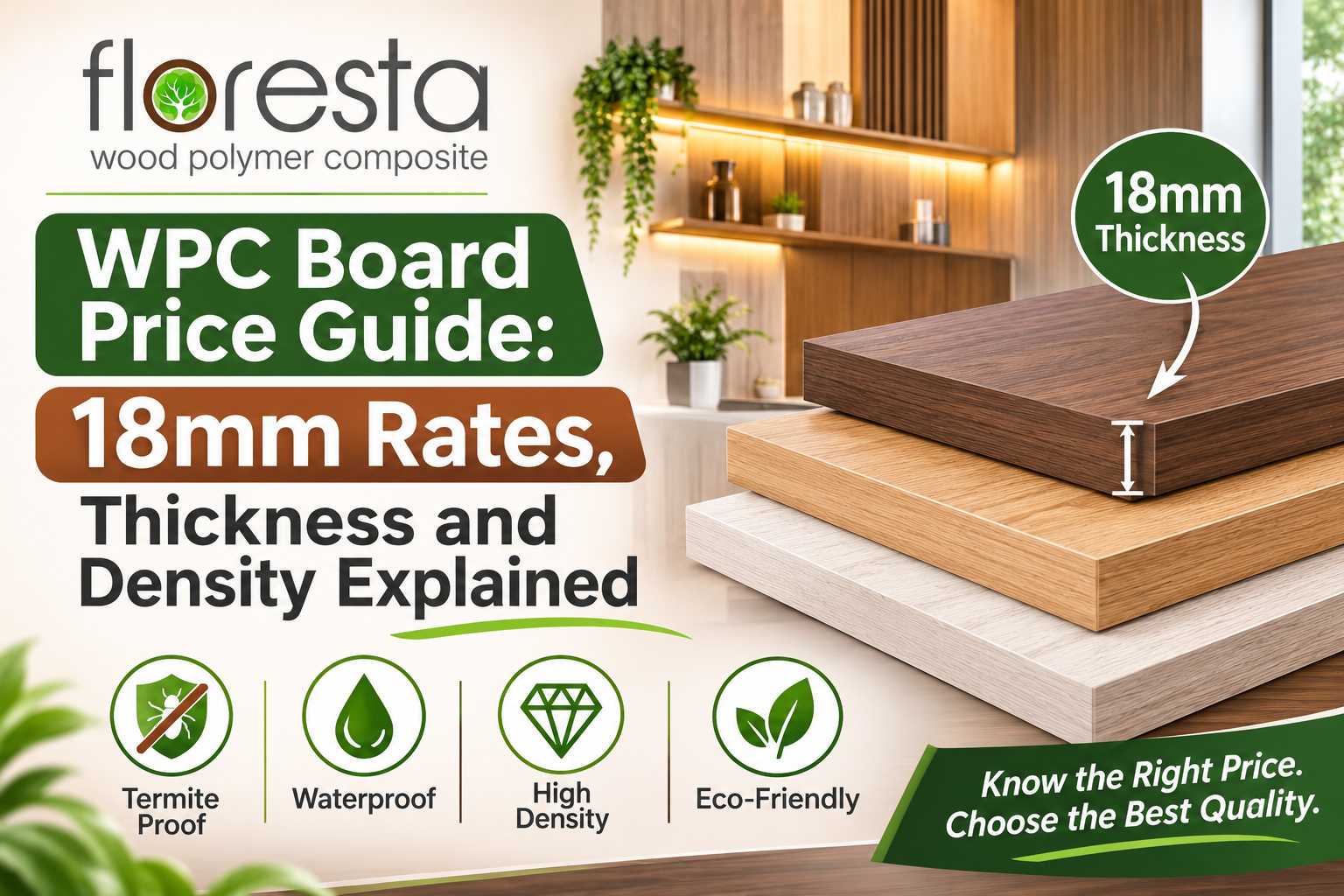
WPC furniture is furniture made from wood-plastic composite boards instead of plywood, MDF, or solid wood. The boards are made by blending fine wood dust with polymer and processing aids, then forming them into solid sheets. You can learn more about the material on our Why WPC page.
For a carpenter, a WPC board works much like a wooden board. It can be cut, routed, nailed, and screwed with standard tools. It also takes laminates, veneers, PU paint, and acrylic finishes, so the final look is the same as any premium interior.
Key Benefits of WPC Furniture for Indian Homes
India's climate is hard on wooden furniture. Monsoon humidity, coastal moisture, dry winters, and termite-prone soil all take a toll. Here is why WPC furniture holds up better:
Waterproof and moisture-proof: No swelling, delamination, or fungus, even with daily mopping or a leaking sink.
Termite and borer-proof: No need for repeated anti-termite chemical treatment, so you get truly termite-proof furniture.
Fire retardant: WPC boards resist the spread of flame better than untreated wood. [ADD FACT: fire test standard and rating]
Stable shape: Boards stay flat through humid and dry seasons, so shutters keep closing properly.
Low maintenance: A damp cloth is enough. No polishing or retreatment.
Eco-friendly: Made using wood dust and polymer, which reduces the demand for fresh timber.
Nailable and screwable: Fits into the normal workflow of any furniture workshop.
WPC Modular Kitchen: Why It Works Best
The kitchen is the toughest room in the house for furniture. There is water at the sink, steam from cooking, leaks from RO units and dishwashers, and mopping water at floor level. Plywood carcasses near the sink are usually the first to fail. A WPC cabinet in the same spot stays solid because there is no wood grain for water to travel through.
A WPC modular kitchen removes this weak point. Among modular kitchen materials, WPC is one of the few that is fully waterproof through its whole thickness, not just on the surface.
Best Places to Use WPC in the Kitchen
Sink base unit and under-sink storage
Base cabinets close to the floor
Tall units next to the RO, fridge, or dishwasher
WPC shutters finished with laminate, acrylic, or PU
WPC Kitchen Design Ideas
Two-tone kitchen: A white WPC carcass with matte or glossy acrylic shutters in a contrasting color.
Handle-less look: Profile handles or push-to-open fittings on WPC shutters for a clean finish.
Open shelving: Wood-grain laminated WPC shelves for spices and daily-use jars.
Full-height loft units: Extra storage up to the ceiling, without worrying about seepage from walls.
These waterproof kitchen cabinets are especially useful in ground-floor flats, coastal cities, and older buildings with damp walls.
WPC Kitchen Cabinet Price per Sq Ft: What Decides the Cost
There is no single rate for WPC kitchen cabinets. The WPC kitchen cabinet price per sq ft depends on the board, the finish, and the design. Here are the main cost factors:
WPC boards usually cost more per sheet than commercial plywood. However, you do not pay for anti-termite treatment, repairs, or early replacement. Over 10 to 15 years, the total cost of WPC furniture is often lower. For an exact WPC furniture price for your project, get a quote from Floresta.
WPC Wardrobe Design Ideas
Wardrobes often stand against outer walls or walls shared with bathrooms. When those walls get damp, plywood backs swell and attract termites. WPC solves both problems.
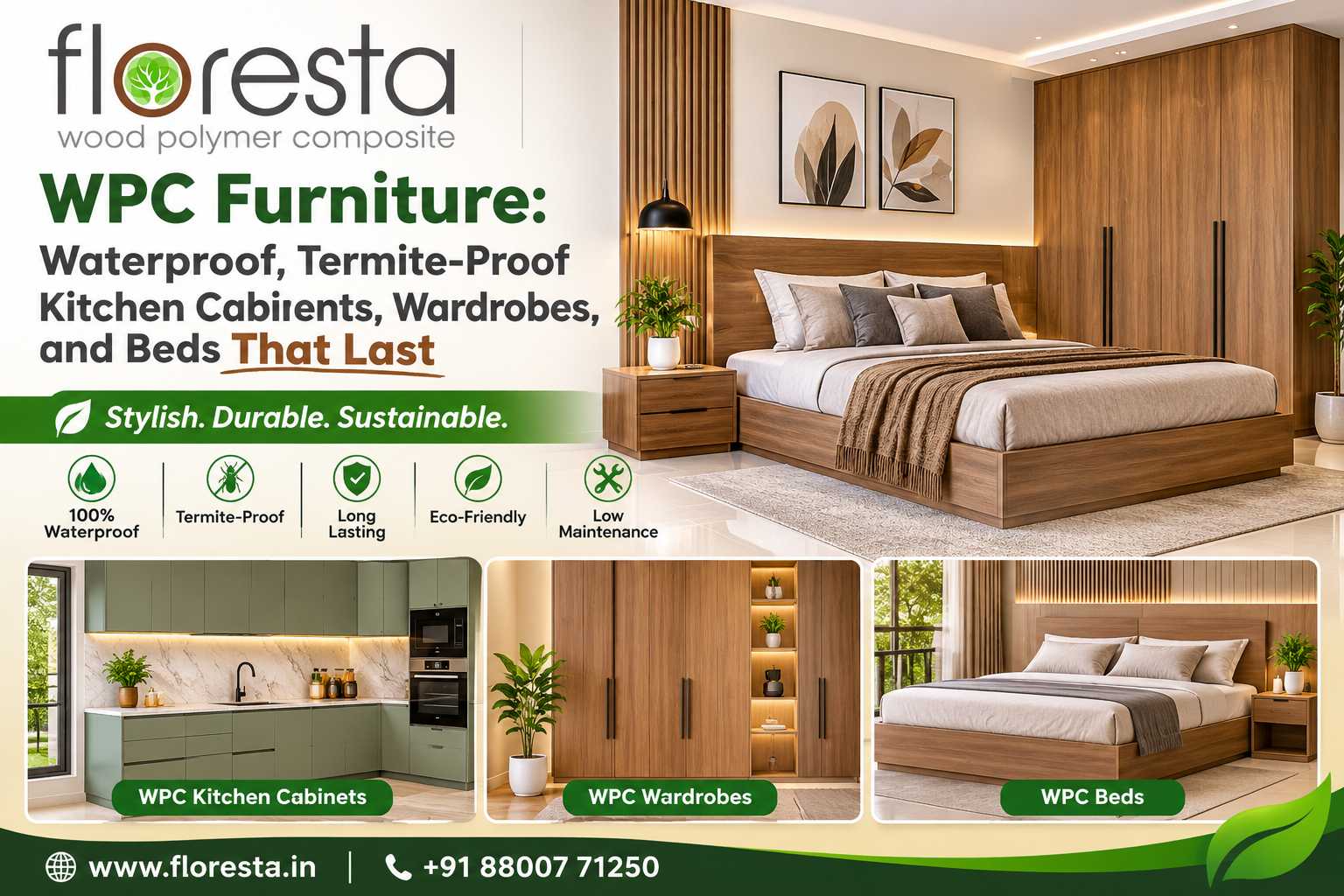
Popular WPC wardrobe design options include:
Sliding wardrobe with mirror shutters: Saves space in compact bedrooms.
Hinged wardrobe with loft: Extra storage for suitcases and seasonal clothes.
Walk-in wardrobe: Open WPC shelving with drawers and hanging rods.
Kids' wardrobe: Bright laminates, rounded edges, and easy-to-clean surfaces.
The WPC wardrobe price depends on size, shutter type, internal fittings, and finish. A sliding WPC wardrobe design with mirror shutters will cost more than a basic hinged unit with laminate.
WPC Bed, Vanity, and Other Furniture Ideas
WPC Bed
A WPC bed with storage is a smart choice for ground-floor homes and termite-prone areas. Box beds and hydraulic storage beds keep bedding and luggage safe from moisture. A WPC bed also stays free of the creaking and warping that older wooden beds develop.
WPC Vanity
The bathroom is where plywood fails fastest. A WPC vanity can handle splashes, steam, and wet floors every day. Pair it with a quartz top and stainless steel hardware for a long life.
Balcony, Utility, and Office Furniture
WPC also suits balcony storage, utility cabinets, shoe racks, office workstations, and prefab cabins. Explore more uses on our WPC applications page.
WPC vs Plywood vs Solid Wood: Comparison Table
Many buyers ask about WPC vs. plywood furniture before they decide. Here is a side-by-side view:
Installation Tips for WPC Furniture
Use carbide-tipped saw blades for clean, chip-free cuts.
Pre-drill pilot holes near edges before fixing screws. Use the adhesive recommended by the board maker for laminates.
Seal exposed edges with edge banding for a neat finish.
Choose stainless steel hinges and channels in kitchens and bathrooms.
Maintenance Tips
Clean with a soft cloth and mild soap solution.
Avoid harsh solvents like acetone on finished surfaces.
Do not place hot pans directly on WPC shelves.
Tighten hinges and check drawer channels once a year.
Buying Guide: How to Choose the Right WPC Board
Check density: Higher density gives better screw holding. Ask for the density figure in writing.
Match thickness to use: Carcass, shutters, and back panels need different thicknesses.
Buy from a manufacturer: Ask for test reports and batch details.
Do a water test: Soak a sample overnight and check for swelling.
Ask about warranty:
See the full range of sizes and finishes on our WPC sheets page.
Why Choose Floresta for WPC Furniture Boards
Floresta is a brand of TVL Engineers Pvt. Ltd. and a WPC board manufacturer in India. Here is what you get with us:
Own manufacturing plant at Pantnagar, Rudrapur, Uttarakhand, with our corporate office in Kirti Nagar, New Delhi.
European technology for consistent board quality.
Complete protection: Termite- and borer-proof, waterproof, moisture-proof, and fire-retardant boards.
Easy to work with: Nailable and screwable, ready for laminate, veneer, and paint.
Pan-India supply to carpenters, interior designers, builders, and dealers.
Read more about Floresta or download our product brochure.
Conclusion: Build WPC Furniture That Lasts
Termites, swelling and warping should not decide how long your furniture lasts. WPC furniture gives you waterproof kitchens, termite-free wardrobes, strong beds and long-lasting vanities, with almost no upkeep. Whether you are a homeowner planning a WPC modular kitchen, an architect working on WPC interior design for a full flat, or a builder or dealer sourcing boards in bulk, Floresta boards help you deliver furniture that lasts.
Ready to start your project?
Call: +91 88007 71250
WhatsApp: +91 88007 71250
Email: info@floresta.in
Frequently Asked Questions
1. What is WPC furniture?
WPC furniture is made from wood-plastic composite boards, a blend of wood dust and polymer formed into solid sheets. It looks and works like wood but does not absorb water or attract termites. It is used for kitchen cabinets, wardrobes, beds, vanities, and office furniture and can be finished with laminate, veneer, or paint.
2. Is WPC better than plywood for kitchen cabinets?
For kitchens, WPC is usually the better choice. It is waterproof through its full thickness, so sink units and base cabinets do not swell from leaks or mopping. It is also termite- and borer-proof. Plywood can work in dry areas, but even BWP grade can swell at the edges over time.
3. What is the WPC kitchen cabinet price per sq ft?
The WPC kitchen cabinet price per sq ft depends on board thickness, density, shutter finish, hardware and design. Laminate shutters cost less than acrylic or PU. [ADD FACT: indicative price range] For an accurate quote for your kitchen size and design, call Floresta at +91 88007 71250 or email info@floresta.in.
4. Can WPC be used for wardrobes and beds?
Yes. WPC is a great choice for wardrobes and beds, especially in ground-floor homes, damp walls and termite-prone areas. It holds screws well, supports sliding and hinged shutters, and can be used for storage beds with hydraulic fittings. Finish it with laminate or veneer for a premium look.
5. Is WPC furniture waterproof and termite-proof?
Yes. WPC boards do not absorb water, so they do not swell, rot or grow fungus. The polymer content also makes them termite- and borer-proof, so no repeated chemical treatment is needed. This makes WPC furniture ideal for kitchens, bathrooms, balconies, and homes in humid or coastal regions.
6. How long does WPC furniture last?
WPC furniture lasts much longer than ordinary plywood in wet or termite-prone areas because it does not rot, swell, or get eaten by termites. Its actual life depends on board quality, hardware, and usage. [ADD FACT: expected life or warranty] With basic care, it needs very little maintenance over the years.
7. Can carpenters work with WPC boards easily?
Yes. WPC boards can be cut, routed, drilled, nailed, and screwed with standard woodworking tools. Carbide-tipped blades give the cleanest cuts. Pre-drilling near edges improves screw holding. Boards accept laminates, veneers, PU paint, and acrylic, so carpenters can follow their usual workflow without special machinery.