
HOW TO CHOOSE WPC DOORS THAT LAST BUYING GUIDE FOR BATHROOM BEDROOM AND MAIN DOOR
November 13, 2026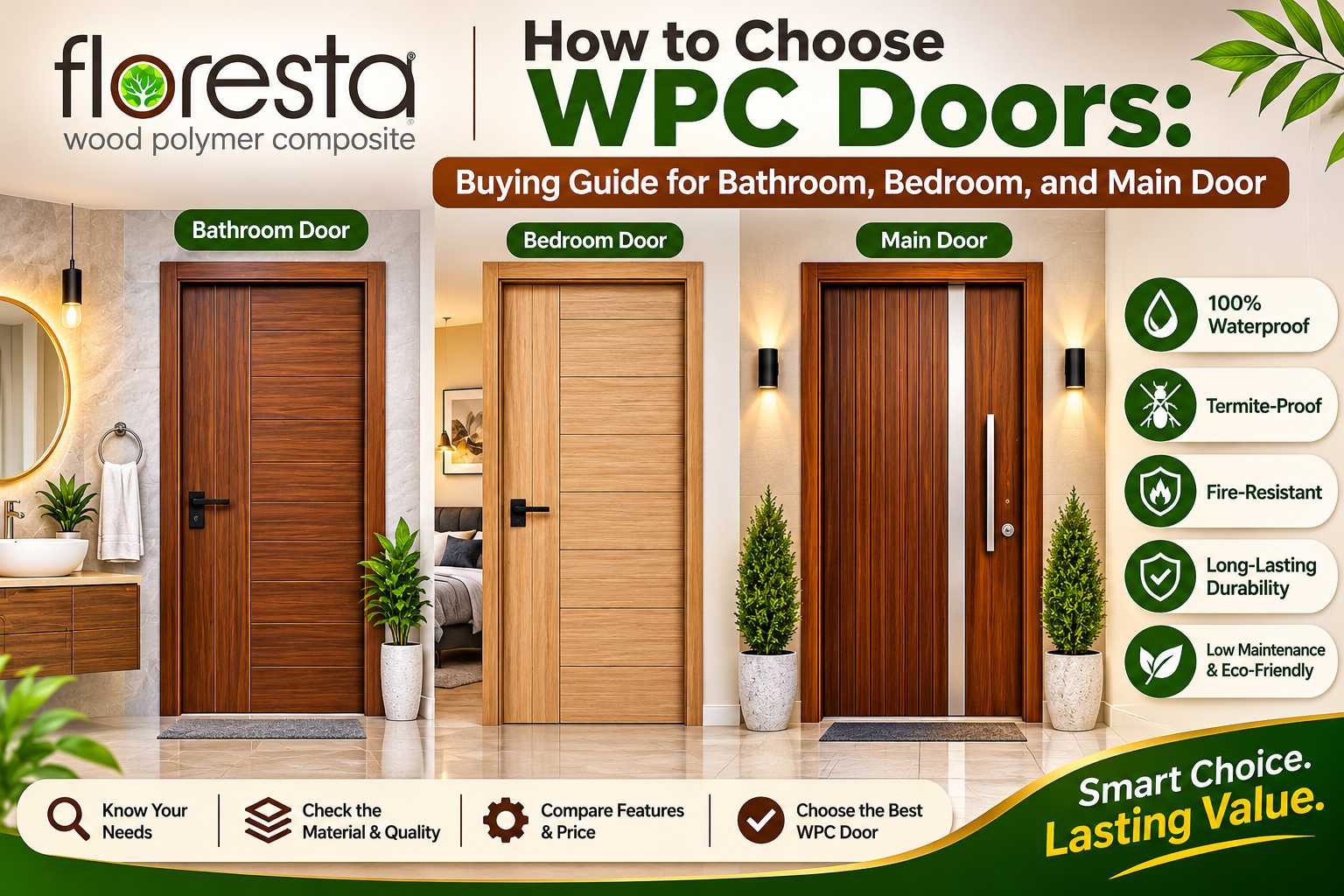
HOW TO CHOOSE WPC DOORS THAT LAST BUYING GUIDE FOR BATHROOM BEDROOM AND MAIN DOOR
The bathroom door was barely four years old when its bottom edge started to swell. Then the laminate began to peel, and by the next monsoon it would not shut properly. If you have lived in an Indian home, you have probably seen this, or found termite trails running up a wooden door frame.
WPC doors solve both problems. They do not soak up water, termites cannot eat them, and they hold their shape through humid summers and wet monsoons.
But not every WPC door is built the same. Thickness, core, frame and finish decide how long it lasts. This guide explains what to check, room by room, so you buy the right door the first time.
What Are WPC Doors?
WPC stands for Wood Polymer Composite. It is made by blending fine wood fibre with a polymer such as PVC and special additives, then extruding the mix into solid boards and profiles.
The result works like wood (you can cut, nail and screw it) but behaves like plastic around water. That is why WPC doors are now common in bathrooms, kitchens and ground-floor homes, where wooden doors fail first.
Why WPC Doors Are Replacing Wooden Doors in Indian Homes
Most door problems in India come from three things: moisture, termites and sun. If you want waterproof doors and termite-proof doors that need little care, WPC handles all three better than timber or plywood.
Waterproof and moisture proof: No swelling, rotting or delamination from mopping water or bathroom splashes.
Termite and borer proof: There is nothing in the board for termites to feed on, so no yearly pest treatment.
No warping: The door stays straight through humidity swings, so it keeps closing properly.
Low maintenance: No polishing, sealing or repainting cycle.
Fire retardant: Quality WPC is made to resist the spread of flame.
Eco-friendly: Reduces the need to cut fresh timber.
WPC vs Wooden Door vs Plywood: Quick Comparison
WPC vs PVC door: PVC doors are usually hollow and light. They are cheap and fine for low-use bathrooms, but they feel flimsy and hold hinges less firmly. A WPC door has a dense, solid core, so it feels like wood and suits every room.
How to Choose WPC Doors: 7 Things to Check
1. Door thickness
WPC door thickness affects strength, sound insulation and how well hinges hold. Interior doors can be slimmer, but a main door should be thicker and denser. Always ask for the exact thickness in mm before you order.
2. Core and density
Tap the door. A solid, dense core gives a firm, dull sound, while a hollow one sounds light. Ask the supplier for the board density, and compare it across brands.
3. Door size
Measure the opening’s height and width at three points each and use the smallest figure. Most homes use a standard WPC door size, but older buildings often need custom cuts, so check this with your supplier.
4. Door with frame
Water and termites usually attack the frame first, especially where it touches the floor. Buying a WPC door with frame (WPC or PVC) from the same maker means the parts fit and are equally protected.
5. Finish and laminate
The door finish and laminate decide the look. Choose from laminate, membrane, paint or veneer. For wet areas, pick a waterproof laminate with sealed edges. For doors facing sunlight, ask for a UV-stable finish.
6. Hardware
Check that the door can take your hinges, handles and locks. Heavy hardware on a main door needs a solid core at the fixing points.
7. Door warranty
Ask what the door warranty covers: termites, water damage, delamination, or all three. Get it in writing.
Choosing the Right Door Room by Room
WPC Bathroom Doors
Bathrooms are where wooden doors fail fastest. Daily splashes and a wet floor soak the lower edge, then the frame. WPC bathroom doors are not affected because the material does not absorb water.
Tips for WPC bathroom doors:
Pick a waterproof frame, not just a waterproof shutter.
Leave a small gap at the bottom for ventilation.
Consider a louvre panel if the bathroom has no exhaust fan.
The same logic applies to kitchens, utility areas and balcony doors that face rain.
WPC Bedroom Door
A WPC bedroom door is mostly about comfort and looks. Choose a solid core for better sound control and a finish that matches your wardrobe or bed panel. In ground-floor homes in termite-prone areas, WPC also protects the door and frame for years.
Grooved designs and wood-grain laminates look warm and premium in a bedroom. A WPC bedroom door also won’t jam in the monsoon, which is a common complaint with wooden doors.
WPC Main Door
Your WPC main door faces sun, rain and heavy daily use. Choose the thickest, densest option and a finish made for outdoor exposure. Use a strong lock, and for extra security pair it with a safety grill door.
A WPC main door is a smart pick in coastal and humid cities, where wooden main doors swell and need frequent repainting.
Popular WPC Door Design Options
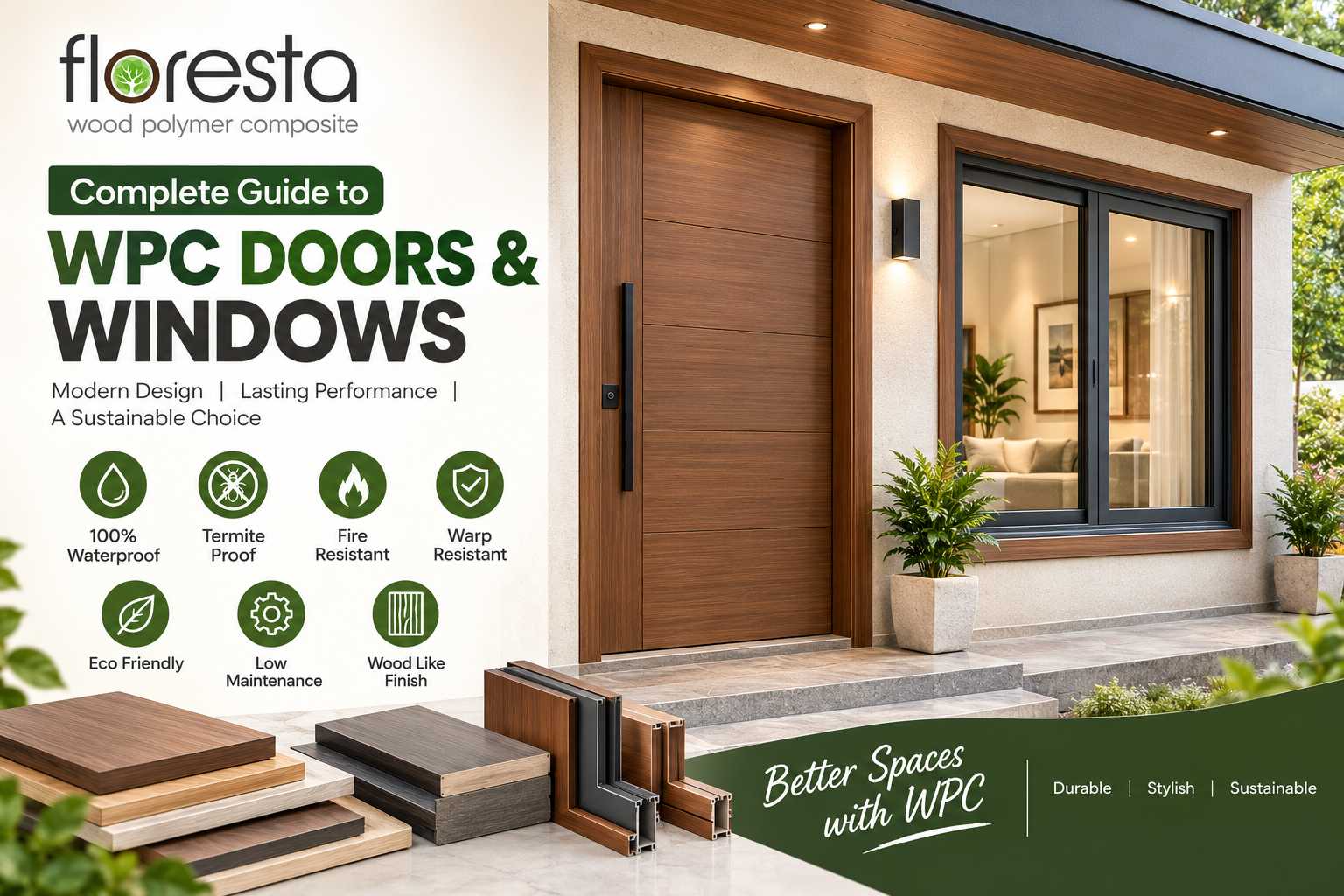
WPC door design is not limited to plain white shutters. Popular choices include:
Plain flush doors for a clean, modern look
Horizontal or vertical grooves
Wood-grain and textured laminates
Doors with a glass vision panel
Louvred doors for bathrooms and utility rooms
Ask Floresta for the latest catalogue and pick a WPC door design that matches the rest of your interiors.
WPC Door Price: What Affects the Cost
WPC door price depends on:
Thickness and density
Size (standard or custom)
Finish (laminate, membrane, paint)
Whether the frame is included
Design work such as grooves or glass
Order quantity (builders and dealers get bulk rates)
Compare the total cost over the years, not just the first bill. A cheap door that you replace twice costs more than a good WPC door bought once. For an exact price, share your door sizes and quantity and ask for a written quote.
Installation Tips
Install after tiling, plaster and painting are done, to protect the finish.
Check that the wall opening is plumb and square.
Fix the frame with screws, not just nails.
In bathrooms, seal the joint between the frame and the wall with silicone.
Use a trained carpenter or the manufacturer’s team.
Maintenance Tips
Wipe with a damp cloth and mild soap.
Avoid acid, thinner or harsh cleaners on the surface.
Tighten the hinge screws once a year.
No polishing or termite treatment is needed.
How to Spot the Best WPC Doors
The best WPC doors share a few signs: a solid, heavy core, clean edges, a written warranty, and a manufacturer who can show test reports. Avoid unbranded doors that come with no thickness or density details. Buying the best WPC doors directly from a manufacturer also makes after-sales service simple.
Why Choose Floresta WPC Doors
Floresta is a brand of TVL Engineers Pvt. Ltd., with its manufacturing plant in Pantnagar, Uttarakhand and its corporate office in Kirti Nagar, New Delhi.
European technology for consistent board quality
Termite and borer proof, waterproof and moisture proof
Fire retardant and eco-friendly
Nailable and screwable, so carpenters can work with it easily
Doors and frames from one manufacturer
Bulk supply for builders, contractors and dealers across India
Frequently Asked Questions
Are WPC doors fully waterproof?
Yes. WPC doors do not absorb water, so they don’t swell, rot or delaminate like wood or plywood. That makes them ideal for bathrooms, kitchens and balconies. For full protection in wet areas, use a WPC or PVC frame as well, and choose a laminate with sealed edges.
What thickness should a WPC main door be?
A main door should be thicker and denser than an internal door, because it carries heavier locks, faces the weather and gets more daily use. Before you buy, ask the manufacturer for the exact thickness in mm and the board density, and for their recommendation for your entrance.
Which is better for a bathroom, a WPC or PVC door?
Both are waterproof, but a WPC door is denser and stronger. PVC doors are usually hollow, light and cheaper, which suits low-use bathrooms. WPC feels like a wooden door, holds hinges and handles more firmly, and lasts longer under daily use, so it is the better long-term choice.
Are WPC doors termite-proof?
Yes. Termites and borers feed on natural wood, and WPC gives them nothing to eat. A WPC door and frame needs no yearly pest treatment, which is a big advantage in ground-floor homes and termite-prone regions. Make sure the frame is also WPC or PVC, not wood.
How long do WPC doors last?
With basic care, WPC doors last much longer than wooden or plywood doors in wet and humid areas, because they don’t rot, warp or attract termites. How long a door actually lasts depends on its thickness, finish and use. Check the manufacturer’s warranty for the guaranteed period.
Can WPC doors be laminated or painted?
Yes. WPC doors take laminates, membrane foils and paint well, and they can be grooved for design. For bathrooms, choose a waterproof laminate with sealed edges. For main doors facing the sun, ask for a UV-stable finish so the colour doesn’t fade quickly.
What is the WPC door price in India?
WPC door price depends on thickness, size, finish, design and whether the frame is included. Builders and dealers who order in bulk usually get better rates. For an accurate figure, share your door sizes and quantity with the manufacturer and ask for a written quote.
Conclusion
Choosing WPC doors comes down to a few checks: the right thickness, a solid core, a matching frame, a finish suited to the room, and a clear warranty. Get these right and you won’t have to deal with swollen bathroom doors, termite-eaten frames or yearly polishing again.
Whether you are fitting out one home or a full housing project, Floresta can help you choose the right WPC doors and frames for every room.
Get a free quote today:
Call / WhatsApp: +91 88007 71250
Email: info@floresta.in