
COMPLETE GUIDE TO WPC MODULAR KITCHEN
October 26, 2026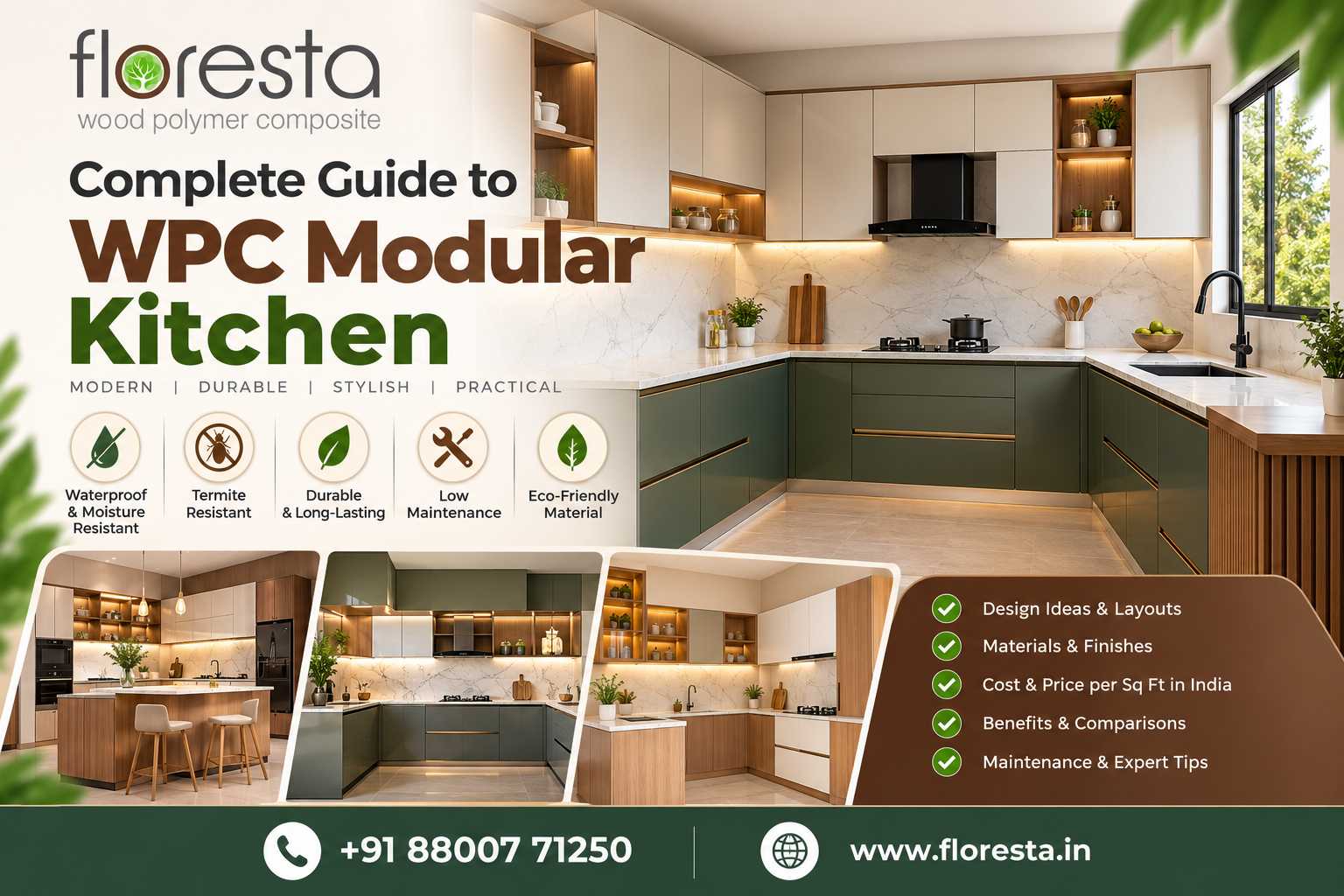
COMPLETE GUIDE TO WPC MODULAR KITCHEN
The kitchen is the hardest-working room in an Indian home. It deals with steam, oil, water splashes, heat and daily cleaning, often for decades. Cabinets made from ordinary plywood or MDF can swell near the sink, peel at the edges and attract termites. That is why more homeowners are choosing a WPC modular kitchen, which is built from a material designed to handle exactly these conditions.
This guide covers what WPC is, how it performs in a kitchen, layout and design options, plywood vs WPC, and how to plan, buy and maintain your kitchen.
What Is a WPC Modular Kitchen?
WPC stands for Wood Plastic Composite (also called wood polymer composite). It is made by combining wood fibre with thermoplastic polymers and additives, then forming the mix into boards. A modular kitchen is built from standard factory-made units, such as base cabinets, wall cabinets, tall units and drawers, that are fitted together on site.
A WPC modular kitchen uses WPC boards for the carcass, shelves and sometimes the shutters. The boards are then finished with laminates, veneers, acrylic, membrane foil or paint, so the outside looks like any premium kitchen while the core resists water and pests.
Why Kitchens Fail: The Case for Better Materials
A kitchen is one of the most demanding rooms for any material:
Moisture and steam: Cooking and washing keep humidity high all day.
Water near the sink: Leaks and splashes attack the bottom of base cabinets first.
Heat and grease: Hob and chimney zones see temperature swings and oily residue.
Termites and pests: Warm, damp cabinets are attractive to insects.
Heavy loads: Shelves hold crockery, appliances and groceries for years.
Boards that absorb water swell, delaminate and lose screw-holding strength. A kitchen that looks perfect at handover can start to fail within a few monsoons.
WPC Kitchen Benefits
Here are the main WPC kitchen benefits for Indian homes:
Waterproof kitchen performance: WPC resists water absorption, so cabinet bases near the sink do not swell or rot.
Termite resistance: The polymer content makes the material unattractive to termites and borers.
Dimensional stability: Boards stay flat and true, so shutters keep aligning and drawers keep sliding.
Good screw holding: Hinges, drawer channels and handles stay firmly fixed.
Low maintenance: No repeated polishing or pest treatment for the carcass.
Finish flexibility: It accepts laminates, acrylic, veneers and paints for the look you want.
Long-term value: The upfront cost may be higher than basic plywood, but fewer repairs and replacements help over the years.
Lower dependence on timber: It supports a more sustainable material choice.
WPC Kitchen Cabinets: What Goes Where
WPC kitchen cabinets can be used across the entire kitchen layout:
Base units: Hold the hob, sink and heavy utensils. These benefit most from WPC because of water and weight.
Wall units: Store crockery, spices and lighter items.
Tall units: House appliances such as the oven or microwave, plus pantry storage.
Loft units: Offer extra storage for seasonal and rarely used items.
Drawers and pull-outs: Take cutlery, pots, pans and organisers.
Corner units: Use carousel or magic corner fittings to make awkward space useful.
Breakfast counters and islands: Add seating and workspace in open layouts.
Make sure the carcass thickness suits the load. Base cabinets and tall units usually need thicker boards than wall units.
Modular Kitchen Design India: Popular Layouts
Good modular kitchen design in India starts with layout, since it decides how comfortably you can work. The classic principle is the kitchen work triangle, linking the hob, sink and refrigerator so movement between them is short and clear.
Straight (Single Wall) Kitchen
All units along one wall. Suits small flats and studio homes, and it is easy to install and clean.
L-Shaped Kitchen
Two adjoining walls form an L. It is one of the most popular kitchen layouts, with good use of corners and room for a small dining spot.
U-Shaped Kitchen
Three walls of cabinets give generous storage and counter space. It works well for larger kitchens and heavy cooks.
Parallel (Galley) Kitchen
Two facing runs of cabinets with a walkway in between. It is efficient for narrow rooms and keeps everything within easy reach.
Island or Peninsula Kitchen
A freestanding or attached counter adds prep space and seating. It needs enough floor space, generally a larger room with open planning.
Choose the layout based on room size, door and window positions, and how many people cook at once.
Kitchen Shutters: Finish Options
Shutters are the visible face of your kitchen, so the finish matters as much as the core. Common kitchen shutters over a WPC base include:
Laminate: Affordable, durable and available in many colours and textures.
Acrylic: Glossy, modern look with good colour depth.
Membrane (PVC foil): Smooth, seamless finish that suits handleless and profile designs.
Veneer with PU finish: Natural wood look with a premium feel.
Matte and textured finishes: Hide fingerprints and give a soft look.
Glass shutters: Good for wall units with lighting and display.
Pair the finish with the right edge banding and good-quality hardware, since edges and hinges are where moisture and wear often start.
Plywood vs WPC for Kitchens
The plywood vs WPCmodular kitchen question is one of the most common ones buyers ask.
Good marine or BWP plywood is also a strong choice for kitchens, so the real comparison is often WPC against high-grade plywood. WPC offers consistent water and termite resistance throughout the board, while plywood quality can vary by brand and glue grade. Ordinary commercial plywood is not recommended for wet kitchen areas.
Kitchen Storage Ideas
Smart kitchen storage makes a modular kitchen more useful every day. Consider:
Pull-out drawers for pots, pans and lids, which are easier to reach than deep shelves.
Tandem boxes for cutlery and utensils with soft-close action.
Corner carousels or magic corners to use dead corner space.
Tall pantry units with pull-out racks for groceries and masalas.
Bottle pull-outs and slim units for oils, sauces and spices.WPC modular kitchen
Basket and plate organisers for crockery.
Overhead lofts for appliances and seasonal items.
Appliance garages to hide the mixer, toaster and other small appliances.
Dustbin cabinets with built-in bin holders under the sink.
Match the storage to your cooking style and household size, not just to what looks good in a catalogue.
Waterproof Kitchen Tips
Even with a waterproof core, details decide how long a kitchen stays dry:
Seal the edges. Use quality edge banding and sealant on cut edges, especially near the sink.
Raise the base. Use a plinth or legs so cabinets do not sit directly on a wet floor.
Protect the sink area. Fix proper waterproofing behind and around the sink, and check for leaks.
Ventilate. A good chimney and window or exhaust fan reduce steam and grease.
Use a good backsplash. Tiles or glass behind the hob and sink protect the wall and the cabinets.
Wipe spills quickly. Standing water over time is hard on any material.
Kitchen Maintenance Tips
Good kitchen maintenance keeps WPC modular kitchens looking new:
Clean regularly with a soft cloth and mild soap or a suitable kitchen cleaner.
Avoid abrasive scrubbers and harsh chemicals that can scratch or dull the finish.
Dry the surfaces after cleaning, especially around the sink.
Check hinges and channels periodically, and tighten or lubricate if needed.
Fix leaks promptly. Even small drips under the sink should not be ignored.
Keep hot pans off the surfaces. Use trivets and heat pads.
Ventilate daily to reduce humidity inside cabinets.
Inspect once a year for loose handles, worn seals and edge damage.
How to Plan and Buy a WPC Modular Kitchen
Set a budget that includes cabinets, countertop, hardware, appliances and installation.
Measure the space accurately and note all windows, doors, pipes and electrical points.
Choose your layout based on room shape and workflow.
Decide the core material and finish. Confirm the board type, thickness and shutter finish in writing.
Pick quality hardware. Soft-close hinges and strong channels make a big difference to daily use.
Choose the countertop and backsplash to suit your cooking style and budget.
Plan lighting and electricals early, including under-cabinet lighting and socket positions.
Ask for samples and a 3D design before you approve the order.
Check warranty and after-sales service. Get the terms in writing.
Use experienced installers who can level units, seal edges and align shutters properly.
Common Mistakes to Avoid
Confusing WPC with PVC foam board. Check the composition and density, since the two perform differently.
Skimping on hardware. Cheap hinges and channels fail long before the board does.
Ignoring the work triangle. A beautiful layout that is awkward to use becomes a daily frustration.
Forgetting ventilation. Poor airflow shortens the life of any kitchen.
Underestimating storage. Plan for more space than you think you need.
Not sealing edges. Exposed edges are where moisture gets in first.
Final Thoughts
A WPC modular kitchen is built for the realities of Indian cooking: heat, steam, moisture and years of heavy use. With the right layout, good hardware, quality finishes and careful installation, it can stay stable, attractive and easy to maintain. Whether you compare it with plywood or other boards, the key is to choose based on the full picture of durability, cost and care, and not on looks alone.
If you are planning a new kitchen or a renovation, Floresta is a brand to consider. Floresta is a Delhi-based maker of wood polymer composite and PVC boards, doors and door frames, and it also offers WPC modular kitchen solutions designed to resist moisture and termites. Talk to your designer or contractor about Floresta for your kitchen, and ask to see samples, thickness options and warranty details before you finalise your plan. With Floresta, you can build a kitchen that combines good looks with long-lasting performance.
Top 5 SEO-Friendly FAQs for WPC Modular Kitchen
1. What is a WPC modular kitchen, and why is it popular in India?
A WPC modular kitchen is made using Wood Plastic Composite boards designed to resist moisture, termites, and everyday wear. WPC kitchen cabinets offer durability, low maintenance, and attractive finishes. They are a practical choice for Indian homes where kitchens regularly experience heat, humidity, steam, and water splashes.
2. Is a WPC modular kitchen better than plywood?
A WPC modular kitchen offers better moisture and termite resistance than ordinary commercial plywood. WPC boards are less likely to swell or warp in damp conditions. High-quality marine plywood also performs well, but WPC is an excellent option for homeowners seeking water-resistant kitchen cabinets with minimal maintenance.
3. What are the main benefits of WPC kitchen cabinets?
The main WPC kitchen benefits include high water resistance, termite resistance, dimensional stability, easy maintenance, and long-lasting performance. WPC kitchen cabinets also support various finishes, including laminate, acrylic, and veneer, making them suitable for modern modular kitchen designs in India.
4. Which WPC modular kitchen design is best for Indian homes?
The best WPC modular kitchen design depends on kitchen size, available space, and storage requirements. L-shaped kitchens are suitable for many Indian homes, while straight kitchens work well in compact apartments. U-shaped, parallel, and island kitchens provide additional storage and workspace for larger homes.
5. How do you maintain a WPC modular kitchen for long-lasting performance?
Maintaining a WPC modular kitchen is simple. Clean cabinets regularly using a soft cloth and mild soap, wipe away water spills, and avoid harsh chemicals. Check hinges, drawer channels, and edge seals periodically. Proper ventilation and timely plumbing repairs help keep WPC kitchen cabinets attractive and functional for years.