
WHAT IS WPC TYPES USES PROS AND CONS OF WOOD PLASTIC COMPOSITE
November 12, 2026
WHAT IS WPC TYPES USES PROS AND CONS OF WOOD PLASTIC COMPOSITE
What Is WPC? Types, Uses, Pros and Cons of Wood Plastic Composite
A kitchen cabinet that swells at the base after two monsoons. A bathroom door that peels near the floor. A wardrobe that sounds hollow because termites ate it from the inside. If you have built or renovated a home in India, you have seen at least one of these.
Builders, carpenters and interior designers now ask one question before they order board: what is WPC, and can it last longer than plywood? This guide answers that in plain language. You will learn what the material is made of, its main types and uses, honest WPC advantages and disadvantages, and how to buy the right board.
What Is WPC? A Simple Definition
WPC stands for Wood Plastic Composite. It is made by blending fine wood flour or fibre with a thermoplastic resin such as PVC, polyethylene (PE) or polypropylene (PP), plus additives. The mix is heated and extruded into boards, sheets, door frames and profiles.
The wood gives the board a natural feel and easy workability. The plastic coats each wood particle, so water and termites have very little to attack. Additives such as stabilisers, foaming agents, UV inhibitors and fire retardants fine-tune the final product.
So, what is WPC material in day-to-day terms? It is a board that cuts, drills and finishes much like wood, but behaves like plastic when it meets water.
How WPC Boards Are Made
Part of understanding what is WPC is knowing how it is produced:
Wood flour is dried to a low moisture level.
It is mixed with polymer resin and additives in fixed ratios.
The blend is melted and pushed through a die (extrusion) to form a board or profile.
The board is cooled, cut to size and surface-finished.
Floresta makes its boards using European technology at its own plant in Pantnagar, Uttarakhand.
Types of WPC
Ask a dealer what is WPC and you will hear about several kinds. The two easiest ways to sort WPC products are by polymer base and by form.
By polymer base
PVC-based WPC: The most common type for interior boards, door frames and furniture in India. PVC naturally resists flame better than PE or PP.
PE-based WPC: Mostly used for outdoor decking, fencing and garden furniture.
PP-based WPC: Stiffer, used in some outdoor profiles and industrial parts.
By product form
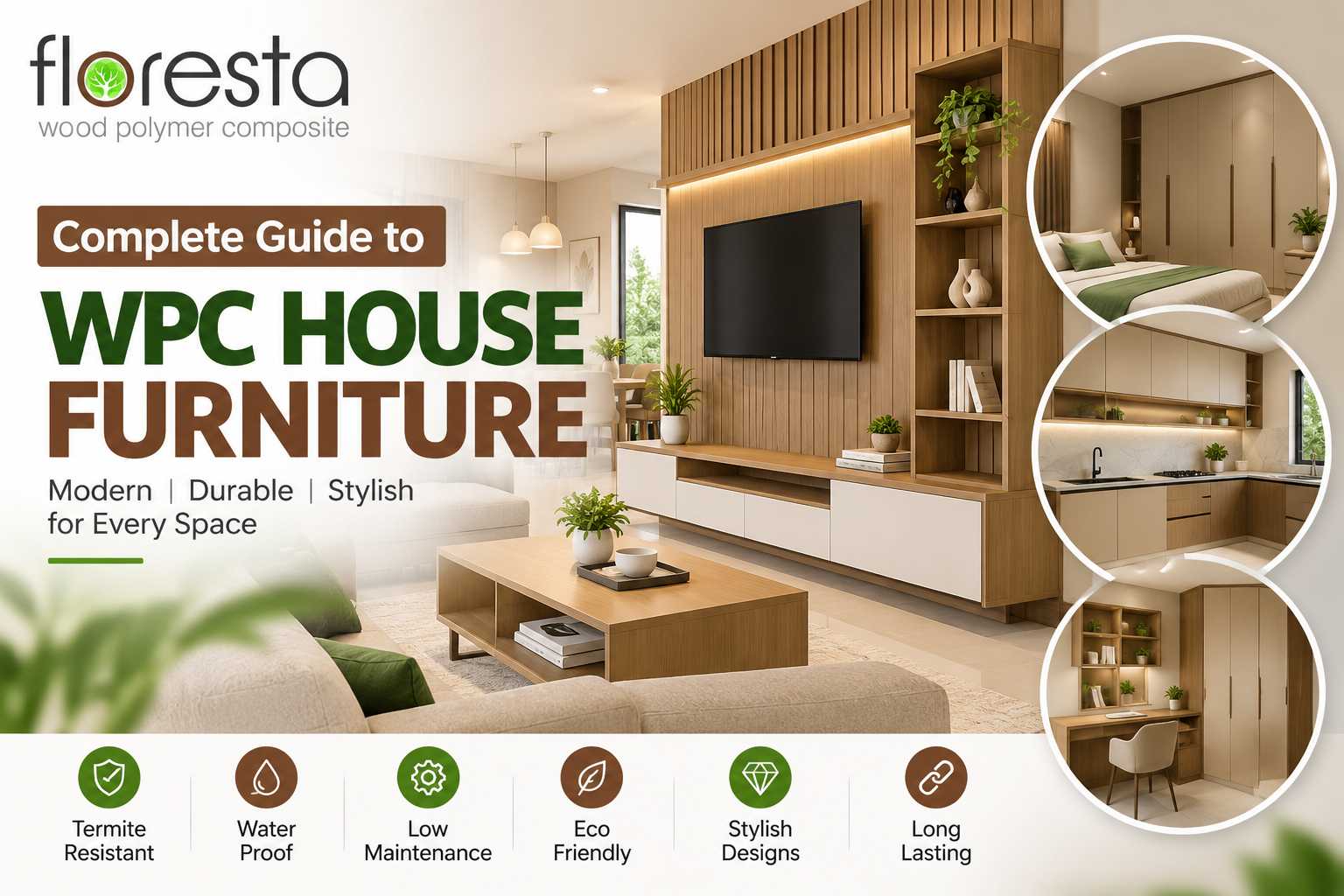
WPC boards and sheets: For kitchens, wardrobes, vanities, office furniture and wall panelling.
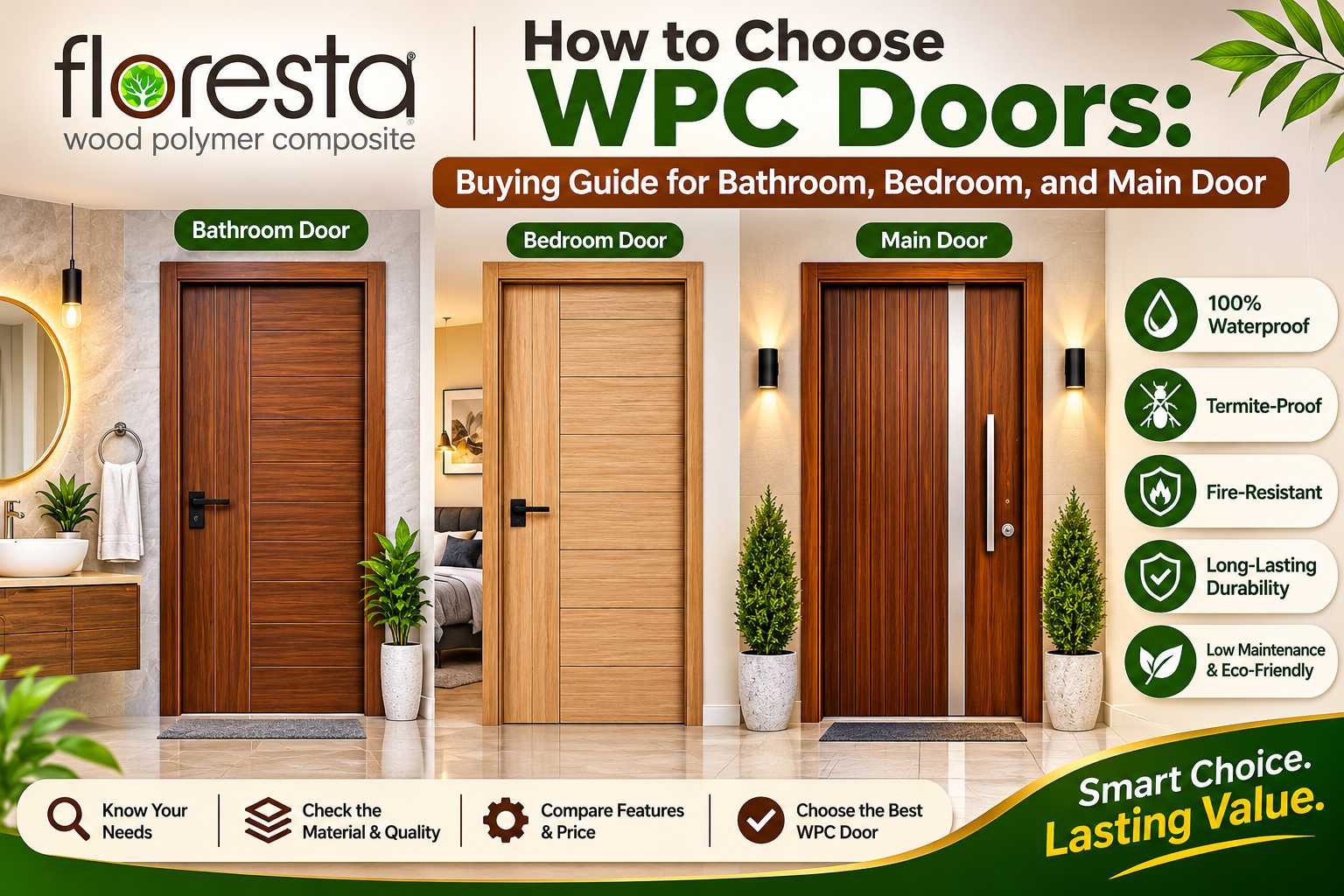
WPC door frames and doors: A popular replacement for wooden chaukhats in damp areas.
WPC profiles: Decking, cladding, louvres and skirting.
Foam (lighter) boards suit panels and shutters. High-density boards hold screws better and suit carcass and load-bearing parts.
WPC Properties and Specifications to Check
Knowing what is WPC is half the job. Before you compare brands, ask the supplier for these WPC properties on paper:
Want Floresta’s numbers? Download the Floresta WPC brochure or ask our team for the technical datasheet.
What WPC Material Uses Look Like in Real Projects
If you are wondering what is WPC good for, here is where it earns its price in Indian homes and buildings:
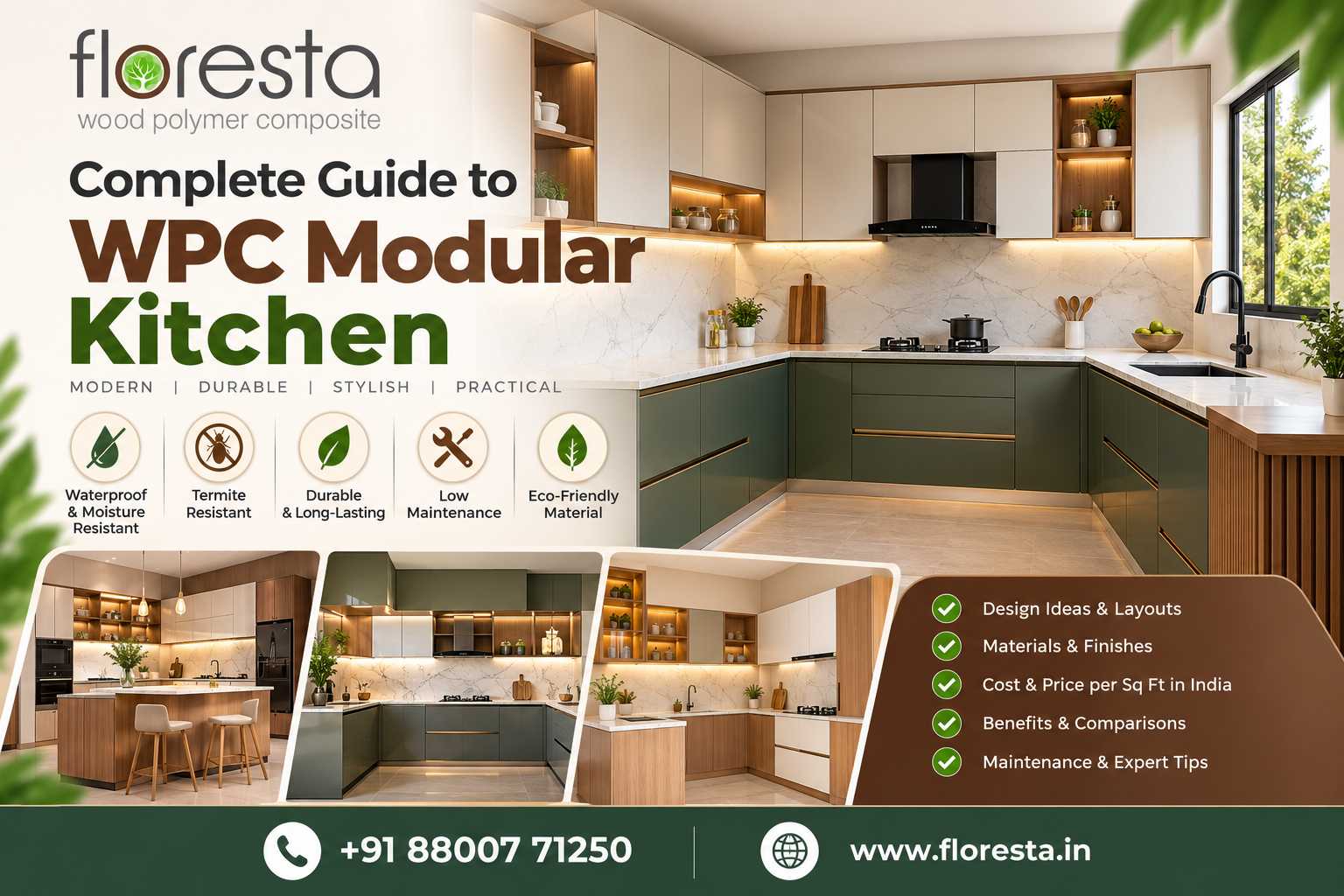
Modular kitchens: The sink base cabinet is where plywood fails first. A WPC carcass does not swell from leaks or daily mopping.
Bathrooms: Vanity units, shelves and bathroom doors stay stable despite steam and splashes.
Balconies and utility areas: Shoe racks, washing-machine units and storage cabinets. For direct sun, choose a UV-stabilised or laminated board.
Termite-prone and humid regions: Ground-floor wardrobes and coastal cities like Mumbai, Chennai, Kochi and Kolkata, where damp and termites are a constant problem.
Offices, schools and hospitals: Workstations, partitions and storage that are cleaned often.
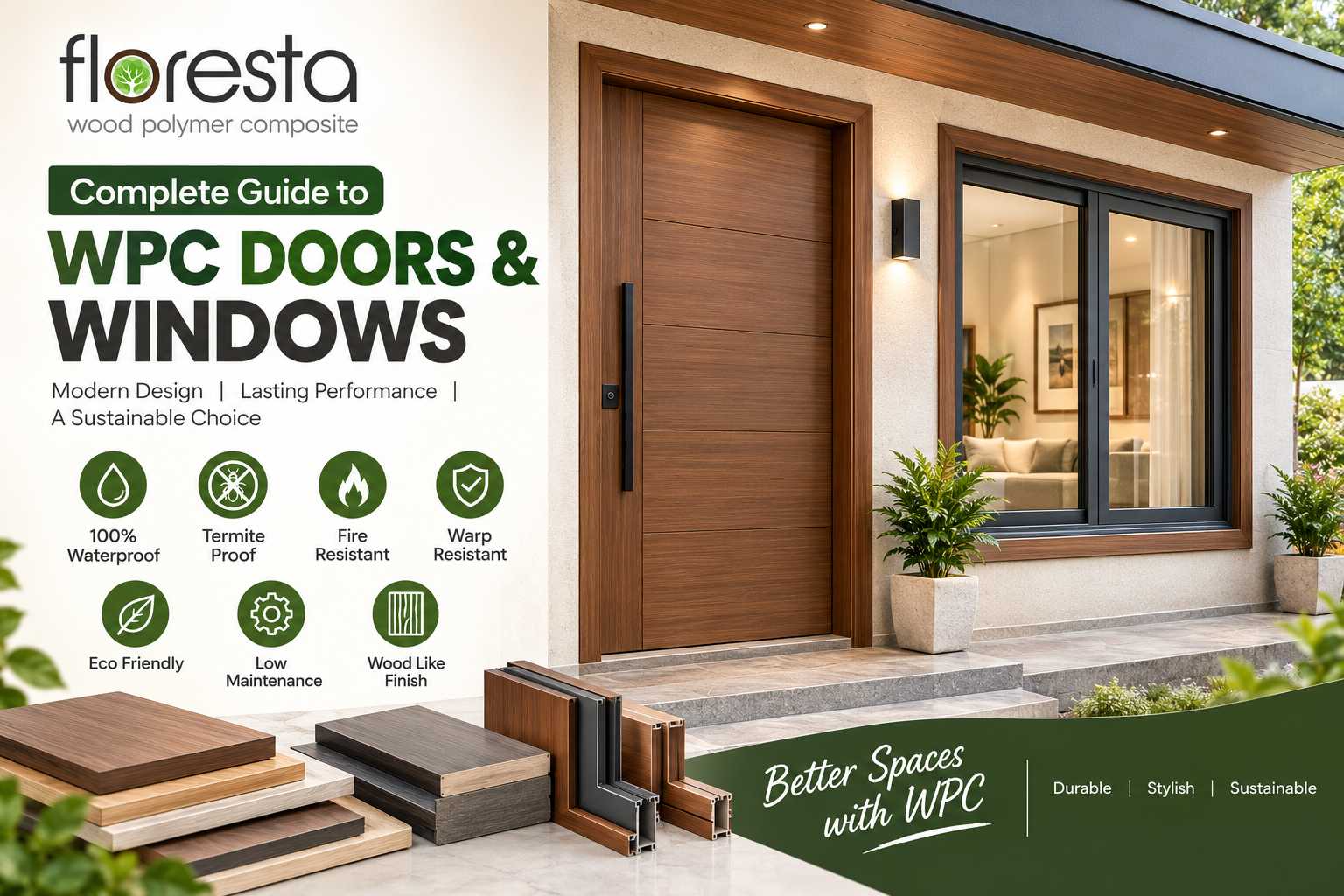
Doors, windows and frames: Frames that sit on wet floors and do not rot at the bottom.
Pre-fabricated structures: Site offices, cabins and quick-build rooms.
Once you know what WPC material uses suit your project, the next step is weighing the trade-offs. You can also browse more WPC applications from Floresta.
WPC Advantages and Disadvantages
No material is perfect. Here is a balanced look at WPC advantages and disadvantages, so you can decide with clear eyes.
Advantages of WPC
Waterproof and moisture proof: It does not swell, delaminate or rot when wet.
Termite and borer proof: The plastic-coated wood particles give pests nothing to feed on. Long-term research by the USDA Forest Products Laboratory has tracked how WPC holds up against moisture and fungal decay.
Fire retardant: Many grades are made to resist flame spread. Ask for the fire test report for the grade you buy.
No warping from moisture: Shutters stay straight through the monsoon.
Low maintenance: No yearly polishing or anti-termite treatment. A wipe keeps it clean.
Eco-friendly: It uses wood flour, reduces demand for fresh timber, and the core does not depend on the formaldehyde-based glues found in many plywood and MDF boards.
Nailable and screwable: Carpenters use their usual tools.
Uniform quality: No knots, voids or core gaps.
Disadvantages of WPC
Any honest answer to what is WPC must include its limits:
Higher upfront cost: It usually costs more than commercial plywood or MDF, though it saves on repairs later.
Weight: High-density grades can be heavier than plywood of the same thickness.
Sag over long spans: Wide shelves need extra support or a thicker board.
Edge screw holding: Screws close to the edge need pre-drilling and correct screw type.
Heat sensitivity: Hot vessels should not sit directly on an unlaminated surface.
Quality varies by brand: Cheap boards with low resin content may not deliver the same protection.
Most of these drawbacks are handled with the right grade and good carpentry practice.
WPC vs Wood vs Plywood: Comparison Table
The table below shows what is WPC like next to wood and plywood on the points that matter on site. For a deeper look, read why WPC is better than wood.
WPC vs plywood: Plywood is cheaper and lighter, but WPC wins wherever water, humidity or termites are a risk.
WPC vs PVC board: PVC foam board is lighter and fully waterproof, but softer, with weaker screw holding. WPC adds wood fibre for better strength and a more wood-like feel.
WPC vs MDF: MDF gives a smooth finish but swells quickly with water. WPC keeps the smooth surface and adds water resistance.
Installation and Maintenance Tips
Good fitting matters as much as knowing what is WPC. Follow these site tips.
Installation
Use sharp, carbide-tipped saw blades for clean edges.
Pre-drill holes near edges and use the screw type the manufacturer recommends.
Use an adhesive suitable for WPC or PVC when fixing laminates or veneers.
Finish exposed edges with edge banding for a neat look.
Leave small expansion gaps in large outdoor panels.
Add a middle support for long shelves.
Maintenance
Clean with a damp cloth and mild soap.
Avoid harsh solvents like acetone on the surface.
Wash outdoor panels every few months to remove dust.
Buying Guide: How to Choose the Right WPC Board
Once you know what is WPC material and where it fits, buying comes down to six checks:
Match density to use: High-density for carcasses, lighter boards for shutters and panels.
Check thickness tolerance: Uneven boards cause gaps in hinges and drawers.
Ask for test reports: Water absorption, fire and termite tests from a recognised lab.
Check the surface: Confirm it is lamination-ready or paintable as needed.
Do a sample test: Cut a piece, drive a screw near the edge and soak an offcut in water overnight.
Buy from the manufacturer or an authorised dealer: Ask about warranty and after-sales support.
Why Choose Floresta WPC Boards
When customers ask us what is WPC, we show them the board, the test and the plant behind it.
European technology: Floresta brought European WPC manufacturing technology to India. Learn more about Floresta.
Own manufacturing plant: Boards are made at Floresta’s plant in Pantnagar, Rudrapur, Uttarakhand, with the corporate office in Kirti Nagar, New Delhi.
Built for Indian conditions: Termite and borer proof, waterproof, moisture proof, fire retardant, eco-friendly, nailable and screwable.
Wide product range: WPC sheets and boards, modular kitchens, office furniture, bathroom furniture, doors and windows, and pre-fabricated houses.
Open to trade partners: We welcome enquiries from builders, contractors, dealers and distributors.
Frequently Asked Questions
What is WPC full form and what is it made of?
WPC stands for Wood Plastic Composite. It is made by mixing fine wood flour or fibre with a thermoplastic resin such as PVC, PE or PP, along with stabilisers and other additives. The blend is extruded into boards, sheets, door frames and profiles that look like wood but resist water and termites.
Is WPC better than plywood?
WPC is better than plywood in wet and termite-prone areas such as kitchens, bathrooms and ground-floor wardrobes. It does not swell, rot or need anti-termite treatment. Plywood costs less upfront and is lighter, so it can still suit dry rooms. For long-term durability with low maintenance, WPC is usually the smarter choice.
Is WPC board waterproof and termite-proof?
Yes. In a WPC board, each wood particle is coated with plastic, so water cannot soak in and termites or borers have nothing to feed on. This makes it suitable for sink cabinets, bathroom vanities and doors. Always check the manufacturer’s water absorption and termite test reports before buying.
What are the disadvantages of WPC?
The main disadvantages are a higher upfront cost than commercial plywood, extra weight in high-density grades, sagging on long unsupported shelves and weaker screw holding near edges. Hot vessels can also mark an unlaminated surface. Choosing the right grade, adding shelf support and pre-drilling near edges solves most of these issues.
Can WPC board be used for modular kitchens?
Yes, WPC is one of the best materials for modular kitchens, especially for the sink base cabinet where leaks and mopping damage plywood. It can be laminated like any board and holds hinges and channels when the right screws are used. Use high-density boards for carcasses and lighter boards for shutters.
Is WPC eco-friendly?
WPC is considered an eco-friendly building material because it uses wood flour, often from wood waste, and reduces the need to cut fresh timber. Its core does not depend on the formaldehyde-based glues common in plywood and MDF. A longer service life also means fewer replacements and less material going to landfill.
What is WPC material used for?
WPC material is used for modular kitchen cabinets, wardrobes, bathroom vanities, doors and door frames, office workstations, partitions, wall panelling and pre-fabricated cabins. It suits any spot exposed to water, humidity or termites. Outdoor uses such as decking and cladding need UV-stabilised or laminated grades for lasting colour.
Conclusion: What Is WPC and Is It Right for You?
So, what is WPC? It is a wood plastic composite that looks and works like wood but resists water, termites and warping far better. It costs more at the start, but it saves money on repairs and replacement, especially in kitchens, bathrooms, balconies and humid or termite-prone areas.
If you are planning a project or want to stock WPC boards as a dealer, talk to the Floresta team for samples, specifications and a quote.
Call: +91 88007 71250