

TERMITE PROOF DOOR FRAMES WPC VS TEAK VS SAL WOOD
October 23, 2026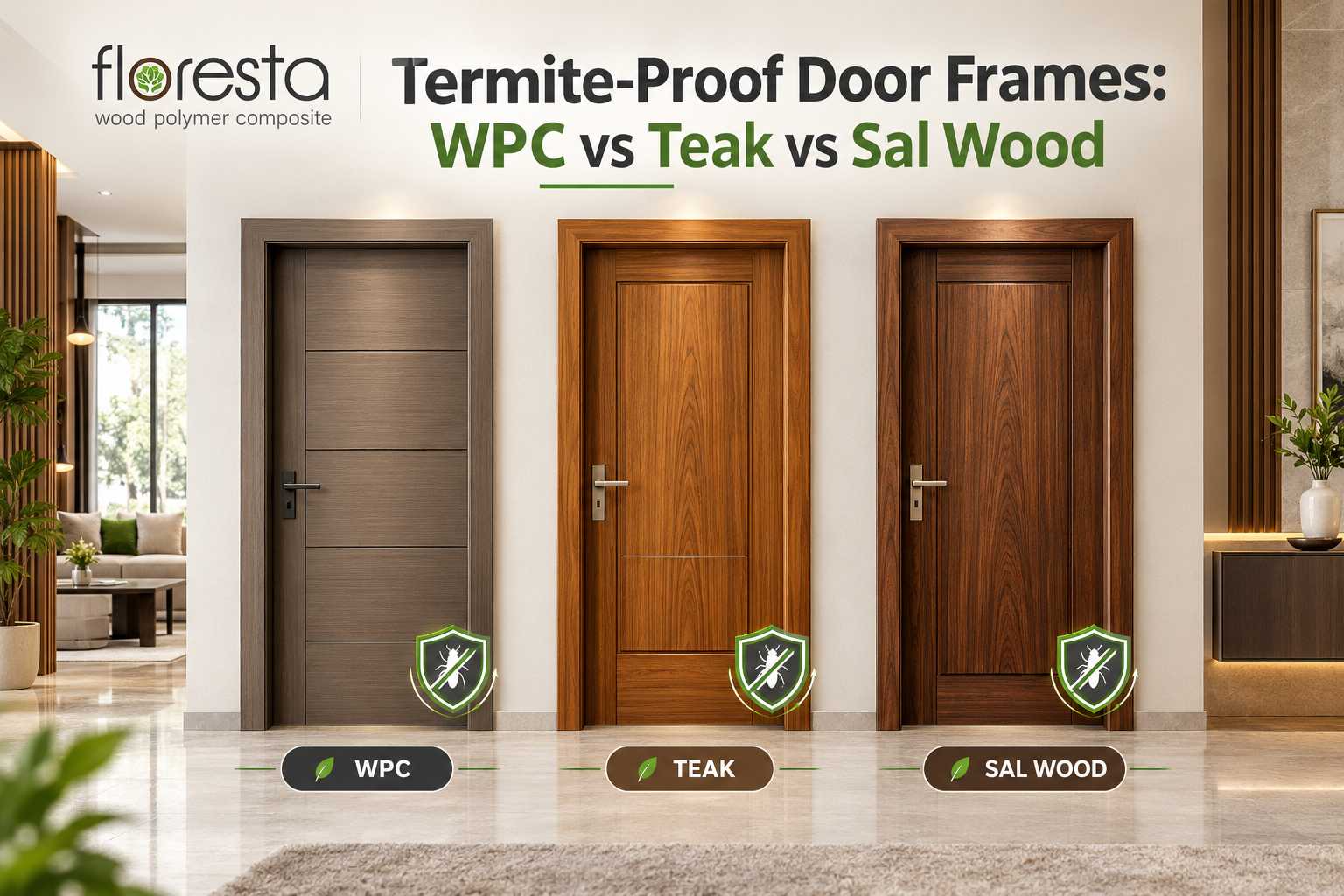
TERMITE PROOF DOOR FRAMES WPC VS TEAK VS SAL WOOD
A door frame is one of the few parts of a house you install once and expect to forget. But in Indian conditions, that expectation is often broken. Termites tunnel through wooden frames from the inside, borers leave fine dust and weak spots, and monsoon humidity makes timber swell and warp. By the time the damage is visible, the frame may need full replacement, along with the plaster and paint around it.
Choosing the right material at the start avoids this. This guide compares WPC, teak and sal wood, three of the most common options, so you can pick a termite-proof door frame that suits your home and budget.
Why Door Frames Fail in Indian Homes
Door frames sit in a tough spot. They touch the wall, the floor and the outside air, so they are exposed to several problems at once:
Termites: Subterranean termites travel through soil and masonry and attack wood at the base of frames.
Wood borers: Beetle larvae bore into timber, especially sapwood, leaving it hollow.
Moisture: Damp walls, leaking pipes and monsoon humidity cause swelling, warping and fungal rot.
Heat cycles: Seasonal changes cause timber to expand and contract, loosening joints.
Poor treatment: Untreated or badly seasoned wood fails early, whatever the species.
A good material choice, combined with correct installation, tackles most of these.
What Makes a Termite-Resistant Material?
A termite-resistant material either contains natural compounds that termites avoid or has no cellulose food source at all. For door frames, there are three routes:
Naturally durable heartwood, such as teak, which contains oils and extractives that deter pests.
Treated timber, where preservatives are pressure-impregnated or applied to the wood.
Engineered composites, such as WPC, where wood fibre is bonded with polymers, so the material resists attack and moisture.
Each route has strengths and trade-offs, which we look at below.
WPC Door Frames
WPC (Wood Plastic Composite) door frames are made by combining wood fibre with thermoplastic polymers and additives, then forming them into solid profiles. They are designed to look and handle somewhat like timber without behaving like it.
Advantages of WPC
Termite resistance: The polymer content makes the material unappealing to termites and borers, which is why WPC is widely promoted as termite-proof.
Moisture resistance: It does not absorb water the way wood does, so it resists swelling, warping and rot.
Low maintenance: No polishing, no pest treatment, and no repainting to protect the material.
Consistency: Frames are made to uniform dimensions without knots, cracks or grain defects.
Easy to work with: WPC can be cut, drilled and screwed, and it takes paint, laminates and veneers.
Eco-friendly angle: It reduces the demand for natural timber from forests.
Limitations of WPC
It may not match the premium feel of solid hardwood for some buyers.
Quality varies by manufacturer, so cheap boards labelled WPC may be PVC foam with weak strength.
Very heavy doors need proper frame sizing and fixing.
It still needs correct installation at the wall and floor junction.
Teak Wood Door Frames
Teak is the traditional benchmark for quality door frames in India. Its heartwood contains natural oils that give it excellent resistance to termites, fungus and moisture, and it keeps its dimensional stability better than most timbers.
Advantages of Teak
Natural durability: Mature heartwood resists termites, rot and weather well.
Beauty: Rich grain and colour that improve with age and polishing.
Stability: Low shrinkage and warping once properly seasoned.
Strength and longevity: Teak frames can last for decades.
Resale appeal: Solid teak is seen as a premium feature.
Limitations of Teak
High cost: Quality teak is expensive, and prices have risen over the years.
Quality varies: Sapwood, young plantation teak and poorly seasoned timber are less durable than old-growth heartwood.
Maintenance: It still benefits from polishing or sealing, especially outdoors.
Sourcing concerns: Genuine, legally sourced teak can be hard to verify, and substitutes are sometimes sold as teak.
Not immune: Teak is resistant, not invincible, so poor installation and damp can still cause problems.
Sal Wood Door Frames
Sal is a dense, strong hardwood that has long been used for door frames, beams and heavy-duty joinery in northern and eastern India. It is generally cheaper than teak and is valued for its strength.
Advantages of Sal
Strength and hardness: Sal holds screws and hinges firmly and carries heavy doors well.
Good durability: Seasoned heartwood is reasonably durable.
Lower cost than teak: A solid hardwood option at a more moderate price.
Wide availability: Common in many regional markets.
Limitations of Sal
Termite resistance is moderate: It generally needs chemical treatment or preservative protection for long-term safety, especially in humid or termite-prone areas.
Prone to cracking and warping: Poorly seasoned sal can twist and split.
Heavy and hard to work: It is dense, so cutting and fixing take more effort.
Quality varies: Sapwood and unseasoned logs perform poorly.
WPC vs Teak Wood Door Frame
The WPC vs teak wood door frame question is really about value versus tradition.
Termite protection: WPC offers consistent resistance throughout the material, while teak depends on using genuine, well-seasoned heartwood.
Moisture behaviour: WPC does not swell or rot from damp, while teak resists moisture well but still reacts to long-term dampness and humidity swings.
Cost: WPC is usually cheaper than good teak, often by a wide margin.
Look and feel: Teak has a natural grain and a premium character that composites may not fully match.
Maintenance: WPC needs little care, while teak looks best with periodic polishing.
Sustainability: WPC avoids felling mature trees, while teak depends on responsible sourcing.
WPC vs Sal Wood
The WPC vs sal wood comparison is more straightforward for most buyers.
Termite protection: WPC wins, since sal usually needs added preservative treatment.
Strength: Sal is very strong and stiff, though a properly sized WPC frame is enough for most residential doors.
Stability: WPC does not warp or crack with humidity, while sal may if not seasoned correctly.
Cost: Sal can be cheaper upfront, but treatment and repairs add to the lifetime cost.
Maintenance: WPC needs less attention.
Comparison Table: WPC vs Teak vs Sal Wood
Door Frame Lifespan and Maintenance
The door frame lifespan depends on the material, installation and environment, not on the label alone.
WPC: With proper fitting, a good-quality WPC frame can last for decades without pest treatment.
Teak: Genuine heartwood frames can also last for decades, but need periodic care.
Sal: Treated, well-seasoned sal can last a long time, while untreated sal in damp areas may not.
Basic door frame maintenance helps any material last longer:
Keep the base dry. Fix leaking pipes and avoid water collecting at the floor level.
Seal gaps. Close cracks between the frame and wall to block termite entry.
Inspect regularly. Look for mud tubes, fine dust, hollow sounds and soft spots.
Polish or seal natural wood. This protects the surface from moisture and sunlight.
Clean gently. Use a damp cloth, and avoid harsh chemicals on composite and polished surfaces.
Act early. Treat termite activity as soon as you notice it.
Best Wood for Door Frame: How to Choose
There is no single best wood for door frames that fits every home. Here is a simple way to decide:
Choose WPC if your priority is termite and moisture protection, low maintenance and good value, especially in humid, coastal or termite-prone areas.
Choose teak if you want a premium, natural wooden look, have the budget, and can source genuine, seasoned heartwood.
Choose sal if you want a strong solid hardwood at a moderate price and are willing to invest in proper treatment and seasoning.
For bathrooms, balconies, ground-floor entrances and basements, the moisture and termite resistance of WPC gives it a clear practical advantage.
Tips for a Long-Lasting Door Frame
Use a damp-proof barrier where the frame meets the floor or wall.
Pre-treat the wall base with anti-termite treatment during construction.
Check the product’s quality. Ask for density, composition and test details, whatever the material.
Choose the correct size. The frame should suit the door’s weight and wall thickness.
Install carefully. A well-fitted frame resists stress and gaps.
Buy from reputable suppliers who offer a warranty and clear specifications.
Final Thoughts
Termites, borers and moisture are persistent threats to Indian door frames, and the material you choose largely decides how well your frames hold up. Teak offers beauty and natural durability at a premium, sal offers strength at a moderate price but usually needs treatment, and WPC offers consistent termite and moisture resistance with minimal upkeep. For many homes, especially in humid or termite-prone areas, WPC delivers the best balance of protection, convenience and value for a long-lasting door frame.
If you are planning new doors or replacing damaged frames, Floresta is a brand to consider. Floresta is a Delhi-based maker of wood polymer composite and PVC boards, doors and door frames, designed to resist moisture and termites. Talk to your builder or carpenter about Floresta door frames for your project, and ask for samples, specifications and warranty details before you decide. With Floresta, you can choose a door frame built for Indian conditions and long-term peace of mind.
Top 5 FAQs: Termite-Proof Door Frames — WPC vs Teak vs Sal Wood
1. Which door frame is best for termite protection: WPC, teak or sal wood?
WPC door frames offer high termite resistance because their polymer content makes them less susceptible to termite attacks. Teak heartwood also has natural resistance, while sal wood generally benefits from proper chemical treatment in termite-prone areas.
2. Are WPC door frames completely termite-proof?
Good-quality WPC door frames are designed to resist termites and wood borers. However, product composition and manufacturing quality vary, so check the manufacturer's specifications before buying.
3. Is a WPC door frame better than a teak wood door frame?
WPC is a practical choice for homeowners seeking termite and moisture resistance with minimal maintenance. Teak is ideal for those who prefer natural wood grain and a premium appearance but are comfortable with a higher upfront cost and periodic maintenance.
4. How long does a WPC door frame last?
A good-quality WPC door frame can last for decades when properly manufactured, sized and installed. Its actual lifespan depends on product quality, installation methods and usage conditions.
5. Which door frame is best for Indian homes in humid or termite-prone areas?
WPC door frames are a strong practical option because they resist termites and moisture and require little maintenance. Floresta manufactures WPC doors and door frames designed for Indian conditions. Check the product specifications and warranty details to select the right frame for your home.



 Price per Sq Ft & Design Ideas 1.png)
