
WPC LOUVERS FOR MODERN HOMES DESIGN PRICE BEST BRANDS
July 17, 2026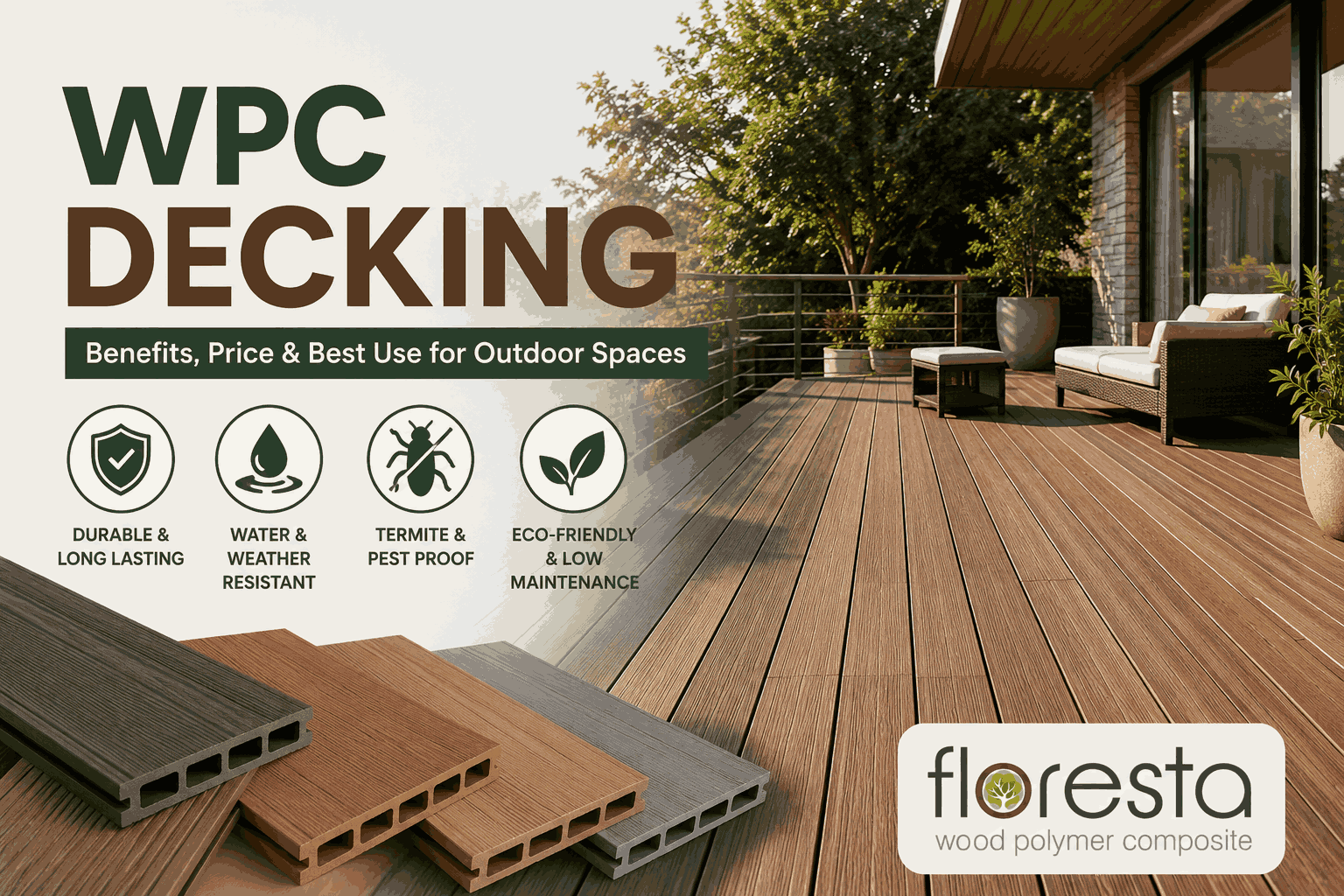
WPC LOUVERS FOR MODERN HOMES DESIGN PRICE BEST BRANDS
Outdoor spaces have become an extension of the home in recent years. Terraces, gardens, poolsides, and balconies are no longer just leftover areas, they are designed, styled, and used almost as much as indoor rooms. That shift has brought a lot of attention to flooring choices, and one material that keeps coming up in conversations is WPC decking.
At Floresta, we get frequent queries from architects, contractors, and homeowners asking about wpc decking price, how it holds up against Indian weather, and which wpc decking manufacturers in India actually deliver quality that lasts. This guide walks through everything you need to know before choosing decking material for your next outdoor project.
What Is WPC Decking
WPC decking is made from a blend of wood fibre and plastic polymers, pressed together under heat to form dense, weather resistant boards. The wood component gives it a natural texture and appearance, while the plastic component provides strength and protection against moisture, sunlight, and general wear.
This combination makes wood plastic composite decking fundamentally different from solid timber decking. Traditional wood decks look beautiful when new, but they demand constant care, sanding, sealing, and staining to survive outdoor conditions. WPC decking was developed specifically to remove that burden while keeping the aesthetic appeal that wood offers.
Why Outdoor Spaces Need a Different Kind of Material
Outdoor flooring faces challenges that indoor flooring never has to deal with. Sun exposure, rain, humidity, dust, and constant temperature changes all take a toll on materials over time. Regular wood tends to crack, fade, or rot under these conditions, especially in coastal or high humidity regions common across India.
This is exactly where outdoor wpc decking proves its worth. Because it does not absorb water the way natural wood does, it resists swelling and rotting even during heavy monsoon seasons. It also holds up well against UV exposure when treated properly, meaning your deck will not fade or become brittle after a few summers.
Another factor worth mentioning is safety. Many WPC decking boards come with textured or grooved surfaces, offering anti slip decking properties that matter a great deal around pool areas or wet patios where slipping is a genuine concern.
Comparing Composite Decking vs Wood
The composite decking vs wood debate usually comes down to three things, maintenance, lifespan, and long term cost.
Natural wood requires yearly maintenance in most climates. Sanding, sealing, and repainting are almost unavoidable if you want the deck to last and look presentable. Skip this maintenance even once, and the wood begins to show signs of damage quickly.
WPC decking, on the other hand, needs very little upkeep. Occasional cleaning with water and mild soap is usually enough to keep it looking fresh. There is no need for sealing or staining, which saves both time and recurring expense.
In terms of lifespan, a well installed WPC deck can easily outlast a comparable wood deck by several years, particularly in outdoor conditions where moisture and pests are a constant threat. Termites, which are a serious concern for wooden decks in many parts of India, are far less of an issue with composite material.
Understanding WPC Decking Price in India
The wpc decking price varies based on board thickness, texture, colour, and brand reputation. Generally speaking, WPC decking sits in a mid range price bracket, higher than basic wood alternatives but considerably more economical over its lifetime once you factor in maintenance savings.
Several elements influence the final quote you receive from wpc decking manufacturers. Board profile, whether solid or hollow, affects both price and weight. Surface finish, such as embossed wood grain versus smooth textures, also plays a role. Installation method and the framework required underneath the boards add to the overall project cost as well.
When comparing quotes, ask manufacturers whether the price includes fixing clips, substructure materials, and installation labour, since these can significantly change the final number if quoted separately.
Choosing the Right WPC Decking Manufacturers in India
Not every composite decking product on the market is made to the same standard, which is why choosing the right manufacturer matters as much as choosing the right material.
Look for manufacturers who are transparent about the wood to plastic ratio used in their boards, since this ratio directly affects durability and weather resistance. Ask about UV stabilisation treatments, especially if the deck will be exposed to direct sunlight for most of the day.
It also helps to check whether the manufacturer offers samples or references from previous outdoor flooring solutions they have delivered. A reliable brand should be able to show real installations, not just product photos.
At Floresta, our decking boards are engineered specifically with Indian weather patterns in mind, factoring in monsoon humidity, coastal salinity, and prolonged summer heat, so that the material performs consistently across regions rather than only in controlled conditions.
Best Uses for WPC Decking
WPC decking works beautifully across a wide range of outdoor and semi outdoor applications. Garden pathways and patios benefit from its weatherproof decking qualities, holding up season after season without warping.
Poolside areas are another popular application, largely because of the anti slip surface texture combined with water resistance. Rooftop terraces and balconies also do well with WPC, particularly in urban homes where terrace flooring ideas often centre around low maintenance materials that still look elegant.
Even commercial spaces such as cafes, resorts, and rooftop restaurants are increasingly turning to WPC decking for its combination of visual appeal and practical durability under heavy footfall.
Final Thoughts
If you are planning an outdoor space and want something that looks good without demanding constant attention, WPC decking is worth serious consideration. It bridges the gap between the natural warmth of wood and the practical durability needed for Indian outdoor conditions.
At Floresta, we work closely with homeowners, architects, and contractors to help them choose decking solutions suited to their specific climate and usage needs. Understanding the price factors, material quality, and manufacturer credibility outlined above should put you in a strong position to make a confident, informed decision for your next outdoor project.
Frequently Asked Questions
Is WPC decking suitable for direct sunlight areas?
Yes, provided the boards are UV stabilised. This treatment helps prevent fading and brittleness from prolonged sun exposure.
How long does WPC decking typically last?
With proper installation, WPC decking can last well over fifteen years, often outperforming traditional wood decks in outdoor conditions.
Does WPC decking get slippery when wet?
Most quality boards come with textured or grooved surfaces designed to reduce slipping, making them safer for poolside and patio use.
Is WPC decking more expensive than wood?
The upfront cost can be slightly higher in some cases, but lower maintenance needs make it more economical over the long run.
Can WPC decking be installed on existing concrete surfaces?
Yes, WPC decking can be installed over concrete using a proper substructure or framework to ensure stability and drainage.