

WPC WALL PANEL PRICE IN INDIA TYPES USES INSTALLATION GUIDE
July 15, 2026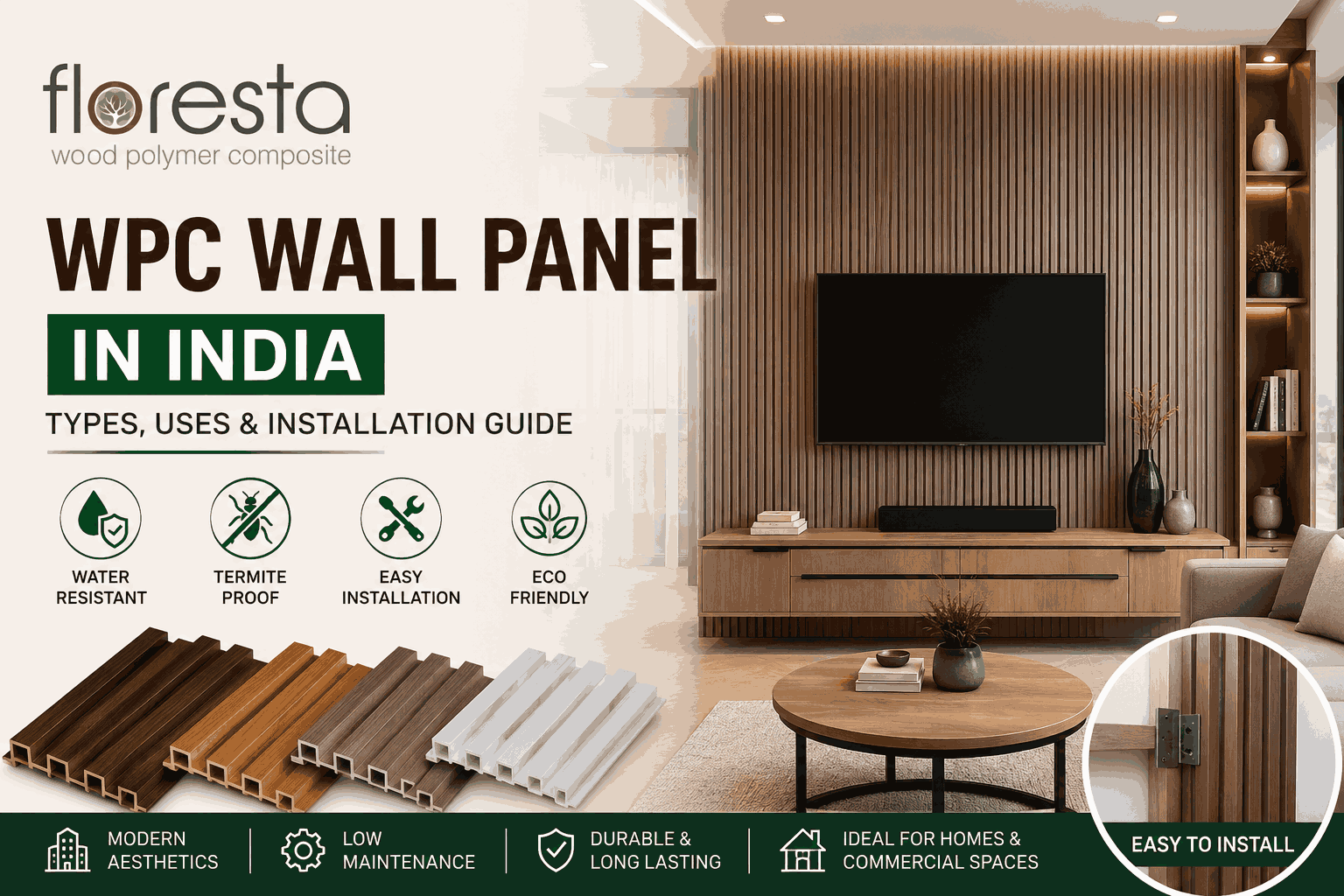
WPC WALL PANEL PRICE IN INDIA TYPES USES INSTALLATION GUIDE
WPC Wall Panels: Price, Types & Installation Guide
If you have been renovating your home or planning a fresh interior project, chances are you have already come across the term WPC wall panel. Homeowners, interior designers, and contractors across India are steadily moving away from traditional plywood and gypsum in favour of this modern wall covering solution. But before you make a decision, it helps to understand what these panels actually are, how much they cost, and why they might be the right choice for your space.
At Floresta, we work with wood plastic composite materials every day, and we often get asked the same set of questions. What is the wpc wall panel price in India? How does it compare to plywood? Is it actually worth the investment? This guide answers all of that in simple, practical terms.
What Exactly Is a WPC Wall Panel
WPC stands for wood-plastic composite. In simple words, it is a building material made by combining wood fibre or wood flour with plastic polymers and a few bonding agents. The result is a panel that looks like natural wood but behaves very differently when exposed to moisture, humidity, and daily wear.
Unlike plywood, which is essentially layers of natural wood glued together, a wood plastic composite panel is engineered to resist water absorption. This single difference is what makes it such a strong alternative for plywood wall applications, especially in Indian homes where humidity and seasonal dampness are common problems.
Why People Are Choosing WPC Panels Over Plywood
Plywood has been the go-to material for interior walls, false ceilings, and furniture for decades. So why is that changing now?
The honest answer is durability. Plywood, even the marine-grade variety, tends to swell, warp, or develop fungus when it comes into regular contact with moisture. Kitchens, bathrooms, balconies, and coastal homes are particularly prone to this issue. WPC panels solve this problem almost entirely because the plastic component in the composite does not absorb water the way wood does.
Termites are another major concern in Indian households. A termite-proof wall panel is not just a nice feature; it is often a necessity in certain regions. Since WPC panels do not contain the organic matter that termites feed on in the same way solid wood does, they offer far better long-term protection.
There is also the matter of appearance and maintenance. WPC panels come in a wide range of textures and finishes, including wood grain designs that closely mimic teak, walnut, or oak. Cleaning them is straightforward, usually requiring nothing more than a damp cloth, which makes them practical for busy households.
Types of WPC Wall Panels Available Today
Not all WPC panels are made the same way, and understanding the types available will help you choose the right one for your project.
Solid WPC panels are dense, heavier boards that offer maximum strength and are typically used in areas with higher footfall or where structural support matters, such as around doorways or in commercial spaces.
Hollow or fluted WPC panels are lighter and more affordable. These are commonly used for wall cladding and false ceilings where weight distribution and cost efficiency matter more than raw strength.
Louvre-style WPC panels have become extremely popular in modern interior design. These panels have vertical slats built into the design, adding depth and a contemporary look to living rooms, office reception areas, and TV unit backdrops.
There are also fluted 3D WPC panels, which create a textured, sculptural effect on walls. Designers often use these as a statement wall in bedrooms and living spaces.
Understanding WPC Wall Panel Price in India
Pricing is usually the first question on everyone's mind, and rightly so. The wpc panel price in the Indian market varies depending on several factors, including panel thickness, design complexity, brand quality, and the finish you choose.
As a general guide, the wpc board price per sq ft in India typically falls in a moderate to mid-range bracket, positioning it as more affordable than solid wood paneling but slightly higher priced than basic plywood or standard PVC wall panel cost options. The exact figure depends on whether you are choosing a plain finish or a textured, wood-grain, or louvre design, since intricate designs naturally cost more due to the manufacturing process involved.
It is worth noting that while the upfront WPC wall panel price might be marginally higher than that of cheap plywood alternatives, the long-term value is significantly better. You save on replacement costs, repainting, pest control treatments, and repair work that plywood often demands over time.
When comparing quotes, always ask suppliers for the price per square foot along with installation charges, since some vendors bundle these together while others quote them separately. This transparency helps you compare offers accurately across different brands.
Where WPC Panels Work Best
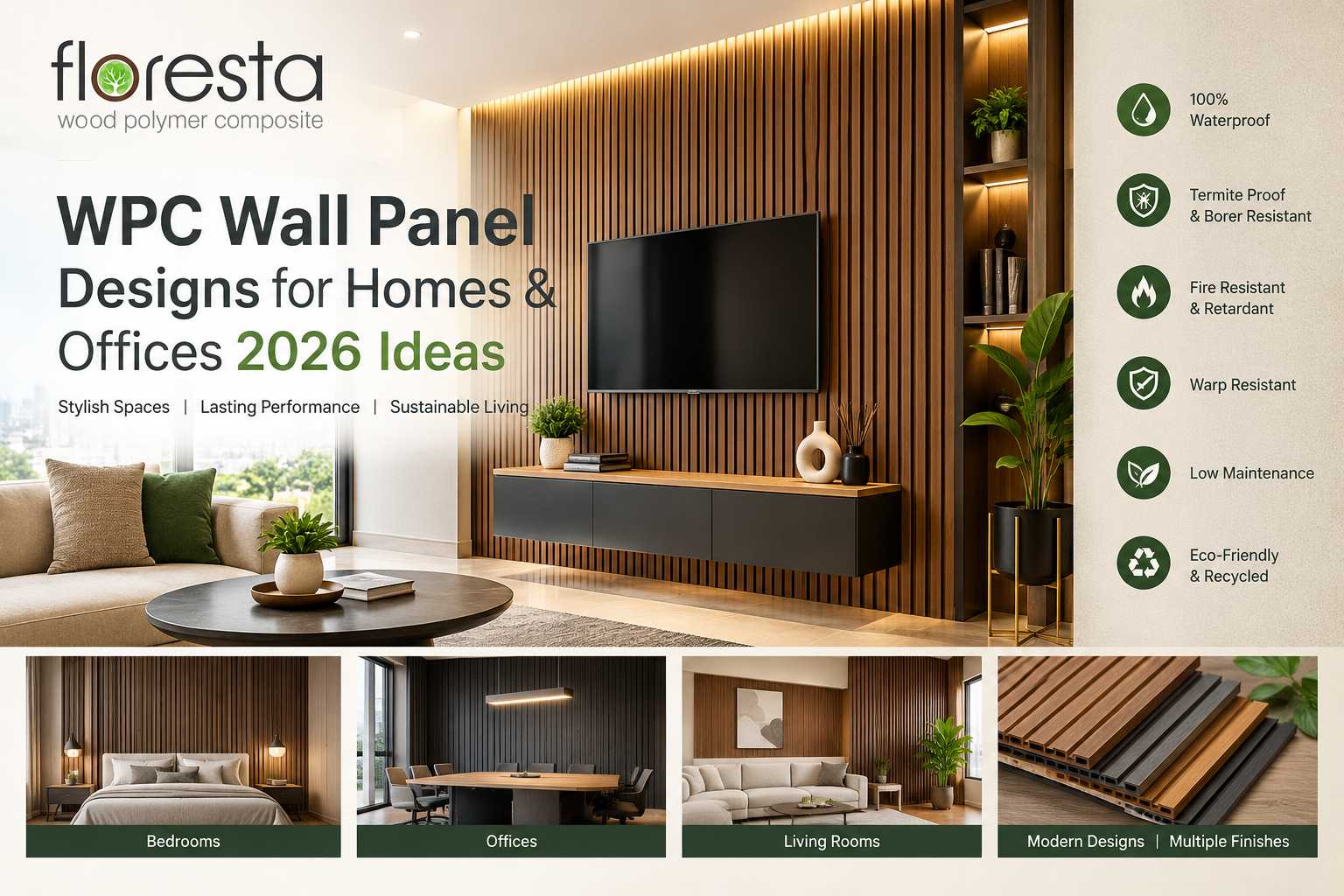
WPC wall panels are versatile enough to be used across nearly every part of a home or office. They work particularly well for interior wall cladding in living rooms, bedrooms, and home offices where a warm, wood-like finish is desired without the maintenance headache of real wood.
Kitchens and bathrooms benefit enormously from their waterproof wall panels' quality, since these are the areas most exposed to moisture and steam on a daily basis. Balconies and semi-outdoor spaces also do well with WPC, provided you choose UV-stabilised variants designed for sun exposure.
Commercial spaces such as offices, retail stores, and hospitality interiors are increasingly adopting WPC panels for feature walls, reception counters, and partition designs because they combine visual appeal with low maintenance.
Installation Process and What to Expect
One of the reasons WPC panels have grown in popularity is how straightforward the installation process is compared to traditional wall finishing methods.
The wall surface is first checked for evenness and cleaned thoroughly. A wooden or metal framework, often called a batten structure, is fixed to the wall at regular intervals. This framework acts as the base onto which the panels are mounted, allowing for a slight air gap that helps with insulation and prevents direct moisture contact with the wall.
The panels are then cut to size according to the wall dimensions and design plan. They are fixed onto the framework using screws, adhesives, or interlocking joints depending on the panel type. Edges and corners are finished with matching trims for a clean, seamless look.
The entire wpc panel installation cost depends on the size of the area, the complexity of the design, and local labor rates, but generally speaking, installation is faster than plastering or traditional carpentry work, which also reduces overall project time.
Final Thoughts
Choosing between plywood and WPC ultimately comes down to what you value most for your space. If durability, water resistance, and low maintenance are priorities, a wood plastic composite panel is a smart long-term investment. The initial wpc wall panel price may be slightly higher in some cases, but the reduced maintenance and longer lifespan often make up for that difference within a few years.
At Floresta, we help customers navigate these choices with panels designed specifically for Indian climate conditions, offering a balance of aesthetics, strength, and practicality. Whether you are renovating a single room or planning a full interior overhaul, understanding these basics puts you in a much stronger position to make the right decision for your home.
Frequently Asked Questions
1. What is the average WPC wall panel price in India?
The WPC wall panel price depends on the design, thickness, finish, and brand. Premium designs generally cost more than standard panels.
2. Are WPC wall panels waterproof?
Yes. WPC wall panels are highly water-resistant, making them suitable for kitchens, bathrooms, and other moisture-prone areas.
3. Is WPC a better alternative to plywood for walls?
Yes. As an alternative for plywood wall applications, WPC offers better resistance to moisture, termites, and warping.
4. How long do WPC wall panels last?
With proper installation and minimal maintenance, wood plastic composite panels can last for many years without losing their appearance.
5. Can WPC wall panels be installed on existing walls?
Yes. In most cases, WPC wall panels can be installed over existing walls using a suitable framework or adhesive system, depending on the surface condition.
 Price per Sq Ft & Design Ideas 1.png)
