

WPC VS PVC DOORS WHICH DOOR IS BETTER
August 21, 2026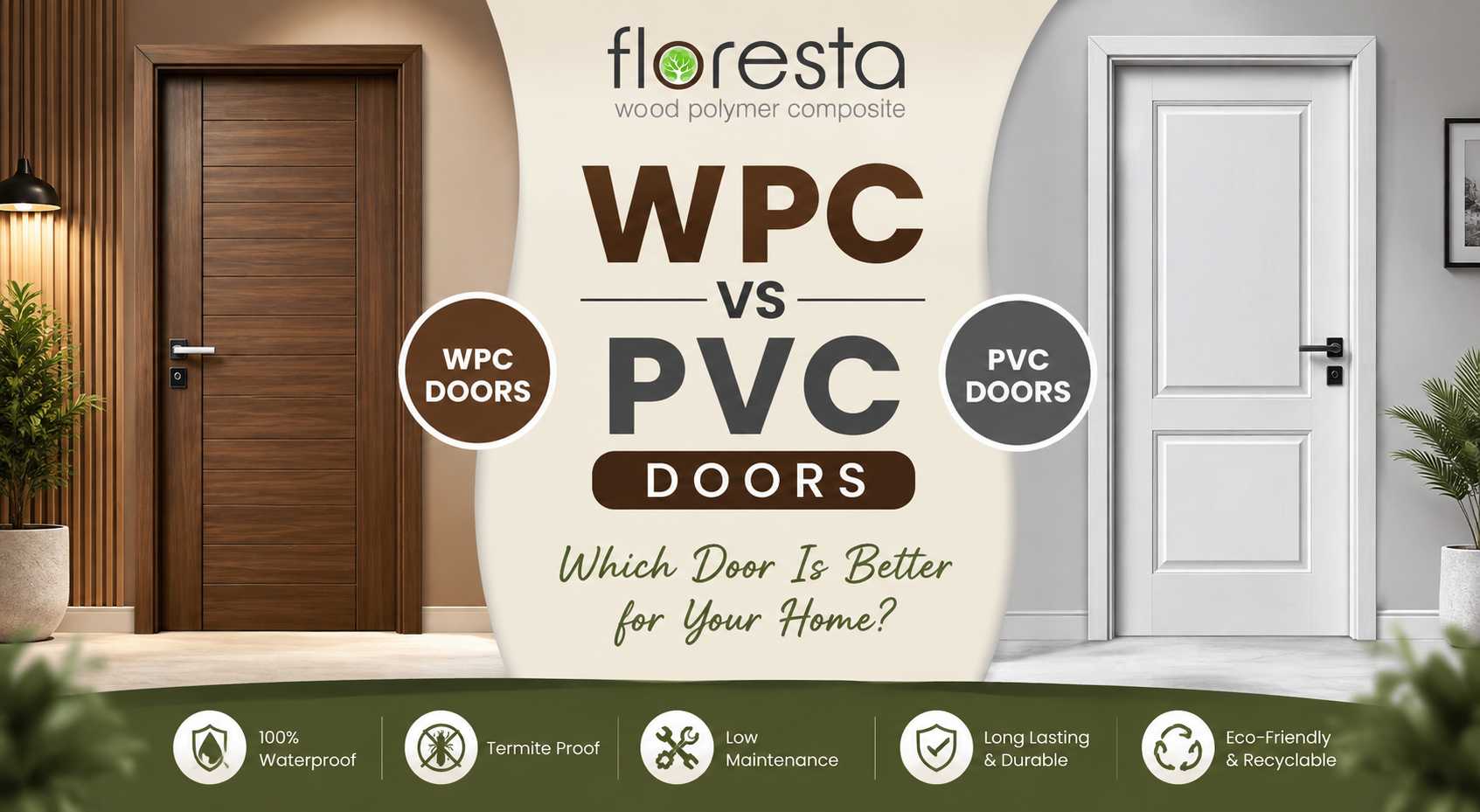
WPC VS PVC DOORS WHICH DOOR IS BETTER
Choosing the right door material is an important part of planning a home or interior space. Doors are expected to provide privacy, durability, easy maintenance, and a good appearance while also handling regular use. In areas such as bathrooms, kitchens, utility rooms, and humid spaces, resistance to moisture becomes WPC Doors important.
Two materials that are increasingly considered for modern door applications are WPC and PVC. Both offer advantages over traditional materials in certain situations, but they are not exactly the same.
Understanding the WPC vs PVC doors comparison can help homeowners, architects, interior designers, contractors, and builders choose a door material according to the actual requirements of the space.
So, what is the difference between WPC and PVC doors, and which one should you choose?
The answer depends on factors such as strength, moisture exposure, durability, appearance, maintenance, installation, and budget. This guide explains these differences in detail to help you make a practical decision.
What Are WPC Doors?
WPC stands for Wood Plastic Composite. WPC doors are manufactured using a composite material that combines wood-based components with polymer materials and other additives.
The combination creates a board-like material with characteristics that differ from conventional wood products. WPC is known for its moisture resistance and is commonly considered for doors, frames, partitions, furniture, wall panels, and other interior applications.
One of the major benefits of WPC doors is that they can provide a wood-like appearance while offering resistance to moisture and termites.
However, WPC products can vary in composition, density, thickness, and manufacturing quality. Therefore, buyers should always check the specifications of the particular product before making a decision.
What Are PVC Doors?
PVC stands for Polyvinyl Chloride, a synthetic polymer widely used in construction and interior applications.
PVC doors are made using PVC-based profiles, sheets, or panels, depending on the product design. They are known for being lightweight, moisture-resistant, and relatively easy to maintain.
PVC doors are commonly found in bathrooms, utility areas, kitchens, offices, and other locations where moisture resistance and easy cleaning are important.
The design, thickness, internal construction, and quality of a PVC door can vary considerably between products. Therefore, it is important to evaluate the complete door rather than comparing materials only by name.
WPC vs PVC Doors: Key Differences
The WPC vs PVC doors comparison becomes clearer when both materials are evaluated across important factors.
The actual performance of a door depends on its construction, thickness, hardware, installation, and manufacturer.
Difference Between WPC and PVC Doors
The main difference between WPC and PVC doors lies in their material composition and resulting characteristics.
WPC combines wood-based material with polymers, giving it a more rigid, board-like structure that can resemble traditional wood products.
PVC is a synthetic polymer-based material and is generally lighter and more resistant to moisture.
WPC can be preferred when a homeowner wants a stronger, more solid-feeling door with a wood-inspired appearance. PVC can be attractive when lightweight construction, easy cleaning, and moisture resistance are priorities.
Neither material is automatically better for every application.
WPC vs PVC Doors: Durability
Durability is one of the first factors homeowners consider when selecting a door.
WPC doors can provide good durability when manufactured with appropriate density and thickness. Their composite construction can make them suitable for regular interior use.
PVC doors can also be durable for many applications, particularly where moisture resistance and low maintenance are important. However, the durability of a PVC door depends significantly on its internal construction and quality.
For high-use areas, buyers should evaluate the complete door construction, including the frame, hinges, hardware, surface finish, and fixing system.
WPC vs PVC Doors: Moisture Resistance
Moisture resistance is one of the strongest reasons people consider WPC and PVC doors.
Traditional wood-based doors can require additional protection when exposed to humidity or water. WPC and PVC are generally better suited to moisture-prone environments.
WPC has a composite structure that provides resistance to moisture-related issues associated with conventional wood products.
PVC is also highly resistant to moisture and does not absorb water in the same way as many wood-based materials.
For bathrooms, kitchens, utility rooms, and other humid areas, both materials can be considered. The final selection should depend on the specific door construction and installation conditions.
WPC vs PVC Doors for Bathrooms
Bathrooms are among the most moisture-intensive areas in a home. Doors installed here may regularly encounter humidity, splashes, and cleaning products.
Both WPC and PVC can be suitable choices for bathroom doors.
WPC can offer a more solid appearance and may be preferred when homeowners want a door that resembles a traditional wooden door.
PVC can be attractive where lightweight construction and easy cleaning are priorities.
For either option, proper installation is important. The door frame, hinges, hardware, and surrounding surfaces should also be suitable for a humid environment.
WPC vs PVC Doors for Kitchens
Kitchen doors can be exposed to moisture, steam, heat, grease, and frequent cleaning.
WPC can be considered for kitchen-related door applications where durability and moisture resistance are important.
PVC is also suitable for many kitchen environments because it is easy to clean and resistant to moisture.
If the door is located close to a sink or another water source, moisture resistance should be given particular attention.
WPC vs PVC Doors: Strength
Strength depends not only on the material but also on the thickness, density, internal construction, and design of the door.
WPC generally provides a more rigid and substantial feel because of its composite board construction.
PVC doors can be strong enough for many interior applications, but their performance can vary depending on whether the door is solid, hollow, reinforced, or manufactured using a particular profile system.
For areas where impact resistance and rigidity are important, compare the technical specifications of the actual products rather than making a decision based solely on the material name.
WPC vs PVC Doors: Weight
Weight can influence installation, handling, transportation, and hardware selection.
PVC doors are generally lightweight, which can make them easier to handle and install.
WPC doors are often heavier because of their denser board construction.
A heavier door may require appropriately selected hinges and hardware. Similarly, a lightweight door should still have sufficient structural integrity for its intended application.
WPC vs PVC Doors: Appearance
The appearance of a door can have a major influence on interior design.
WPC can provide a wood-inspired appearance and can be finished in different ways depending on the product. This makes it attractive for homeowners who want a more traditional or premium-looking interior.
PVC doors are available in various colours, patterns, textures, and finishes. They can be used to create modern and practical interior designs.
The choice ultimately depends on the desired appearance of the room.
WPC vs PVC Doors: Termite Resistance
Termites can cause significant damage to traditional wood-based materials.
WPC is generally resistant to termite-related damage, which is one reason it is considered an alternative to conventional wood products.
PVC is also not a food source for termites, making it suitable for environments where termite resistance is important.
However, the overall door assembly should still be installed correctly and protected from other sources of damage.
WPC vs PVC Doors: Maintenance
Both WPC and PVC doors generally require relatively low maintenance compared with many conventional wooden doors.
Routine cleaning can help maintain the appearance of the surface. Any scratches, hardware issues, or installation problems should be addressed promptly.
PVC is particularly easy to clean because its surface can generally be wiped with suitable cleaning materials.
WPC also requires relatively simple maintenance, although the recommended cleaning method may depend on the surface finish.
Always follow the manufacturer's maintenance instructions.
WPC vs PVC Doors: Cost
Cost is another major factor when choosing the best door material.
The price of WPC and PVC doors can vary depending on:
Door thickness
Size
Internal construction
Surface finish
Design
Hardware
Frame material
Brand
Installation
Quantity
PVC may be an economical option for certain basic applications, while WPC can command a different price depending on its density, finish, and construction.
Instead of comparing only the price per door, consider the total cost of the complete installation and expected maintenance.
WPC vs PVC Doors: Installation
Installation quality can significantly affect door performance.
Before installation, check the opening dimensions and ensure that the frame is properly aligned. Hinges, handles, locks, and other hardware should be suitable for the door's weight and construction.
WPC doors may require appropriate tools and hardware because of their board construction.
PVC doors can be easier to handle because of their relatively lower weight, but correct alignment and fixing remain important.
A professionally installed door can provide better operation and longevity regardless of the material selected.
Which Is Better for Interior Doors?
For bedrooms, living rooms, offices, and other dry interior areas, both WPC and PVC can be considered.
WPC may be preferable when a more solid appearance and wood-like aesthetic are desired.
PVC may be suitable when lightweight construction, easy maintenance, and practical performance are more important.
The final decision should consider the interior design, expected usage, budget, and preferred finish.
Which Is Better for Moisture-Prone Areas?
For bathrooms, utility areas, kitchens, and other humid spaces, both materials can offer advantages over conventional wood products.
WPC provides a combination of rigidity and moisture resistance, while PVC offers lightweight construction and strong moisture resistance.
For particularly wet environments, buyers should check the complete door and frame specifications instead of assuming that every WPC or PVC product has the same performance.
Which Is the Best Door Material?
There is no single best door material for every room or project.
The best material is the one that matches the conditions in which the door will be used.
WPC may be a better choice when:
A solid and rigid door is preferred
A wood-inspired appearance is desired
Moisture resistance is important
Termite resistance is required
The door will be used regularly
PVC may be a better choice when:
Lightweight construction is preferred
Easy cleaning is important
Moisture resistance is required
The door is intended for practical interior applications
A wide range of designs and finishes is desired
Common Mistakes to Avoid
Choosing Only on Price
The cheapest door may not offer the required strength, finish, or durability.
Ignoring Door Construction
Material alone does not determine performance. Check thickness, density, internal structure, and hardware compatibility.
Not Considering the Environment
A bathroom door has different requirements from a bedroom door. Always consider moisture, humidity, temperature, and frequency of use.
Choosing Hardware Without Checking Weight
Hinges and other hardware should be compatible with the door's weight and construction.
Ignoring Installation
Even a good-quality door can perform poorly if it is incorrectly installed.
Why Choose Floresta?
For modern interior projects, selecting the right door material is about finding a practical balance between performance, appearance, maintenance, and cost.
Floresta offers solutions for contemporary interior requirements and helps customers explore material options according to their project needs.
When considering WPC or PVC doors, it is important to look beyond the material name. Product quality, construction, dimensions, finish, installation, and intended application should all be considered before making a final decision.
Final Thoughts
The WPC vs PVC doors comparison shows that both materials have useful advantages.
WPC can be a strong option for homeowners who want a rigid, wood-inspired door with moisture and termite resistance. PVC can be attractive for applications where lightweight construction, easy maintenance, and moisture resistance are priorities.
When deciding between the two, consider where the door will be installed, how frequently it will be used, the required appearance, expected moisture exposure, hardware requirements, and total budget.
Rather than asking which material is universally better, ask which material is better for your specific application.
Floresta can help homeowners, builders, architects, and interior professionals explore suitable door and board solutions according to their project requirements. With the right material, proper installation, and suitable hardware, a door can provide dependable performance while complementing the overall interior design.
Frequently Asked Questions
1. Which is better, WPC or PVC doors?
Both have advantages. WPC offers a more solid, wood-like feel, while PVC is lightweight, moisture-resistant, and easy to maintain.
2. Are WPC doors waterproof?
WPC offers high moisture resistance and is suitable for many humid applications. Always check the specific product's technical specifications.
3. Are PVC doors good for bathrooms?
Yes. PVC doors are commonly considered for bathrooms because they are lightweight, moisture-resistant, and easy to clean.
4. Which door lasts longer, WPC or PVC?
Both can provide good service life when properly manufactured and installed. Durability depends on product quality, construction, usage, and maintenance.
5. What is the best door material for a home?
There is no universal answer. WPC and PVC can both be suitable, depending on the room, moisture exposure, design preference, durability requirements, and budget.


 Price per Sq Ft & Design Ideas 1.png)
.png)

