
TOP 10 ALTERNATIVES TO PLYWOOD FOR INDOOR AND OUTDOOR USE
November 28, 2024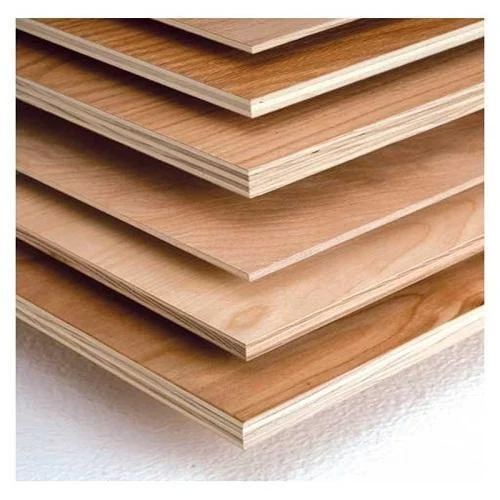
TOP 10 ALTERNATIVES TO PLYWOOD FOR INDOOR AND OUTDOOR USE
Plywood has been a popular material for furniture, cabinets, wall panels, flooring, and construction projects for decades. However, it is not always the most suitable option for every application. Moisture exposure, termite damage, maintenance requirements, budget and environmental considerations often encourage homeowners and builders to explore plywood alternatives.
Today, several materials offer practical alternatives to plywood for indoor and outdoor use. From budget-friendly MDF and particle board to moisture-resistant WPC boards, bamboo sheets and fiber cement panels, each material has different advantages.
If you are searching for the best alternative to plywood, this guide compares 10 popular plywood replacement materials, their features, limitations and suitable applications. It also explains which options work best for furniture, walls, bathrooms, kitchens and outdoor projects.
What Are Plywood Alternatives?
Plywood alternatives are engineered boards, composite panels or natural materials that can replace plywood in certain furniture, decorative or construction applications.
Plywood is manufactured by bonding thin layers of wood veneer together. Although it provides good strength and versatility, its performance depends on the wood species, adhesive, grade and exposure conditions.
Alternative materials may offer benefits such as:
Better moisture resistance for kitchens and bathrooms.
Lower initial cost for budget furniture.
Improved termite resistance in suitable composite products.
Smooth surfaces for painting, laminating and decorative finishes.
Lower maintenance requirements for selected outdoor applications.
Potential environmental benefits when responsibly sourced or made with recycled content.
However, no single plywood substitute is ideal for every application. The correct choice depends on the required strength, installation conditions, moisture exposure and overall budget.
Top 10 Best Alternatives to Plywood
Here are 10 commonly used plywood alternative materials for residential, commercial and construction applications.
1. Medium Density Fiberboard (MDF)
Medium Density Fiberboard, commonly known as MDF, is an engineered wood product manufactured by combining wood fibers with resin and compressing them into dense, uniform boards.
MDF is one of the most common alternatives to plywood for indoor furniture because it offers a smooth surface and consistent finish.
Key features:
Smooth surface suitable for painting, laminating and decorative finishes.
Easy to machine for furniture designs and decorative profiles.
Often more affordable than premium plywood.
Available in different thicknesses and grades.
Best applications: Wardrobes, decorative wall panels, cabinet shutters, shelves and indoor furniture.
Limitations: Standard MDF absorbs moisture and can swell when exposed to water. Moisture-resistant grades are available, but they are not automatically suitable for direct outdoor exposure.
Verdict: MDF is a practical plywood alternative for dry indoor applications where smooth finishing is more important than high structural strength.
2. Particle Board
Particle board is manufactured using wood chips, sawdust and other wood particles bonded together with resin under heat and pressure.
It is a popular cheap alternative to plywood for furniture projects where keeping material costs low is a priority.
Key features:
Generally economical for budget furniture.
Available with decorative laminate and melamine finishes.
Makes use of wood particles and manufacturing residues.
Suitable for mass-produced modular furniture.
Best applications: Office furniture, low-cost wardrobes, storage cabinets, shelves and ready-made furniture.
Limitations: Standard particle board has relatively poor moisture resistance and may offer lower screw-holding strength than suitable plywood grades.
Verdict: Particle board is useful for budget-conscious indoor furniture but is generally unsuitable for exposed outdoor applications.
3. High-Density Fiberboard (HDF)
High-Density Fiberboard is an engineered wood panel manufactured from compressed wood fibers. It typically has a higher density than standard MDF.
HDF is used in applications where a dense, smooth and uniform surface is required.
Key features:
Dense and consistent board structure.
Smooth surface suitable for decorative finishes.
Commonly used as a component in laminate flooring.
Available in specialized grades for different applications.
Best applications: Flooring substrates, furniture components, decorative panels and interior finishing.
Limitations: HDF is not inherently waterproof. Moisture resistance depends on the specific product grade, and prolonged water exposure may cause swelling.
Verdict: HDF can be a suitable alternative to plywood for selected interior applications, but it should not be treated as a universal structural replacement.
4. Bamboo Sheets
Bamboo sheets and engineered bamboo panels are manufactured using processed bamboo strips, fibers or layers bonded together to form boards.
Bamboo is a rapidly renewable raw material and can provide an attractive natural appearance.
Key features:
Natural wood-like appearance.
Suitable for decorative and premium interior applications.
Can offer good hardness and durability depending on manufacturing quality.
Bamboo grows relatively quickly compared with many timber species.
Best applications: Furniture, decorative wall panels, interior partitions, tabletops and selected flooring applications.
Limitations: Bamboo panels require suitable adhesives, finishing and protection against moisture. Outdoor use is possible only with products specifically designed and treated for exterior exposure.
Verdict: Bamboo is an attractive plywood alternative for homeowners seeking natural-looking interior materials.
5. Wood Plastic Composite (WPC)
Wood Plastic Composite (WPC) is a composite material generally manufactured using wood fibers or wood flour, thermoplastic polymers and additives.
WPC has become a popular waterproof plywood alternative for selected applications because suitable WPC formulations offer excellent moisture resistance and do not provide the same food source for termites as natural wood.
Key features:
High moisture resistance in suitable product grades.
Resistant to conventional wood-feeding termite damage.
Low maintenance compared with many natural wood products.
Available in different board profiles and finishes.
Suitable for various interior and exterior applications when appropriately rated.
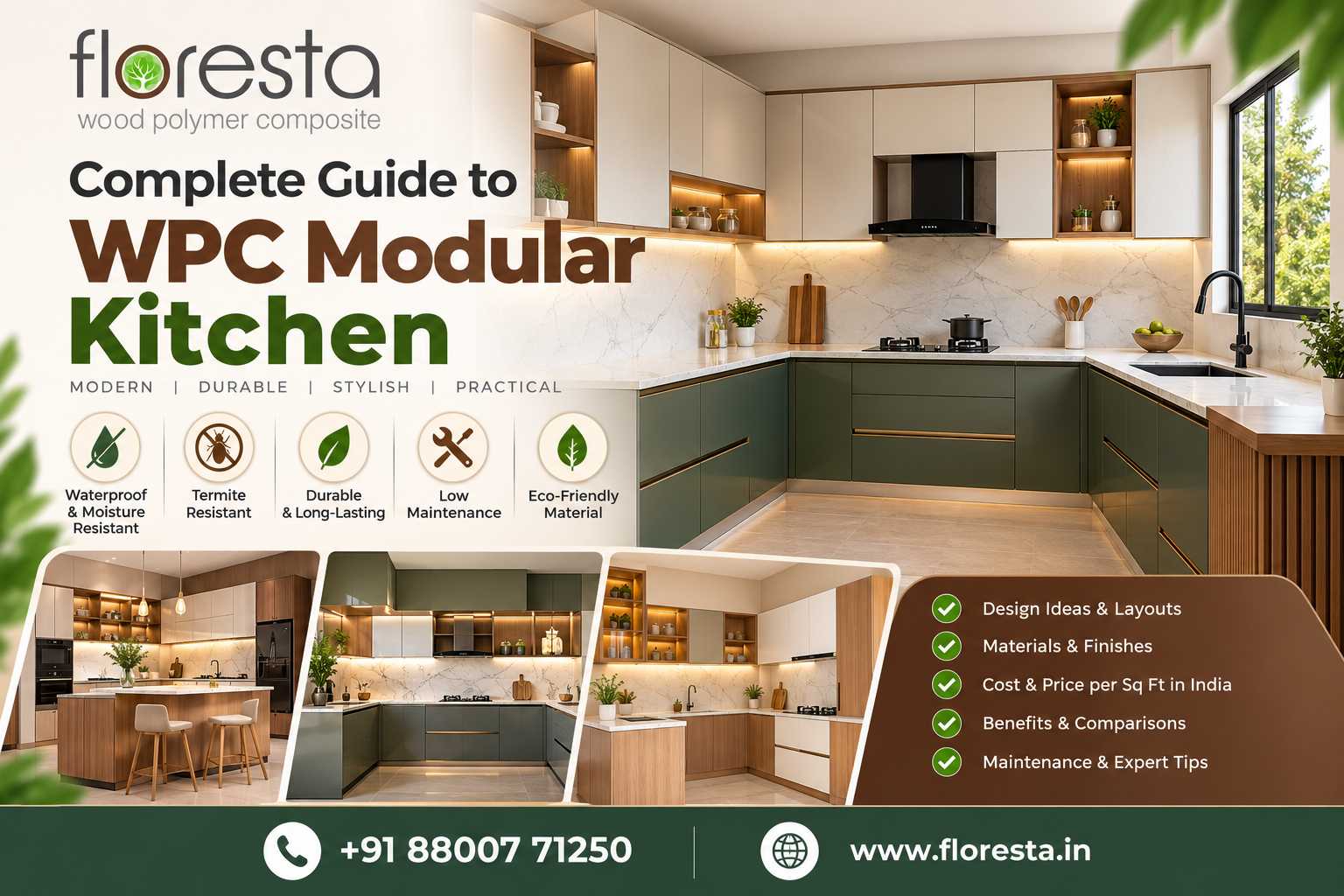
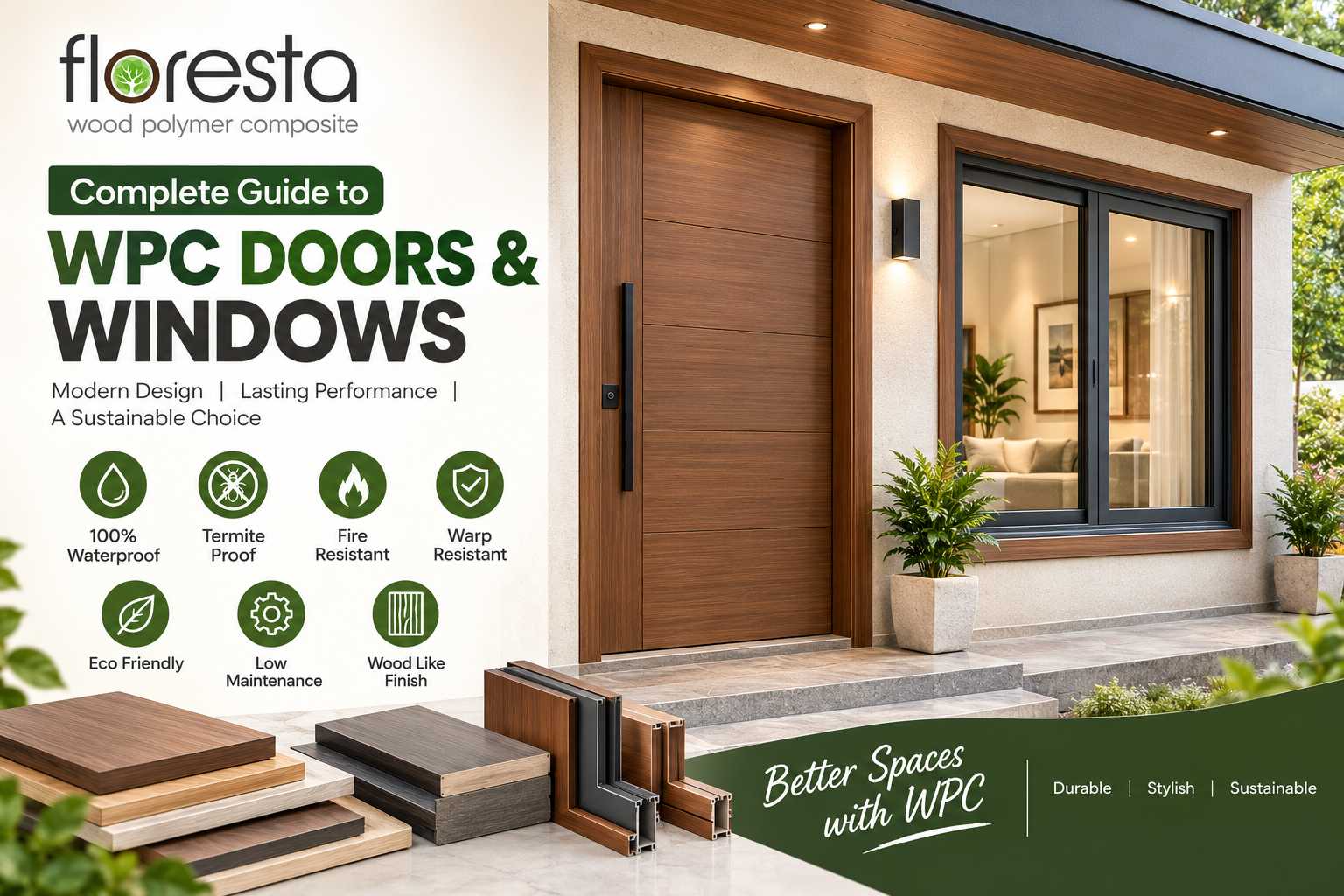
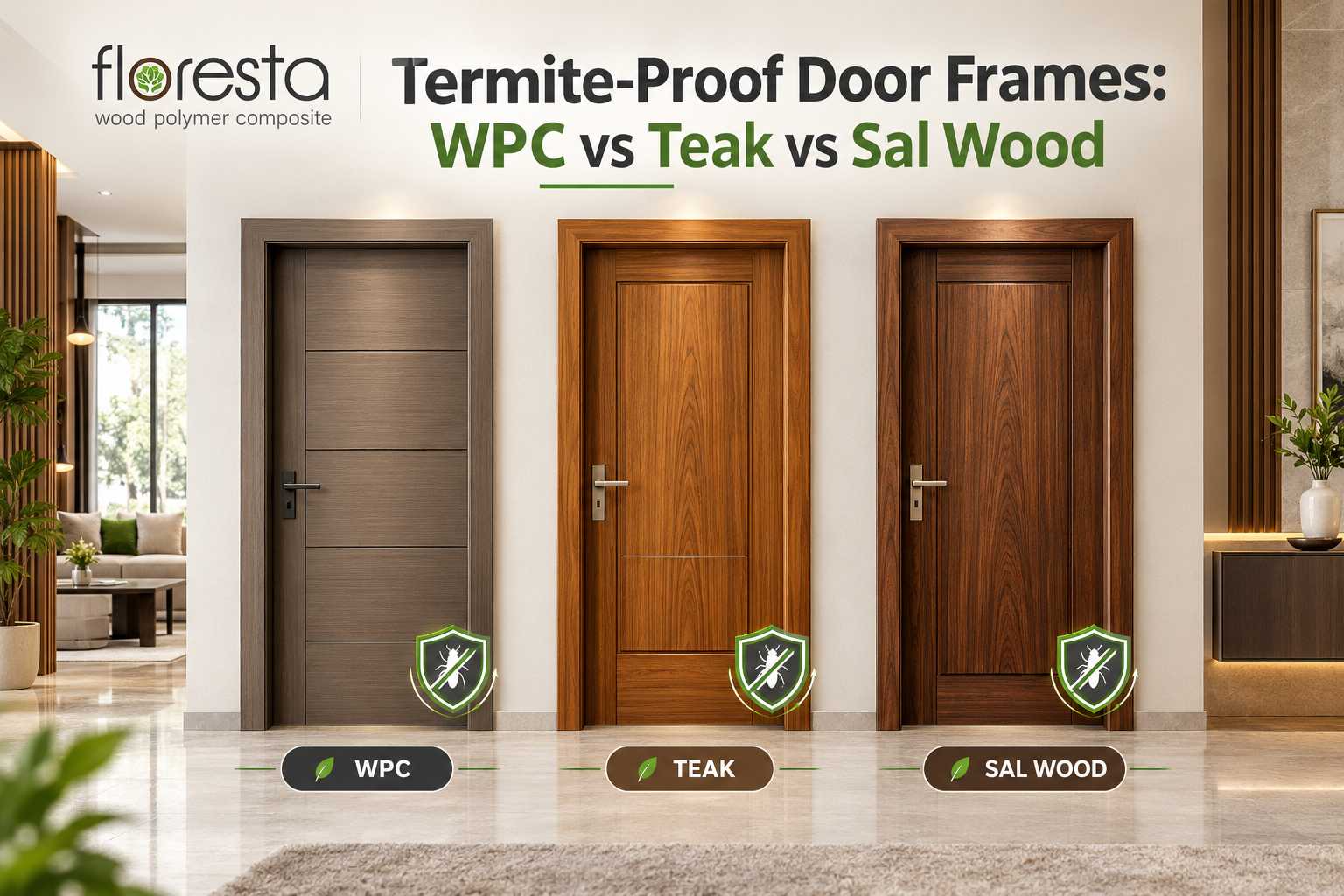
Best applications: Bathroom cabinets, kitchen cabinets, wardrobes, partitions, door frames and selected outdoor installations.
Limitations: WPC can be heavier or more expensive than certain plywood grades. Its stiffness, screw-holding capacity, heat response and load-bearing performance vary by formulation.
Not every WPC board is suitable for decking, exterior cladding or structural applications. Always verify the manufacturer's product specifications.
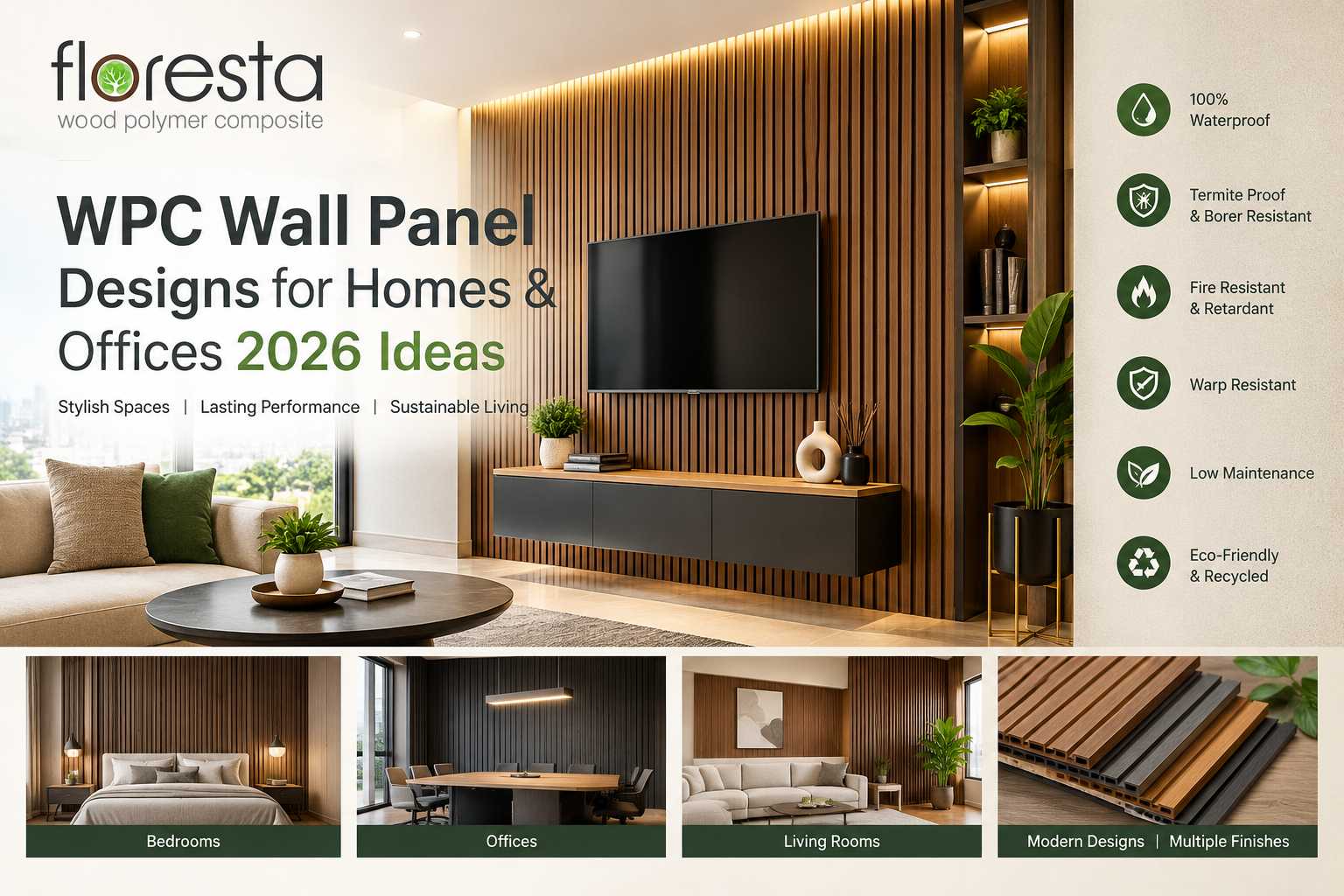
Why consider Floresta WPC boards?
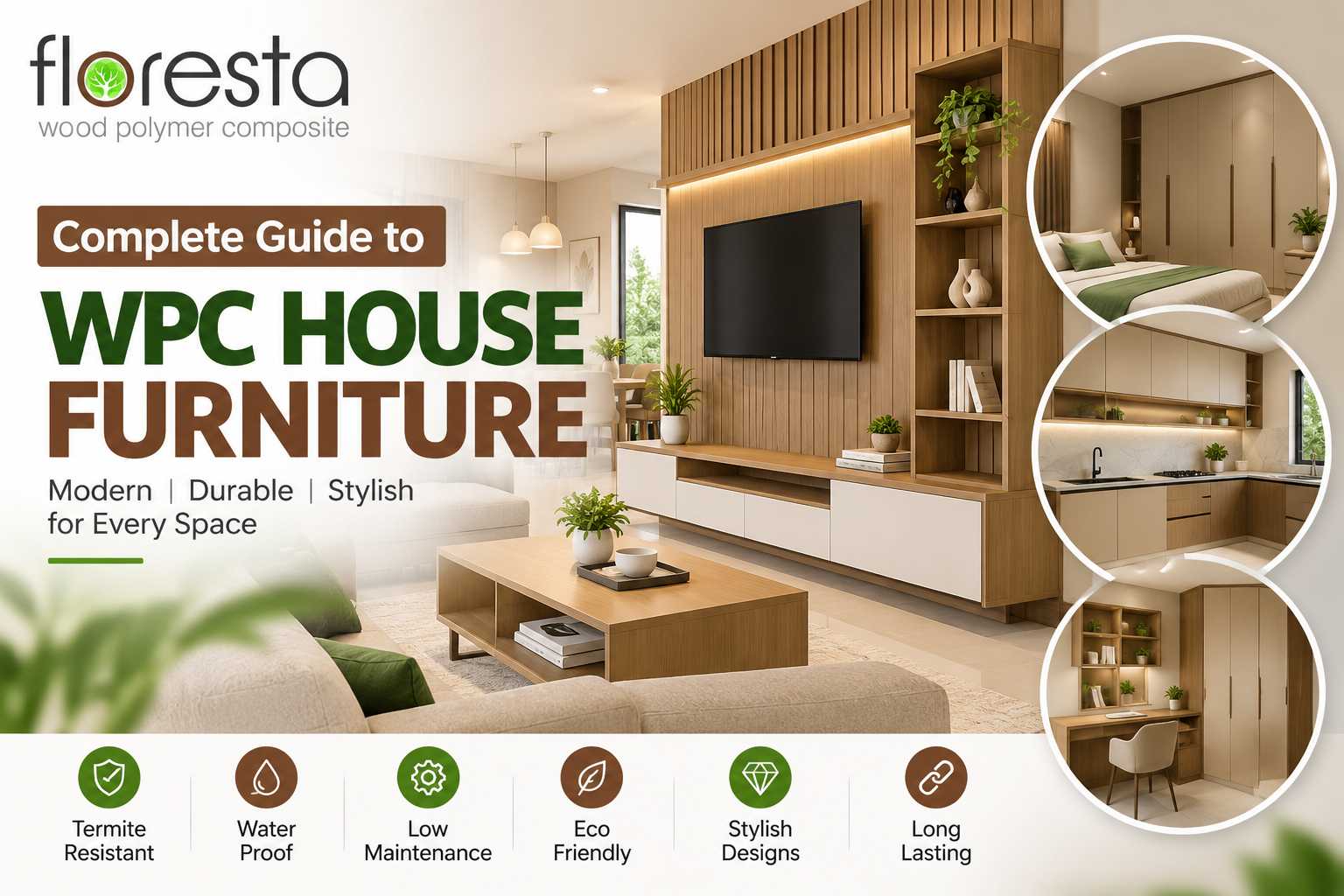
Floresta offers WPC sheets and boards for various interior applications. These products can be considered for projects where moisture resistance, durability and ease of maintenance are important.
For a detailed comparison, read our guide on WPC vs Plywood vs MDF vs HDHMR.
Verdict: WPC is one of the useful alternatives to plywood for moisture-prone furniture, provided the selected board meets the application's technical requirements.
6. Oriented Strand Board (OSB)
Oriented Strand Board, or OSB, is an engineered wood panel made from layers of wood strands bonded with adhesive under heat and pressure.
The strands are arranged in specific directions to provide predictable mechanical properties.
Key features:
Designed for various structural sheathing applications.
Often economical compared with certain plywood grades.
Available in different structural and moisture-resistance classifications.
Manufactured using relatively small-diameter timber.
Best applications: Wall sheathing, roof sheathing, subflooring and other approved construction applications.
Limitations: OSB is not waterproof. Even moisture-resistant grades need suitable protection and installation detailing.
Verdict: OSB is a useful plywood replacement material for structural sheathing when the correct grade and engineering specifications are followed.
7. Cork Sheets
Cork sheets are manufactured from cork oak bark and are widely used in decorative, acoustic and insulation applications.
Cork is lightweight and offers a distinctive natural texture.
Key features:
Good thermal and acoustic insulation properties.
Lightweight and relatively easy to handle.
Renewable raw material when responsibly harvested.
Comfortable and decorative surface finish.
Best applications: Wall coverings, acoustic panels, bulletin boards, flooring underlays and decorative interiors.
Limitations: Cork sheets are generally not suitable as load-bearing plywood replacements. They may require protective finishing in high-moisture areas.
Verdict: Cork is a sustainable alternative for selected decorative and insulation applications rather than structural furniture construction.
8. Solid Wood Panels
Solid wood panels are manufactured from natural timber pieces or boards. They offer the traditional appearance and character of real wood.
They are often selected for premium furniture and decorative projects.
Key features:
Natural grain patterns and attractive appearance.
Can be sanded, refinished and repaired.
Good strength when suitable timber species and dimensions are selected.
Available in multiple species and finishes.
Best applications: Tables, shelves, furniture panels, cabinet components and premium interior designs.
Limitations: Solid wood can expand, shrink or warp with changes in moisture. Cost, termite resistance and durability vary significantly by species and treatment.
Verdict: Solid wood is a premium plywood alternative for applications where natural appearance and repairability are priorities.
9. Fiber Cement Board
Fiber cement board is manufactured using cement, reinforcing fibers and other additives.
It is widely used in construction because suitable products offer good resistance to moisture, weather exposure and pests.
Key features:
Suitable for many exterior and wet-area applications.
Resistant to termite feeding.
Available in products with tested fire-performance characteristics.
Durable when installed according to manufacturer guidelines.
Best applications: Exterior cladding, partitions, wall linings, soffits and selected wet-area applications.
Limitations: Fiber cement boards are heavier than many wood-based panels and require appropriate cutting equipment, fasteners and installation methods. They are not interchangeable with structural plywood without engineering approval.
Verdict: Fiber cement board is a strong candidate for exterior wall and partition applications where weather resistance is important.
10. Recycled Plastic Panels
Recycled plastic panels are manufactured using recovered polymer materials, such as HDPE or other suitable plastics.
They are increasingly considered for applications where moisture resistance and reduced maintenance are priorities.
Key features:
Good resistance to water absorption.
Resistant to conventional wood-feeding termite damage.
Can reduce demand for virgin plastic when recycled content is verified.
Suitable for certain outdoor furniture and utility applications.
Best applications: Outdoor furniture, fencing, utility panels, partitions and selected commercial applications.
Limitations: Strength, thermal expansion, UV resistance and long-term durability vary by polymer and manufacturing quality. Some panels may require additional support or special fastening methods.
Verdict: Recycled plastic panels are a useful plastic alternative to plywood for applications requiring moisture resistance and low maintenance.
Plywood Alternatives Comparison: Cost, Water Resistance and Uses
The following comparison table helps identify suitable materials for different projects.
Note: These are general comparisons. Actual prices and performance depend on product grade, thickness, manufacturer and local availability.
Best Waterproof Plywood Alternatives
When selecting materials for bathrooms, kitchens, utility areas or outdoor projects, moisture resistance is often more important than appearance alone.
The following materials are worth considering.
WPC Boards
WPC boards are useful for bathroom furniture, kitchen cabinets and other moisture-prone applications. Their performance depends on the formulation and manufacturer specifications.
PVC Boards
PVC boards can offer excellent resistance to water absorption. They are commonly used for selected cabinets, partitions and decorative applications. However, their load-bearing capacity and heat resistance must be considered.
Fiber Cement Boards
Fiber cement boards are suitable for many wet-area partitions and exterior wall applications. They are generally not a direct substitute for plywood in conventional cabinet construction.
Recycled Plastic Panels
Suitable recycled plastic panels resist water absorption and can be used for outdoor furniture and utility projects.
Which should you choose?
For moisture-prone cabinets and furniture, suitable WPC or PVC boards may be practical options. For exterior cladding, fiber cement boards may be more appropriate.
You can also read our guide on waterproof plywood alternatives to understand additional material choices.
Cheap Alternatives to Plywood for Furniture
If your main concern is cost, several plywood substitutes may reduce initial material expenses.
Particle board: Often one of the most economical choices for budget furniture, office desks and storage units.
MDF: A practical option for painted cabinet shutters, decorative panels and interior furniture.
OSB: Can be economical for approved construction sheathing applications, although it is generally not selected for premium decorative furniture.
HDF: Suitable for selected flooring and panel applications where a dense engineered board is required.
However, the cheapest alternative to plywood is not necessarily the most economical over its full service life.
Consider installation costs, finishing, maintenance, moisture exposure and expected durability before making a decision.
For kitchens and bathrooms, paying more for a moisture-resistant material may reduce the risk of premature replacement.
Best Plywood Alternatives for Outdoor Use
Outdoor applications expose materials to rain, humidity, sunlight and temperature changes.
A suitable alternative to plywood for outdoor use should be selected according to its weather-resistance rating and intended purpose.
1. Exterior-Grade WPC
Certain WPC products are manufactured for outdoor applications such as fencing, decking and cladding. These require appropriate UV stabilization, support spacing and installation systems.
2. Fiber Cement Board
Fiber cement board is commonly used for exterior cladding, soffits and suitable wall applications.
3. Recycled Plastic Panels
UV-stabilized recycled plastic panels can be used for outdoor furniture, fencing and utility installations.
4. Exterior-Rated Bamboo Panels
Specially treated bamboo products may be suitable for certain outdoor uses, but standard interior bamboo sheets should not be exposed directly to rain.
Important: Standard MDF, particle board and ordinary HDF are generally unsuitable for unprotected outdoor use.
For any load-bearing application, verify structural ratings rather than choosing a material based only on water resistance.
Plastic Alternatives to Plywood: WPC vs PVC
Both WPC and PVC boards are considered for moisture-resistant interior applications, but they differ in composition and performance.
WPC may be preferred when a composite wood-like material is desired, while PVC can be useful where a polymer-based panel is appropriate.
Neither material should be assumed to have the same structural strength as plywood without testing.
Best Alternatives to Marine Plywood
Marine plywood is manufactured using suitable veneers and durable bonding systems for demanding moisture conditions.
For bathroom cabinets and other non-structural applications, WPC and PVC boards may be considered as alternatives to marine plywood.
However, marine plywood alternatives are application-specific.
For boat construction, structural flooring, load-bearing panels or safety-critical applications, do not replace specified marine plywood with WPC, PVC or plastic sheets unless the replacement has appropriate engineering approval.
For household furniture exposed to occasional splashes, compare the board's water absorption, fastening performance, stiffness and warranty.
Sustainable Alternatives to Plywood
Sustainability is another reason homeowners and builders explore alternatives to conventional plywood.
Some materials may offer environmental advantages when responsibly manufactured.
Bamboo panels: Bamboo is a rapidly renewable resource, although processing methods and adhesives affect its environmental impact.
Recycled plastic panels: These can help reuse recovered plastic materials, provided recycled content and product quality are verified.
Cork sheets: Cork bark can be harvested without cutting down the cork oak tree.
Engineered wood boards: MDF, particle board and OSB can make use of wood fibers, residues or smaller timber resources.
WPC boards: Some formulations incorporate recycled polymer or wood-processing residues, but actual sustainability depends on the product composition and manufacturing process.
For a more informed decision, consider recycled content, responsible sourcing, emissions certification, durability and end-of-life disposal.
No material should automatically be described as eco-friendly without supporting product-specific evidence.
How to Choose the Right Plywood Substitute
Before buying any plywood replacement material, consider these factors.
1. Application
Identify whether the material will be used for furniture, cabinets, wall panels, flooring or structural construction.
2. Moisture Exposure
For kitchens, bathrooms and outdoor areas, prioritize suitable moisture-resistant products.
3. Strength and Load Requirements
Check bending strength, stiffness, screw-holding performance and support requirements.
4. Budget
Compare material cost with installation, finishing, maintenance and potential replacement expenses.
5. Appearance
Choose a material that supports your desired paint, laminate, texture or natural finish.
6. Manufacturer Specifications
Review product grade, thickness, warranty, fire-performance information and installation recommendations.
The best plywood alternative is the one that meets the specific performance requirements of your project.
Why Consider Floresta for WPC Boards?
Choosing the right material is essential for durable and functional interiors.
Floresta provides WPC products for various interior applications, offering an option for homeowners, designers and contractors exploring moisture-resistant plywood substitutes.
Benefits of considering Floresta WPC products include:
Moisture-resistant board options for suitable applications.
Resistance to conventional wood-feeding termite damage.
Low-maintenance material choices.
Versatility for selected cabinets, partitions and interior projects.
Alternatives to conventional wood-based boards in moisture-prone environments.
Explore Floresta WPC sheets and check the relevant product specifications before selecting a material.
For product enquiries and application guidance, visit Floresta or contact +91 88007 71250.
Frequently Asked Questions About Plywood Alternatives
1. What is the best alternative to plywood?
The best alternative depends on the application. MDF and particle board are common choices for indoor furniture, WPC is useful for moisture-prone cabinets, and suitable OSB grades are used in structural sheathing. Fiber cement boards are often preferred for certain exterior cladding applications.
2. What is the cheapest alternative to plywood?
Particle board and standard MDF are often among the cheapest plywood alternatives for indoor furniture. OSB may also be economical for suitable construction applications. Prices vary by location, thickness and grade.
3. Which is the best waterproof plywood alternative?
WPC, PVC and recycled plastic panels are useful moisture-resistant options for certain applications. Fiber cement boards are also suitable for many wet-area and exterior wall applications. Always confirm the product's water-resistance rating.
4. What can I use instead of plywood for outdoor use?
Exterior-rated WPC, fiber cement boards, UV-stabilized recycled plastic panels and specially treated bamboo products may be suitable for outdoor applications. The correct choice depends on whether the project involves furniture, cladding, decking or structural construction.
5. Is WPC better than plywood?
WPC can be a better option for certain moisture-prone applications because of its water and termite resistance. However, plywood may offer advantages in structural strength, stiffness and fastening performance, depending on the grade.
6. What is a lightweight alternative to plywood?
Some PVC foam boards, thin MDF panels, cork sheets and lightweight composite panels may weigh less than certain plywood products. Weight depends on board density and thickness, so compare products with equivalent dimensions.
7. Can WPC replace marine plywood?
WPC can replace marine plywood in some non-structural bathroom or kitchen furniture applications when its performance is suitable. It should not be used as a direct replacement in boats or structural applications without appropriate technical verification.
8. Which plywood alternative is best for wardrobes?
MDF, particle board, plywood and suitable WPC boards can all be used in wardrobe construction. The best choice depends on budget, moisture conditions, fastening requirements and the desired finish.
Conclusion
Choosing the right plywood alternative can improve the durability, appearance and practicality of your furniture or construction project.
MDF and particle board are useful for budget-friendly indoor furniture. Bamboo and solid wood panels offer attractive natural finishes. OSB serves suitable construction applications, while fiber cement and recycled plastic panels can be considered for outdoor projects.
For moisture-prone furniture, WPC boards are worth considering because suitable grades provide good water resistance, termite resistance and low-maintenance performance.
Whether you need a cheap alternative to plywood, a waterproof plywood substitute or a sustainable material for your interiors, compare product specifications and intended applications before making your decision.