

COMPLETE GUIDE TO WPC DOORS AND WINDOWS
October 23, 2026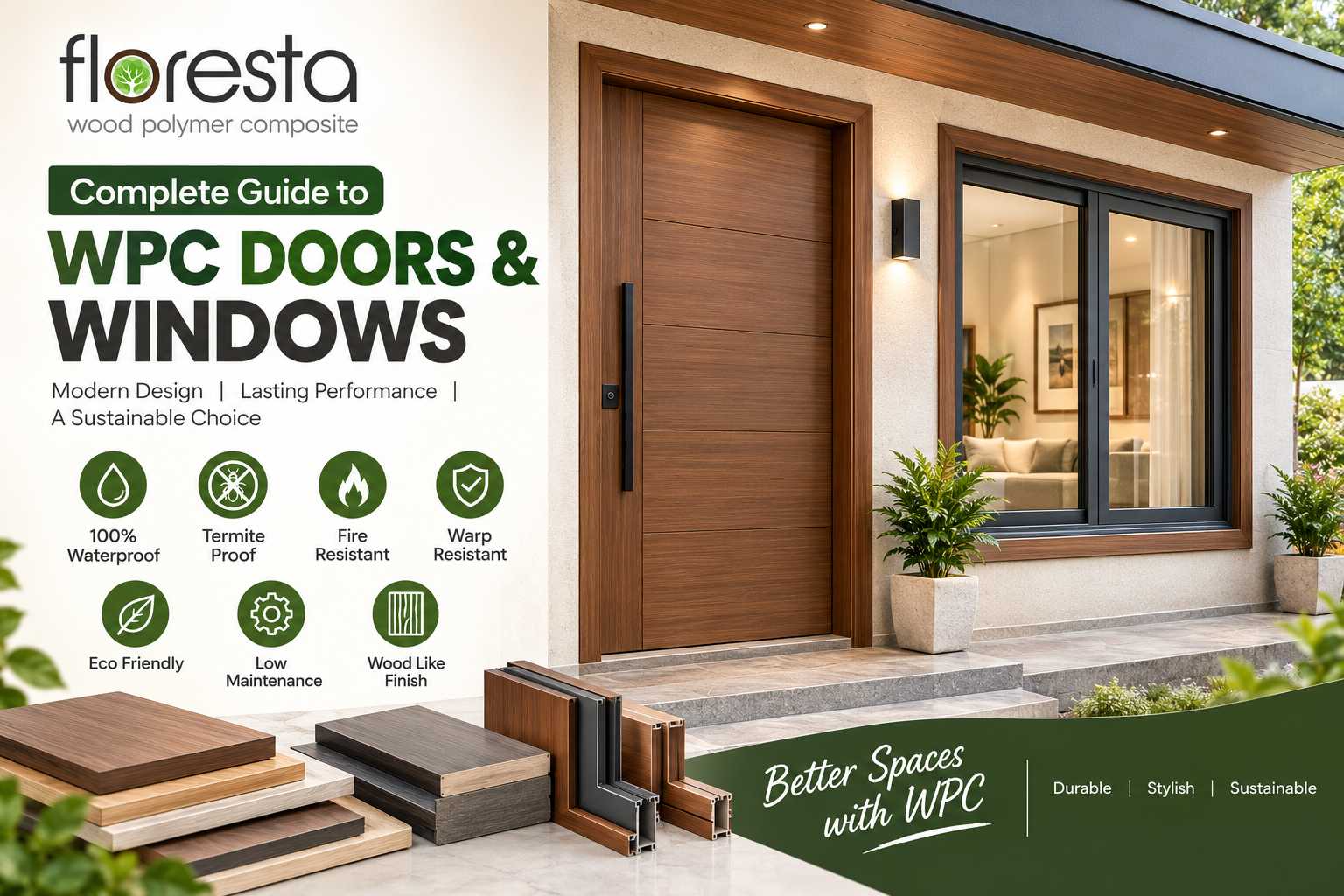
COMPLETE GUIDE TO WPC DOORS AND WINDOWS
Doors and windows take more punishment than almost any other part of a house. They face monsoon humidity, summer heat, termites and daily use, yet they are often chosen quickly, at the end of a building project. Timber swells and warps, plywood delaminates in damp areas, and metal can rust or dent.
That is why WPC doors and windows have become a popular choice for Indian homes. This guide covers what WPC is, the main door types, window frames, sizes, price ranges, and how WPC compares with other materials.
What Are WPC Doors and Windows?
WPC stands for Wood Plastic Composite (also called wood polymer composite). It is made by combining wood fibre with thermoplastic polymers and additives, then forming the mix into boards, door shutters and frame profiles. The result has a wood-like look and can be cut, drilled and screwed like timber, but it does not absorb water or attract termites the way wood does.
WPC is used for door shutters, door and window frames, panels and cladding, which means you can build a matched system from frame to shutter.
Benefits of WPC for Doors and Windows
Moisture resistance: WPC does not swell, warp or rot with humidity, which is why it works well in bathrooms, balconies and coastal homes.
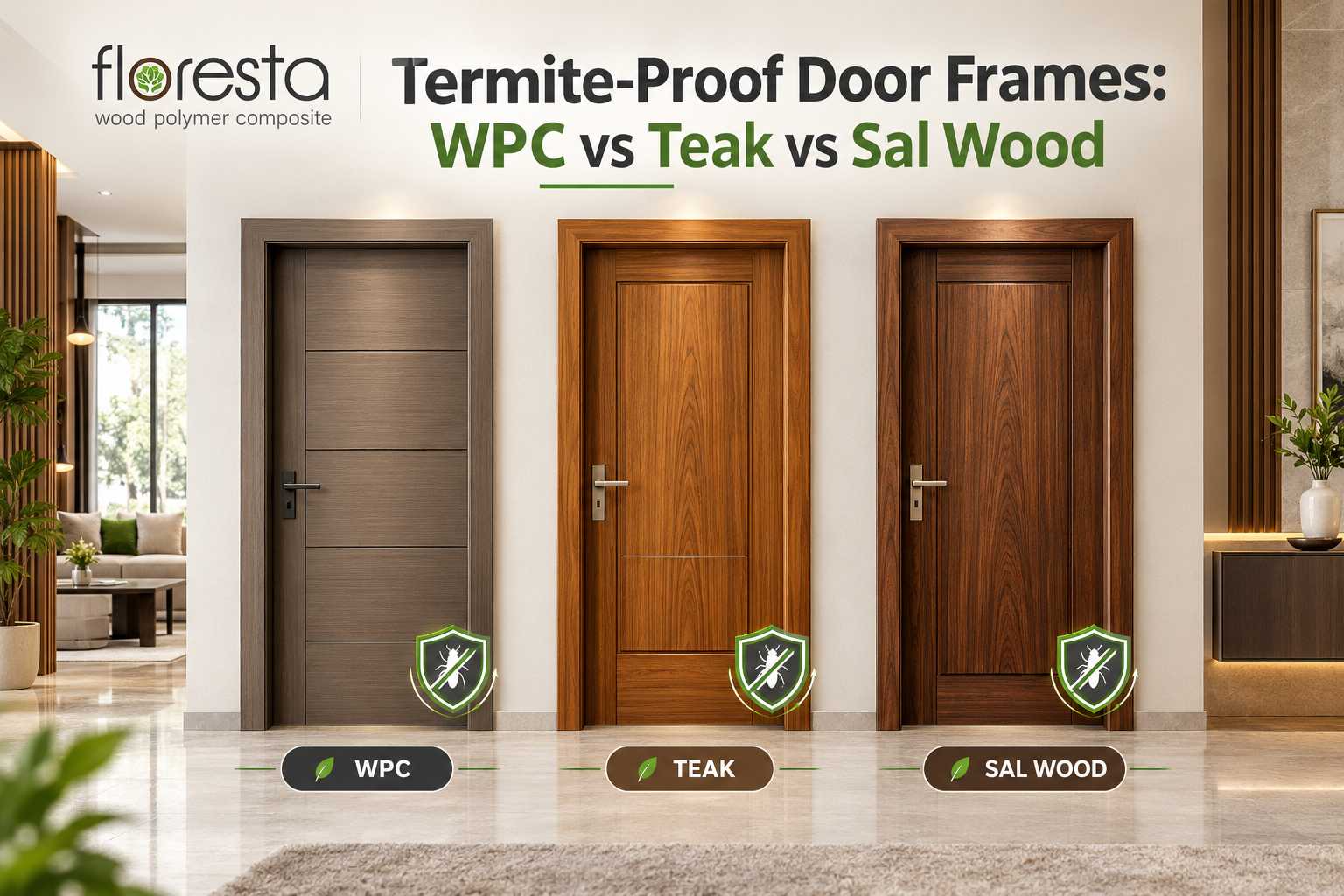
Termite-proof windows and doors: The polymer content makes the material unappealing to termites and borers, so there is no need for repeated pest treatment.
Low maintenance: No polishing, sanding or repainting to protect the material. A damp cloth is enough for cleaning.
Dimensional stability: It holds its shape through heat and humidity cycles, so doors keep closing properly.
Easy installation: Frames and shutters can be cut and fixed with standard tools.
Finish options: WPC takes paint, laminates and veneers, so it can match any interior style.
Eco-friendly angle: It reduces demand for fresh timber.
WPC Door Types
There are several WPC door types, each suited to different spaces.
WPC Flush Doors
Smooth, flat shutters with a clean, modern look. They are the most common choice for bedrooms, kitchens and general interiors.
WPC Bathroom Doors
Doors made specifically for wet areas, usually with a dense core and a water-resistant surface. Bathroom door options are typically around 30 to 35 mm thick. A WPC bathroom door is one of the strongest material choices for humid spaces, since it will not swell or delaminate.
WPC Panel and Moulded Doors
Doors with raised panels or moulded patterns that mimic traditional panelled timber doors. They suit living rooms, bedrooms and traditional interiors.
WPC Laminated or Veneered Doors
Shutters finished with decorative laminates or wood veneers for a richer look, suitable for bedrooms and dining areas.
WPC Main Doors
WPC can also be used for entrance doors, often as a value-focused option. For a grand, statement entrance, many homeowners still prefer solid wood, but WPC works well where durability and weather resistance matter more than heft.
Main Door Design Ideas
A main door design sets the tone for the entire home. With WPC, you can choose:
Plain flush with a wood-grain laminate: Clean and contemporary.
Grooved or panelled design: Adds depth and a classic feel.
Door with a glass insert: Lets in light while keeping security.
Contrast frame and shutter: A darker frame with a lighter door creates a bold effect.
Door with decorative brass or black hardware: Handles, hinges and nameplates complete the look.
For a main entrance in a very exposed location, check the manufacturer’s recommendations for thickness, finish and weather protection.
Bathroom Door: Why WPC Makes Sense
The bathroom door faces constant humidity, splashes and steam. Ordinary timber, MR-grade flush doors and MDF often fail here within a few years, with swelling, peeling and sagging. WPC resists these issues, so it is among the most dependable options for a bathroom door.
One point to remember: the frame matters as much as the shutter. A waterproof door fixed into a timber frame defeats the purpose, because the frame absorbs moisture and the door eventually suffers. Pair a WPC door with a WPC frame for the best result.
WPC Window Frames
WPC window frames are a good fit for homes that face humidity, rain or termite problems. Compared with timber, they:
Do not swell or jam in the monsoon.
Do not need regular repainting or polishing.
Resist termites and wood borers.
Keep their shape for years.
They can be finished in wood tones or painted shades to match your interiors. For large openings or heavy glazing, confirm the frame section size and strength with your supplier.
Door and Window Frames: Sizes and Sections
Frames need to match the wall thickness and the shutter. Common frame sections in India are around 100 x 62 mm (4 x 2.5 inch) for main or internal doors, with thinner sections for light-duty uses. Your carpenter or supplier will advise the right section for your wall and door weight.
Fix frames properly into the masonry using plugs and screws, usually around three fixings per jamb, plus one or two in the head. Poor fixing is a common reason doors sag later, so do not skip this step.
Door Sizes in India
Door sizes in India vary by room and region, but these are typical dimensions:
Heights of around 7 feet (2100 mm) are standard in most modern homes. Always measure your actual openings before ordering, since existing frames may differ.
WPC Door Price in India
The WPC door price in India depends on size, thickness, finish and brand.
Price per sq ft: Published guides put typical WPC door prices at roughly ₹100 to ₹600 per sq ft for the shutter, with trader listings for plain bathroom doors starting near ₹120 per sq ft.
Frame cost: WPC door frames are often priced per running foot, with some listings around ₹100 per foot for standard sections.
Installed cost: A budget bathroom door reusing an existing opening can land at roughly ₹3,500 to ₹4,000 all-in, while mid-range doors with new frames, hardware and fitting cost more.
These are indicative market figures, not fixed rates. GST, hardware, fitting and city labour rates all change the final bill. Cheaper doors may use lower-density material, which can affect strength and warranty, so compare specifications and not just the price tag.
UPVC vs WPC: Which Is Better?
The UPVC vs WPC question comes up often for doors and windows.
UPVC is common in modern sliding windows and large glazed openings, while WPC is popular for doors, frames and interiors where a wood look matters. The best choice depends on the location, the look you want and your budget.
WPC vs Timber and Plywood Doors
Timber looks premium but needs polishing and protection from termites. Plywood and standard flush doors can swell or delaminate in damp areas. WPC costs more upfront than basic flush doors but needs far less maintenance, so the total cost of ownership is often competitive. For dry bedrooms, a good-quality flush door may be enough, while wet areas and termite-prone homes benefit most from WPC.
How to Choose WPC Doors and Windows
Match the product to the room. Bathrooms need dense, water-resistant doors, while bedrooms can use lighter options.
Check thickness and density. Thicker, denser shutters are stronger and feel more solid.
Choose a matching frame. Use WPC frames with WPC doors in wet areas.
Ask about the composition. Some boards sold as WPC are PVC foam, so confirm the details.
Look at the finish. Check for even colour, clean edges and no surface defects.
Compare warranties. A confident manufacturer offers clear coverage.
Plan the hardware. Quality hinges, locks and handles matter as much as the door.
Measure carefully. Order to your actual opening sizes.
Maintenance Tips
Clean with a damp cloth and mild soap, avoiding harsh abrasives.
Keep the base of door frames dry and fix any plumbing leaks.
Check hinges and screws periodically, and tighten them if loose.
Wipe spills and splashes promptly in bathrooms.
Inspect joints and edges once a year.
Final Thoughts
WPC doors and windows offer a practical answer to the problems that Indian homes face, from humidity and termites to constant maintenance. Used with matching frames and good hardware, they give a clean, wood-like look that stays stable for years. By understanding door types, sizes, prices and the trade-offs against UPVC and timber, you can choose a system that suits each room and your budget.
If you are planning new doors, windows or frames, Floresta is a brand to consider. Floresta is a Delhi-based maker of wood polymer composite and PVC boards, doors and door frames, designed to resist moisture and termites. Talk to your builder or interior designer about Floresta for your project, and ask to see samples, specifications and warranty details before you finalise your order. With Floresta, you can fit your home with doors and frames made for Indian conditions.
Top 5 FAQs: Complete Guide to WPC Doors and Windows
1. What are WPC doors and windows?
WPC doors and windows are made from Wood Plastic Composite, a material combining wood fibres, thermoplastics and additives. They offer a wood-like appearance with moisture resistance, termite resistance and low maintenance, making them suitable for many Indian homes.
2. What is the price of WPC doors in India?
The WPC door price in India depends on the size, thickness, density, finish, brand and installation requirements. Indicative shutter prices may range from ₹100 to ₹600 per sq. ft., while frames, hardware, GST and labour can increase the total cost.
3. Are WPC doors suitable for bathrooms?
Yes, WPC doors are a suitable choice for bathrooms because they resist moisture, swelling and termite damage. For better performance, choose a quality WPC door with a matching WPC door frame and suitable hardware.
4. Which is better for doors and windows: WPC or UPVC?
WPC is a good option for doors, door frames and interiors where a wood-like finish is preferred. UPVC is widely used for sliding windows and large glazed openings. The better choice depends on the application, weather exposure, design and budget.
5. How do you maintain WPC doors and window frames?
WPC doors and window frames require minimal maintenance. Clean them with a damp cloth and mild soap, avoid harsh abrasive cleaners, check hinges and screws periodically, and inspect joints and edges to keep them in good condition.


 Price per Sq Ft & Design Ideas 1.png)
