

WPC KITCHEN FURNITURE MODULAR CUPBOARD DESIGNS A MODERN GUIDE FOR INDIAN KITCHENS
September 24, 2026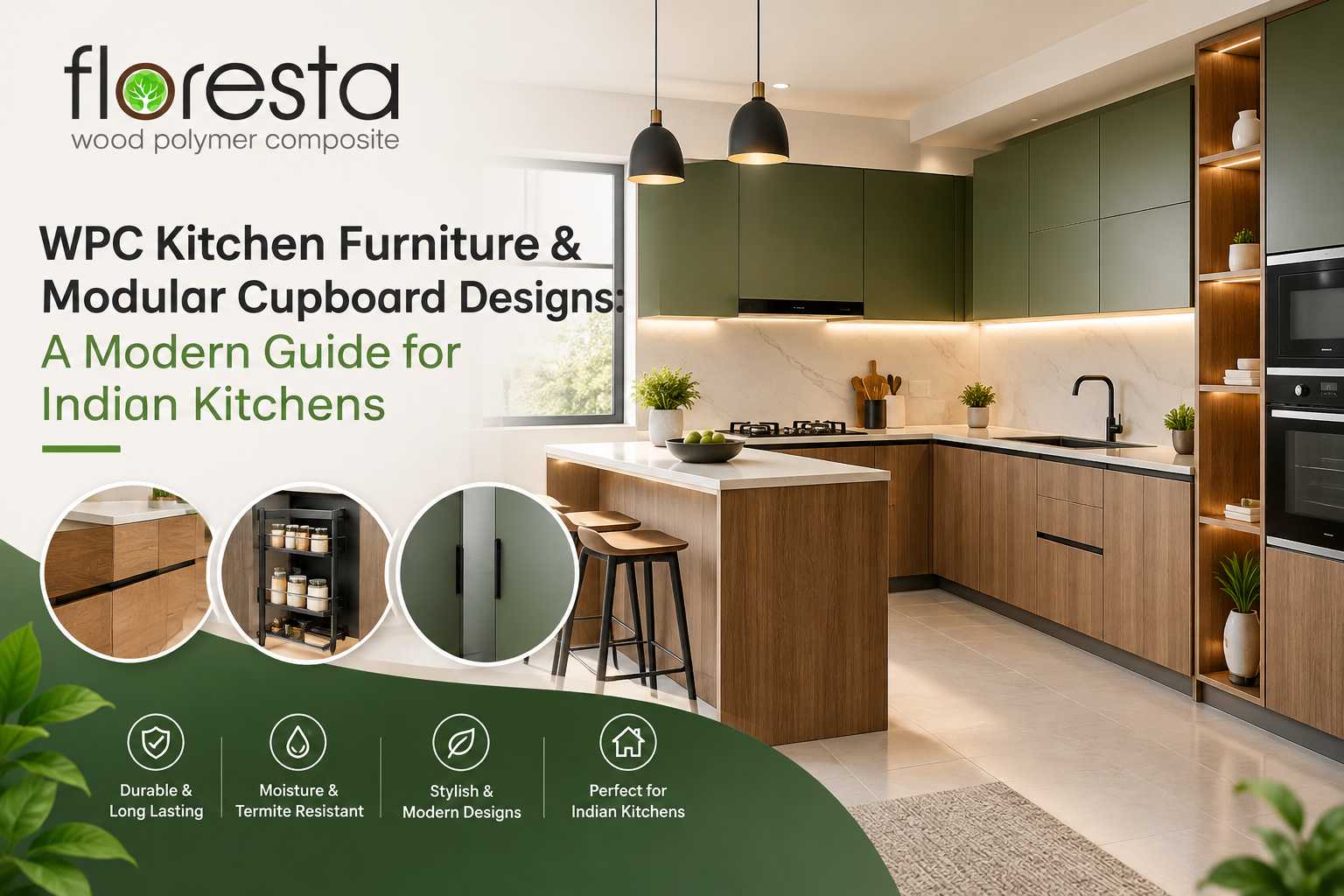
WPC KITCHEN FURNITURE MODULAR CUPBOARD DESIGNS A MODERN GUIDE FOR INDIAN KITCHENS
The kitchen is one of the most demanding areas of a home when it comes to furniture materials. Heat, humidity, water splashes, steam, food stains, frequent cleaning, and everyday wear can all affect cabinets and cupboards over time.
That is why choosing the right material is an important part of designing a durable modular kitchen.
WPC kitchen furniture has become an option for homeowners, interior designers, and builders looking for an alternative to conventional wood-based materials. With characteristics such as moisture resistance, termite resistance, durability, low maintenance, and design flexibility, WPC can be considered for several kitchen applications.
From modular cabinets and overhead storage to under-sink units and tall cupboards, WPC can support a wide range of kitchen designs.
In this guide, we explore practical WPC cupboard designs, explain the benefits and limitations of WPC for kitchen furniture, and compare WPC vs plywood for kitchen applications.
What Is WPC Kitchen Furniture?
WPC stands for Wood Plastic Composite. It is an engineered composite material manufactured using wood-based components and polymer materials, along with additives depending on the product formulation.
Unlike natural wood, WPC is manufactured with defined physical characteristics and dimensions.
For kitchen furniture, this can make WPC an interesting option where homeowners want a material with:
Moisture resistance
Termite resistance
Durability
Low maintenance
Consistent dimensions
Modern design possibilities
The actual performance of a WPC product depends on its composition, manufacturing quality, thickness, application, construction, and installation.
Why Choose WPC Kitchen Furniture?
Kitchen furniture is exposed to conditions that may be more challenging than those found in bedrooms or living rooms.
Water can reach the area around the sink, steam can accumulate during cooking, and surfaces need frequent cleaning.
WPC can be considered for kitchens because of several characteristics.
1. Moisture Resistance
Moisture resistance is one of the major reasons homeowners consider WPC for kitchen applications.
Kitchen cabinets, particularly units close to sinks and water sources, can benefit from materials designed to better handle moisture exposure.
However, moisture resistance does not mean that every WPC product is completely waterproof under every condition. Seams, edges, hardware, installation, and surrounding construction also influence performance.
2. Termite Resistance
Kitchen furniture made from conventional wood-based materials may require appropriate protection against termites.
WPC is often selected because of its resistance to termite-related deterioration.
This can be particularly useful in homes where long-term furniture maintenance is a priority.
3. Easy Maintenance
Kitchen furniture is exposed to oil, food particles, dust, and stains.
WPC surfaces can generally be cleaned using appropriate household cleaning methods, making them convenient for everyday kitchen use.
Always follow the manufacturer's recommended care instructions and avoid aggressive chemicals unless they are approved for the product.
4. Design Flexibility
Modern kitchens are not limited to simple cabinets.
Homeowners increasingly want:
Minimalist kitchens
Handleless cabinets
Two-tone finishes
Open shelving
Tall storage
Island units
Integrated appliances
Decorative panels
WPC can be incorporated into various furniture designs depending on the product and finishing system.
WPC Kitchen Cabinets: Where Can They Be Used?
WPC kitchen cabinets can be planned for several parts of a modular kitchen.
Base Cabinets
Base cabinets provide storage below the countertop.
They can be used for:
Pots and pans
Kitchen accessories
Cleaning supplies
Drawers
Waste-management systems
The material selection is particularly important around areas where water exposure is possible.
Wall-Mounted Cabinets
Upper cabinets make use of vertical wall space and are ideal for storing:
Crockery
Glassware
Spices
Packaged foods
Lightweight kitchen accessories
Tall Units
Tall WPC cabinets can be designed for pantry storage or integrated appliances.
A floor-to-ceiling unit can maximise storage in compact kitchens while creating a clean visual appearance.
Under-Sink Cabinets
The area below the sink is one of the most moisture-sensitive parts of a kitchen.
A moisture-resistant furniture material can therefore be worth considering here.
However, plumbing leaks should always be repaired quickly regardless of the material used.
10 WPC Cupboard Designs for Modern Kitchens
If you are looking for practical WPC cupboard designs, consider these ideas.
1. Minimalist Handleless Cabinets
Handleless cabinets create a clean, contemporary appearance.
They work especially well in kitchens using:
Neutral colours
Simple surfaces
Integrated appliances
Minimal decoration
2. Two-Tone WPC Kitchen
Combine two complementary finishes for upper and lower cabinets.
For example, darker base units with lighter overhead cabinets can create visual balance.
3. Full-Height Pantry Unit
Use vertical space efficiently with a tall cupboard.
Multiple internal shelves can separate groceries, appliances, and household supplies.
4. Under-Sink Storage Unit
Design the cabinet around the plumbing while retaining accessible storage.
Include removable or adjustable internal sections where appropriate.
5. WPC Kitchen Island
For larger kitchens, a central island can combine:
Storage
Seating
Preparation space
Appliance integration
The island can also become the visual centre of the kitchen.
6. Open Shelf and Closed Cabinet Combination
Not everything needs to be hidden.
Combine closed WPC cabinets with open shelves for:
Cookbooks
Decorative pieces
Frequently used items
Crockery
This creates visual variation.
7. L-Shaped WPC Modular Kitchen
An L-shaped kitchen is practical for many homes because it uses two connected walls.
WPC cabinetry can be designed around corners while maintaining continuous storage.
8. U-Shaped Kitchen Cabinets
For larger spaces, U-shaped layouts can provide extensive countertop and storage areas.
WPC cabinets can be designed across all three sides, subject to proper planning and installation.
9. Compact Parallel Kitchen
A galley or parallel kitchen can use cabinets on opposite walls.
Light-coloured finishes and streamlined cupboards can help maintain an open visual appearance.
10. Modern Wood-Look WPC Kitchen
Homeowners who like the warmth of wood can choose suitable wood-inspired finishes where available.
Pairing wood-look cabinets with stone countertops and modern lighting can create a contemporary kitchen aesthetic.
WPC Modular Kitchen Furniture
A modular kitchen requires more than individual cupboards.
Every component needs to work together.
WPC modular kitchen furniture can include:
Base cabinets
Wall cabinets
Tall units
Drawer systems
Pantry units
Sink cabinets
Island units
Appliance housing
Decorative panels
The advantage of planning these elements as one system is that storage, workflow, and aesthetics can be considered together.
WPC vs Plywood for Kitchen: Which Is Better?
One of the most important questions homeowners ask is WPC vs plywood for kitchen.
Both materials have their own advantages, and the right choice depends on the kitchen's requirements.
The key point is that material grade matters more than the material name alone.
A high-quality plywood may be preferable for one application, while a suitable WPC product may offer advantages in another.
Where WPC Can Be Especially Useful in a Kitchen
Some kitchen locations may make WPC particularly attractive.
Around the Sink
The sink area has a higher possibility of water exposure.
A moisture-resistant furniture material can be a useful consideration.
Near Utility Areas
If the kitchen connects directly to a utility or washing area, furniture may encounter higher humidity.
Low-Maintenance Kitchens
For homeowners who want easy-care furniture surfaces, WPC can be worth considering.
Rental or High-Use Properties
In kitchens that experience frequent use, selecting durable and low-maintenance materials can help reduce routine maintenance requirements.
Important Things to Check Before Buying WPC Kitchen Furniture
Not every WPC product is identical.
Before purchasing, ask the manufacturer or supplier about:
Material Specification
Check the exact product type and intended application.
Thickness
The appropriate thickness depends on the cabinet component and structural requirements.
Density
Density can provide useful information about the physical characteristics of the material, but it should not be used as the only measure of quality.
Hardware Compatibility
Kitchen cabinets depend heavily on hinges, drawer channels, handles, fasteners, and other hardware.
Ensure that the selected WPC material is compatible with the proposed furniture construction.
Edge Treatment
Edges and joints deserve particular attention in kitchen applications because these areas may experience moisture exposure.
Surface Finish
Choose a finish appropriate for the kitchen's design and expected cleaning requirements.
Installation
Even good-quality material can perform poorly if cabinets are improperly installed.
Follow the manufacturer's installation recommendations.
WPC Kitchen Furniture Maintenance Tips
A few simple habits can help maintain your kitchen furniture.
Wipe Spills Quickly
Do not allow water, oil, or food residue to remain on surfaces for long periods.
Keep Cabinets Dry
Moisture-resistant does not mean maintenance-free. Keep cabinet interiors and edges reasonably dry.
Check Plumbing Regularly
Leaks under the sink can damage surrounding components regardless of the furniture material.
Clean With Suitable Products
Use cleaning agents recommended for the specific surface finish.
Avoid Overloading
Shelves and drawers should be loaded according to their design and hardware capacity.
Inspect Hardware
Periodically check hinges, handles, drawer channels, and fasteners.
How to Choose the Right WPC Cupboard Design
The best kitchen design is not necessarily the most elaborate.
Start with your actual storage needs.
Ask:
How many people use the kitchen?
A family kitchen may need more pantry and cookware storage than a compact apartment kitchen.
What appliances need space?
Plan locations for refrigerators, ovens, microwaves, dishwashers, and other appliances before finalising cabinets.
Where are the plumbing points?
The sink and water connections should influence cabinet planning.
How much countertop space is needed?
Storage should not come at the expense of useful preparation space.
What style suits the home?
Choose between minimalist, wood-inspired, contemporary, classic, or mixed-finish designs.
Choosing Floresta for WPC Kitchen Applications
For homeowners and interior professionals exploring WPC kitchen furniture, Floresta can be considered when planning modern kitchen interiors where durability, moisture resistance, termite resistance, low maintenance, and design flexibility are important considerations.
From cabinets and cupboards to larger modular furniture concepts, the right WPC product can become part of a coordinated kitchen design.
However, product selection should always be based on the actual application.
For example, the requirements of a base cabinet may differ from those of a decorative panel. Similarly, a sink cabinet may require more attention to moisture exposure and edge detailing than a dry storage unit.
Therefore, discuss the application with the manufacturer or supplier before finalising the material.
WPC Kitchen Furniture Buying Checklist
Before placing your order, confirm:
☐ WPC product specification
☐ Recommended kitchen applications
☐ Board/profile thickness
☐ Density or relevant technical specifications
☐ Moisture-resistance characteristics
☐ Termite-resistance claims
☐ Surface finish
☐ Edge treatment
☐ Hardware compatibility
☐ Cabinet dimensions
☐ Countertop requirements
☐ Installation method
☐ Warranty terms
☐ Maintenance instructions
This checklist helps you compare products based on performance rather than appearance alone.
Final Thoughts
The kitchen demands furniture that can handle everyday use, cleaning, humidity, and occasional moisture exposure without compromising on appearance.
WPC kitchen furniture offers an engineered alternative worth considering for homeowners who want a combination of practical performance and modern design.
From WPC kitchen cabinets and under-sink units to tall cupboards, pantry storage, kitchen islands, and complete modular layouts, there are many ways to incorporate WPC into a contemporary kitchen.
When comparing WPC vs plywood for kitchen, avoid making the decision solely on price or material name. Consider the specific grade, application, moisture exposure, structural requirements, hardware, finishing, and installation.
Similarly, when choosing among different WPC cupboard designs, think about how the furniture will function every day—not just how it looks when newly installed.
For modern Indian homes, the right WPC solution can help create a kitchen that balances functionality, storage, durability, maintenance, and design.
Frequently Asked Questions
1. Is WPC good for kitchen furniture?
WPC can be suitable for selected kitchen furniture applications because of characteristics such as moisture resistance, termite resistance, durability, and low maintenance. The specific product specification should be checked before purchase.
2. Is WPC better than plywood for a kitchen?
Neither material is automatically better for every kitchen. WPC and plywood should be compared based on grade, moisture exposure, structural requirements, finish, hardware compatibility, and budget.
3. Can WPC be used for kitchen cabinets?
Yes, suitable WPC products can be considered for base cabinets, wall cabinets, tall units, pantry storage, and other kitchen furniture applications.
4. What are popular WPC cupboard designs?
Popular options include handleless cabinets, two-tone kitchens, tall pantry units, under-sink cupboards, kitchen islands, open-and-closed storage combinations, and wood-look designs.
5. Is WPC waterproof for kitchen use?
WPC products can offer good moisture resistance, but "waterproof" should not be assumed for every product or installation. Always check the manufacturer's specifications and pay attention to joints, edges, plumbing, and installation.
 Price per Sq Ft & Design Ideas 1.png)
.png)

