

WPC WALL PANEL FULL FORM USES BENEFITS COMPLETE GUIDE FOR MODERN INTERIORS
September 24, 2026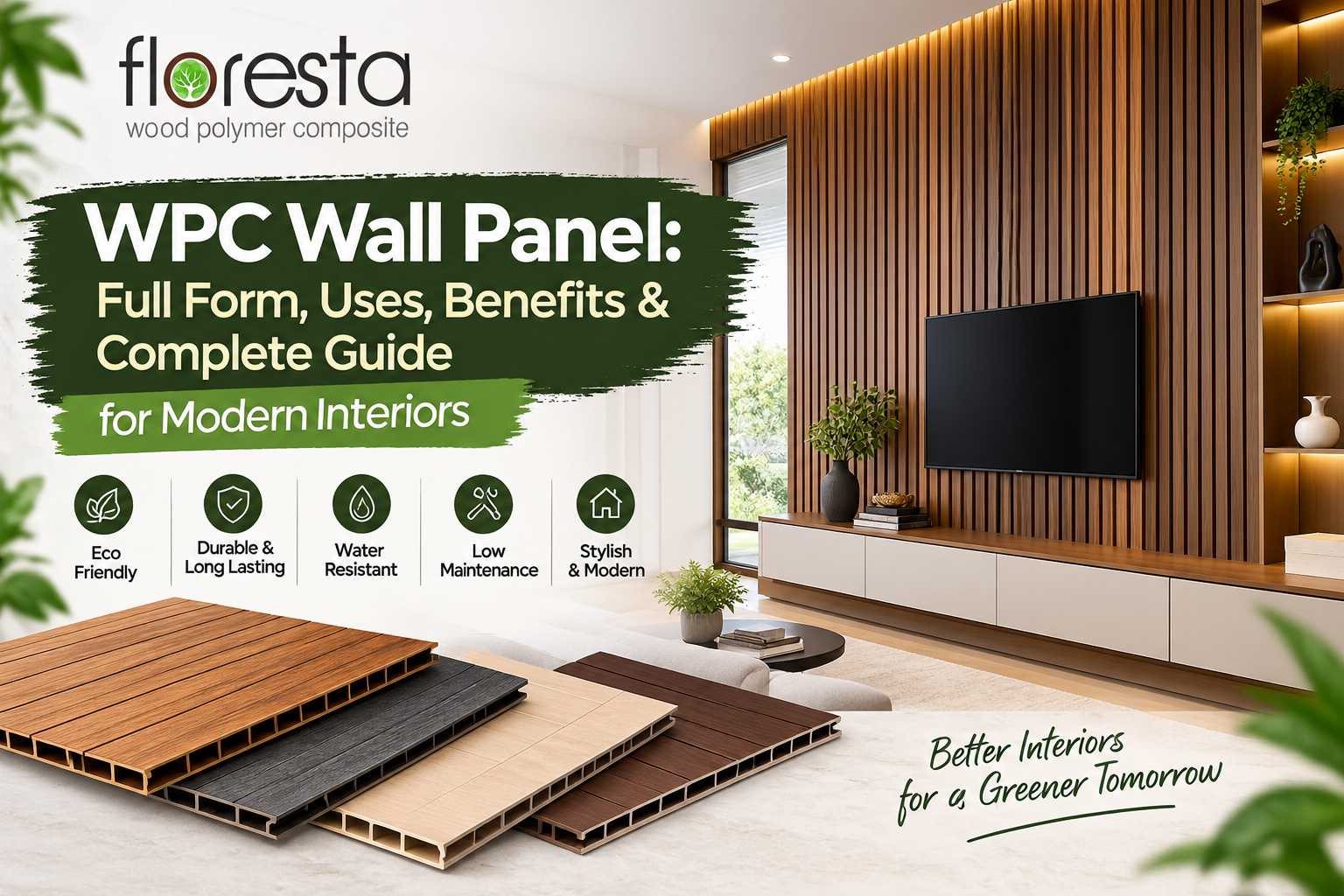
WPC WALL PANEL FULL FORM USES BENEFITS COMPLETE GUIDE FOR MODERN INTERIORS
Walls play an important role in defining the appearance and character of an interior space. While paint, wallpaper, tiles, and traditional wood finishes remain popular, homeowners, architects, and interior designers are increasingly exploring materials that combine aesthetics with practical performance.
One such option is the WPC wall panel.
WPC wall panels can add texture, depth, warmth, and a contemporary finish to interiors while offering characteristics such as moisture resistance, low maintenance, and design flexibility. They can be used for feature walls, partitions, decorative surfaces, commercial interiors, and selected exterior applications, depending on the product specification.
But what exactly does WPC mean? What is a WPC panel used for, and how does it compare with conventional wall-finishing materials?
This guide explains the WPC wall panel full form, WPC panel meaning, uses, benefits, applications, installation considerations, and buying factors to help you make an informed choice.
What Is a WPC Wall Panel?
WPC stands for Wood Plastic Composite.
A WPC panel is an engineered composite material made using wood-based components and polymer materials, along with additives depending on the manufacturer's formulation.
Unlike natural wood, WPC is manufactured to achieve specific physical and aesthetic characteristics. It can be produced in different profiles, textures, colours, dimensions, and surface finishes.
When used as a wall-finishing material, WPC can provide the visual appeal of wood or contemporary decorative surfaces without relying entirely on natural timber.
This is why WPC wall panels have become an option for modern residential and commercial interiors.
The exact performance of a WPC panel depends on its composition, manufacturing process, profile, finish, installation method, and intended application.
WPC Panel Meaning: What Does It Actually Offer?
Understanding the WPC panel meaning is easier when you look at both parts of the term.
Wood + Plastic + Composite = WPC
Wood-based material contributes to the appearance and certain physical characteristics, while polymer components help create a manufactured composite structure.
The result is a material that can be designed for applications where buyers want a combination of:
Modern aesthetics
Consistent dimensions
Moisture resistance
Low maintenance
Termite resistance
Design flexibility
Wood-like textures and finishes
However, not every WPC panel has identical performance. Buyers should always check the technical specifications of the particular product before selecting it for a specific environment.
Why Are WPC Wall Panels Becoming Popular?
Traditional wall finishes can certainly create attractive interiors, but modern design increasingly focuses on combining appearance with practicality.
WPC panels can address several design requirements at once.
Instead of simply painting a wall, designers can use textured panels to create a focal point. Instead of using natural wood across a large surface, WPC can provide a wood-inspired visual effect with an engineered material.
This makes WPC suitable for a variety of interior concepts, from minimalist homes to premium commercial spaces.
Key Benefits of WPC Wall Panels
1. Moisture Resistance
One of the major reasons people consider WPC for wall applications is its resistance to moisture compared with many conventional wood-based materials.
This characteristic can make WPC useful in interiors where humidity or occasional moisture exposure is a consideration.
However, moisture resistant does not automatically mean completely waterproof. Performance depends on the specific product, joints, installation, and environmental exposure.
For areas exposed to significant water, always select a product specifically designed and approved for that application.
2. Termite Resistance
Termite-related damage is a common concern when natural wood-based materials are used in buildings.
WPC is often selected because of its resistance to termite-related deterioration.
This can be particularly useful when designing long-lasting interior features where access for repairs or replacement may be difficult.
3. Low Maintenance
Another advantage of WPC wall panels is their relatively simple maintenance.
Unlike certain natural wood finishes that may require periodic refinishing, WPC generally needs routine cleaning appropriate to the product.
Regular dusting and wiping can help maintain the appearance of the surface.
4. Modern Aesthetic Appeal
Walls do not have to be plain.
WPC can be used to introduce:
Wood-like textures
Linear patterns
Grooves
Fluted effects
Geometric designs
Contemporary decorative finishes
This makes it easier to create statement walls without relying solely on artwork or furniture.
5. Design Flexibility
WPC panels can be incorporated into different interior concepts.
Depending on the product range, designers can explore different colours, textures, patterns, panel widths, and installation arrangements.
This allows the same material category to work across minimalist, contemporary, industrial, and premium interior styles.
6. Consistent Appearance
Natural timber can have variations in grain, colour, and texture.
Engineered WPC products can provide a more consistent appearance across multiple panels, which can be useful for large wall installations.
This consistency can help create a cleaner and more coordinated design.
WPC Wall Panel Uses
One of the strongest reasons to consider WPC is its versatility.
Here are some common WPC panel uses in modern spaces.
1. Living Room Feature Walls
A feature wall can instantly change the visual character of a living room.
WPC can be used behind:
Television units
Sofas
Decorative consoles
Display shelves
Artwork
A wood-textured or fluted WPC installation can add depth without requiring extensive decoration.
2. Bedroom Headboard Walls
WPC wall panels can be used behind beds to create a built-in headboard effect.
Vertical or horizontal panels can visually frame the bed while connecting the wall treatment with bedside furniture or wardrobes.
For compact bedrooms, this can also help create a strong focal point without occupying additional floor space.
3. TV Unit Backgrounds
A plain television wall can be transformed using WPC wall cladding.
Panels can be combined with:
Floating TV units
Concealed lighting
Shelving
Stone-look surfaces
Decorative elements
The result can create a more integrated entertainment area.
4. Dining Areas
WPC panels can be used to highlight a dining wall or create a visual separation between dining and living spaces.
A textured panel can work particularly well behind a dining console, artwork, or crockery unit.
5. Office Interiors
WPC wall panels are also suitable for selected office applications.
They can be used for:
Reception walls
Conference rooms
Cabin backgrounds
Waiting areas
Branding walls
Decorative partitions
The right finish can help create a professional yet welcoming environment.
6. Restaurants and Cafés
Commercial spaces often require interiors that are visually distinctive.
WPC wall cladding can be incorporated into selected restaurant and café areas to introduce texture and warmth.
Because commercial interiors experience regular cleaning and use, product suitability and maintenance requirements should be evaluated before installation.
7. Retail Spaces
Retail stores can use wall panels to create branded zones, display backgrounds, and feature areas.
Different panel arrangements can visually divide sections of a store without constructing permanent walls.
8. Partitions and Decorative Dividers
Some WPC profiles can also be used to create decorative partitions.
A slatted or patterned design can divide two areas while maintaining a sense of visual openness.
This can work well between:
Living and dining areas
Reception and waiting spaces
Workstations
Bedroom and dressing areas
WPC Wall Cladding vs Traditional Wall Finishes
The choice of wall material depends on the desired appearance, environment, maintenance expectations, and budget.
There is no universal winner. Each material has its own strengths, and the best choice depends on the project.
Are WPC Wall Panels Waterproof?
This is one of the most common questions about WPC.
The answer requires some clarification.
WPC is generally known for good moisture resistance, but not every WPC wall panel should automatically be described as completely waterproof.
Water resistance depends on:
Material formulation
Panel construction
Surface finish
Joints
Installation
Exposure conditions
Manufacturer specifications
For kitchens, bathrooms, balconies, or other moisture-prone areas, choose a WPC product specifically recommended for the intended application.
Proper sealing and installation are equally important.
Interior Wall Panels: Where Should You Use Them?
Interior wall panels can be used strategically rather than covering every wall.
For example, a designer may use WPC on only one wall in a living room and keep the remaining walls painted.
This approach can create contrast while controlling material and installation costs.
Some effective locations include:
Behind the TV
Creates a visual centrepiece for the living room.
Behind the Bed
Adds depth and creates a headboard-style backdrop.
Behind a Sofa
Provides a decorative background without additional furniture.
Entryway
Creates a strong first impression when entering the home.
Reception Area
Can give an office or commercial property a more refined appearance.
WPC Wall Panel Installation
Installation is an important part of achieving a good final result.
Depending on the product and wall condition, installation may involve:
Measuring the wall accurately.
Checking whether the surface is suitable.
Planning the panel layout.
Cutting panels to required dimensions.
Preparing the required framework or fixing system.
Installing panels according to manufacturer instructions.
Aligning joints and profiles carefully.
Completing corners and edges.
Checking the finished surface for gaps or unevenness.
The installation method varies between different WPC panel systems.
Before installation, check the manufacturer's recommended fixing method, expansion requirements, substrate preparation, and finishing details.
How Much Does a WPC Wall Panel Cost?
WPC wall panel price can vary considerably depending on the product and project.
Important cost factors include:
Panel thickness
Panel dimensions
Profile
Surface finish
Texture
Colour
Quantity required
Installation method
Framework requirements
Labour charges
Transportation
Project location
Instead of comparing only the price per panel, calculate the complete installed cost per square foot.
A cheaper panel may not always be more economical if it requires additional framework, finishing, or frequent replacement.
How to Choose the Right WPC Wall Panel
Before buying, consider the following factors.
Check the Material Specification
Understand what type of WPC product you are purchasing and what application it is designed for.
Consider the Installation Location
A bedroom wall has different requirements from a semi-outdoor wall or moisture-prone area.
Look at Thickness and Profile
Thickness and profile influence the appearance, rigidity, installation requirements, and overall performance of the panel.
Evaluate Surface Finish
Select textures and colours that complement the existing interior.
Check Moisture Performance
If the wall is exposed to humidity or occasional moisture, confirm that the product is suitable for the environment.
Consider Installation Support
Even a good panel can produce a poor result if installation is not carried out correctly.
Choose an installation method recommended by the manufacturer.
Why Consider Floresta for WPC Wall Applications?
For homeowners, architects, builders, and interior designers exploring WPC wall panels, Floresta can be considered when planning contemporary interior and architectural applications.
The important point is to select the appropriate WPC product according to the intended use rather than choosing purely on appearance or price.
For a residential project, WPC can be incorporated into living-room feature walls, TV backgrounds, bedroom walls, partitions, and other decorative applications.
For commercial projects, the material can be considered for reception areas, offices, retail spaces, cafés, and other selected interiors where the product specification is appropriate.
The right combination of material, profile, design, installation, and maintenance is what ultimately determines the quality of the finished wall.
WPC Wall Panel Buying Checklist
Before finalising your purchase, check:
☐ WPC material specification
☐ Panel thickness and dimensions
☐ Surface texture and finish
☐ Colour options
☐ Moisture-resistance requirements
☐ Intended application
☐ Installation method
☐ Wall/substrate condition
☐ Required quantity
☐ Complete installed cost
☐ Warranty terms
☐ Manufacturer support
This checklist can help avoid common purchasing and installation mistakes.
Final Thoughts
A wall can do much more than provide a background for furniture.
With the right design, it can become one of the strongest visual elements of an interior.
A WPC wall panel offers an interesting combination of aesthetics and practical characteristics, making it suitable for a wide range of residential and commercial applications. From living-room feature walls and bedroom headboards to office interiors, partitions, cafés, and retail spaces, its versatility allows designers to explore many creative possibilities.
Understanding the WPC wall panel full form and WPC panel meaning is only the starting point. Buyers should also evaluate material specifications, moisture performance, profile, finish, installation requirements, and the environment in which the panels will be used.
For those exploring modern interior wall panels and WPC wall cladding solutions, Floresta can be considered as part of a contemporary material selection process focused on design, functionality, and practical performance.
Frequently Asked Questions
1. What is the full form of WPC wall panel?
WPC stands for Wood Plastic Composite. WPC wall panels are engineered composite panels made using wood-based components and polymer materials.
2. What is a WPC wall panel used for?
WPC wall panels can be used for feature walls, TV backgrounds, bedroom walls, partitions, office interiors, reception areas, retail spaces, restaurants, and other decorative applications.
3. Are WPC wall panels waterproof?
WPC generally offers good moisture resistance, but waterproof performance depends on the specific product, installation, joints, and intended application. Always check manufacturer specifications.
4. Are WPC wall panels good for interior walls?
Yes, WPC panels can be suitable for many interior wall applications because they offer design flexibility, low maintenance, moisture resistance, and a range of decorative finishes.
5. What are the benefits of WPC wall panels?
Common benefits include moisture resistance, termite resistance, low maintenance, consistent appearance, design flexibility, and the ability to create wood-inspired or contemporary wall finishes.
 Price per Sq Ft & Design Ideas 1.png)
.png)

